

Sustainable Interior Design: Materials & LEED [2026]
 A. Togay Koralturk
Last updated on October 07, 2026
9 min read
A. Togay Koralturk
Last updated on October 07, 2026
9 min read
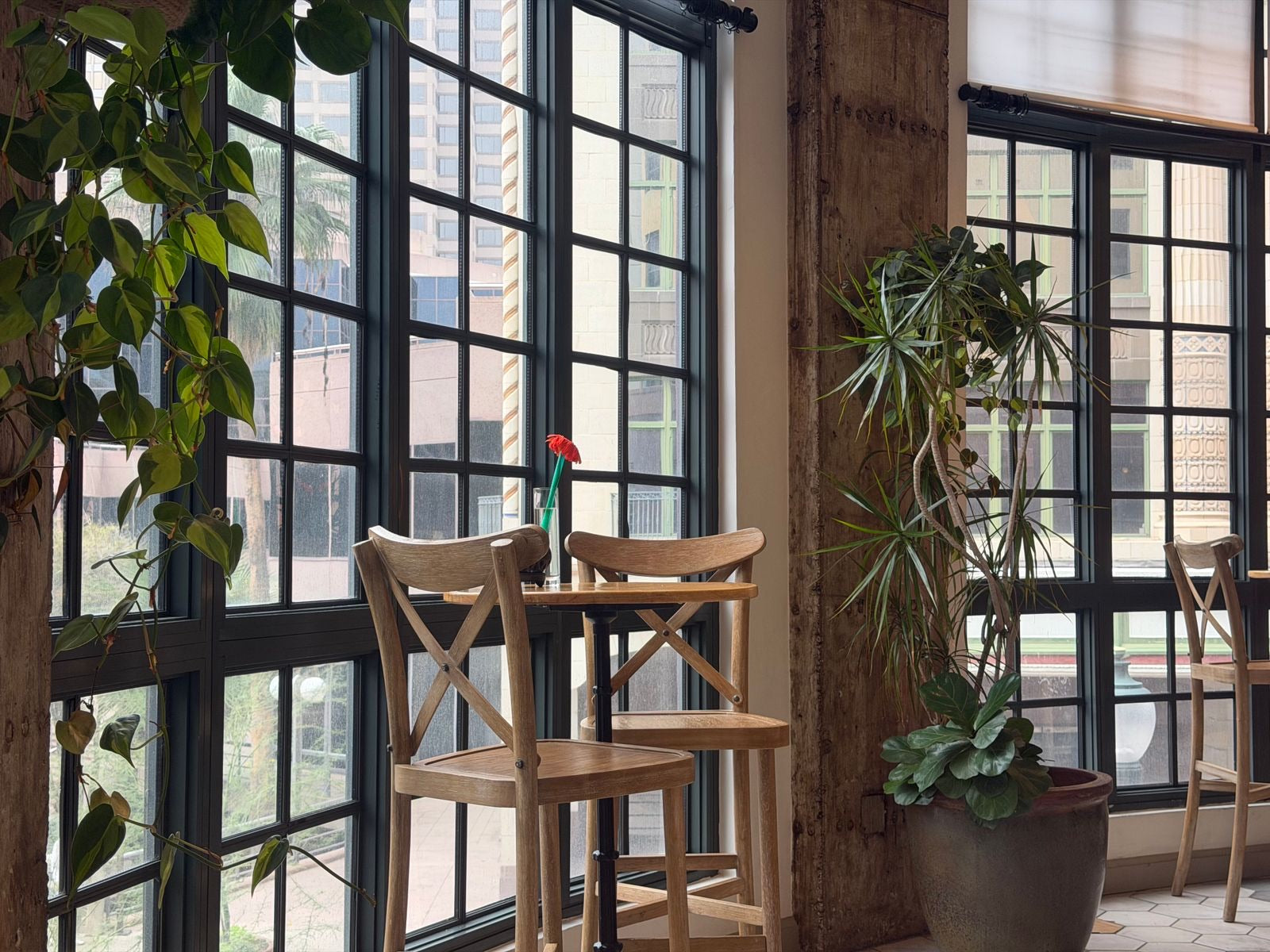

Walk into a newly fitted-out office and nearly everything you see was chosen by an interior designer: the flooring underfoot, the paint on the walls, the panels on the ceiling, the furniture, the lighting overhead. Every one of those choices had an environmental cost before it arrived, and most of them will sit within arm's reach of people breathing beside them for the next decade. Sustainable interior design is the discipline that takes both of those facts seriously at once. This guide covers what sustainable interior design is, the materials and labels that matter, energy and daylight, the 6 R's, green versus sustainable terminology, real examples, how LEED verifies the results, and the courses and credentials that teach it.
What is sustainable interior design?
Sustainable interior design is the practice of designing interior spaces that minimize environmental impact and protect the health of the people inside them: specifying low-impact, low-emitting materials, using energy and daylight efficiently, choosing durable and reusable elements over disposable ones, and verifying the results against recognized standards.
The definition has two halves, and both matter. The environmental half looks outward: every carpet, cabinet, and partition carries embodied impacts (the energy, water, and emissions behind its manufacture and transport), and interiors are replaced far more often than structures, so those impacts repeat with every renovation cycle. The health half looks inward: interior products sit in a closed volume of air that occupants breathe for hours, so what a material releases matters as much as what it is made of. A designer practicing sustainably asks both questions about every specification, and the rest of this guide walks through how that is actually done.
Why sustainable interior design matters
Because interiors are where buildings and people actually meet: finish and furnishing choices repeat with every fit-out cycle, they drive a meaningful share of a building's material consumption and waste, and they determine the air quality, light, and comfort that occupants experience every working hour.
Consider the life of a commercial building. Its structure may stand for fifty years or more, but its interiors are renewed again and again as tenants change, which means the materials decision is not made once but over and over. Each cycle consumes new materials and sends the old fit-out somewhere, and in most cases that somewhere is landfill. Meanwhile, the people inside spend the vast majority of their time indoors, where the EPA notes that concentrations of some pollutants, including the volatile organic compounds that building products release, routinely run higher than outdoors. In other words, the interior is both a recurring environmental bill and the environment people actually live in, which is why designing it responsibly pays twice.
Ready to earn your LEED credential?
 200,000+ Learners and Counting


Sustainable materials for interior design
Sustainable interior materials share three qualities: responsible origins (rapidly renewable, recycled, or certified sources), low emissions into indoor air (verified by chamber testing, not marketing), and durability, so the material does not need replacing in a few years. Common choices include bamboo, cork, reclaimed wood, recycled-content products, and low-emitting finishes.
| Material | Why it earns its place |
|---|---|
| Bamboo | Rapidly renewable grass that matures in a few years; used for flooring and panels |
| Cork | Harvested from bark without felling the tree; renewable and naturally resilient |
| Reclaimed wood | Reuses existing material, avoiding new harvest and new manufacturing impacts |
| Recycled-content products | Carpets, tiles, and countertops made from recovered material streams |
| Low-emitting paints and finishes | Reduce what the surface releases into the air as it cures and ages |
| Natural-fiber textiles | Wool, organic cotton, and similar fibers over petroleum-based synthetics |
The table is a starting point; the skill is in how you read any material that claims a spot on it. First, ask what the claim actually covers: a product can be made of recycled content and still emit heavily, because what a material contains and what it releases are different measurements — our guide to low-VOC materials walks that distinction in depth. Second, prefer verified claims to self-declared ones. Third, remember that durability is a sustainability property: the most responsibly sourced flooring is a poor choice if it must be replaced in five years. A short list of widely used verification labels helps separate evidence from marketing:
| Label type | What it verifies |
|---|---|
| Emissions certifications (e.g., GREENGUARD, FloorScore) | The product's measured off-gassing into indoor air, via chamber testing |
| Responsible-forestry certification (FSC) | Wood and paper products from responsibly managed forests |
| Material transparency labels (e.g., Declare) | What the product is made of, disclosed ingredient by ingredient |
| Recycled-content claims | The share of recovered material in the product |
Energy, lighting, and daylight in sustainable interiors
Interior design decisions directly shape a building's energy use: lighting design and controls determine a significant electric load, finish colors and layout decide how far daylight travels, and the fit-out either supports or undermines the building's heating and cooling strategy.
Lighting is the clearest example, because the interior designer often owns it outright. Efficient fixtures matter, but the larger wins come from design: putting light where tasks actually happen instead of flooding whole volumes, choosing light-colored surfaces that bounce illumination deeper into the plan, and adding controls that dim electric lighting when daylight is already doing the work. That last move connects the interior to one of green building's most valuable strategies, daylighting, where orientation, shading, and interior surfaces cooperate to replace electric light with controlled natural light. Layout plays its part too: an open workstation zone placed at the window wall gets daylight to the most people, while private rooms that need less light can sit deeper in the plan. None of this requires exotic technology; it requires treating energy as a design input from the first sketch.
Waste, circularity, and the 6 R's of sustainable design
The 6 R's of sustainable design are rethink, refuse, reduce, reuse, repair, and recycle, in roughly that order of value: the earlier R's prevent impacts from existing at all, while recycling, the last resort, only recovers part of what has already been made.
The ordering is the insight. Rethink asks whether the fit-out needs the element at all: an exposed ceiling instead of a suspended one is a whole product category never purchased. Refuse screens out materials that fail the health or origin tests above. Reduce trims quantities through efficient design. Reuse keeps existing assets working, from refurbished furniture to a fit-out that retains the previous tenant's partitions; it is regularly the highest-impact move available in interiors, because it displaces an entire new product. Repair extends life where reuse needs help. And recycle, valuable as it is, comes last for a reason: it recovers material, not the energy and labor that shaped it. A designer who works down this ladder, in this order, prevents more impact than one who recycles diligently at the bottom of it.
Green interior design vs sustainable interior design
Green interior design and sustainable interior design describe the same practice: designing interiors for lower environmental impact and better occupant health. "Green" is the older, more colloquial label; "sustainable" is the term the professional and certification world has largely settled on, and no technical distinction separates them.
You will meet both terms, along with eco-friendly interior design, and the differences are stylistic rather than substantive. What matters is the checklist behind whichever word is used, because the label is easy to claim and the practice is not. A genuinely green interior can point to verified materials, a lighting and daylight strategy, and a waste plan; a superficially green one points to a color palette and some plants. The practical test is the same one used throughout this guide: ask what is verified. That is also why the certification systems discussed below exist — they turn "green" from an adjective into a checkable claim.
Sustainable interior design examples
Recognizable examples include fit-outs that reuse the previous tenant's build-out, offices lit by daylight-responsive controls behind light-colored finishes, interiors specified entirely with emissions-certified materials, and furniture strategies built on refurbished or take-back products rather than new purchases.
Walk through a few concrete moves the way a project team would. A law firm renewing its lease keeps the existing partitions and ceilings, redirecting its budget to refinishing: the single decision avoids demolition waste and the embodied impacts of a full new fit-out. A school specifies every paint, adhesive, and flooring product from emissions-certified lists, so the air its students breathe was a criterion, not an accident. An open-plan office pairs its window wall with light shelves, pale surfaces, and photosensor-dimmed fixtures, and its lighting energy falls while its occupants report brighter space. A hotel furnishes guest rooms with refurbished casegoods and textiles from natural fibers. None of these examples depends on the others; each is one decision made deliberately, which is exactly how sustainable interiors are built in practice.
How LEED verifies sustainable interiors
LEED gives interiors their own rating system, Interior Design and Construction (ID+C), which certifies interior fit-outs, while the strategies sustainable interiors rely on earn credit across the LEED scorecard: on the v5 BD+C scorecard, Low-Emitting Materials (MRc3) is worth 2 points, the Construction Management (EQp1) and Fundamental Air Quality (EQp2) prerequisites are required, and the 7-point Occupant Experience credit (EQc2) covers the comfort, light, and quality occupants actually feel.
The structure tells you how the industry formalized everything this guide has covered. Materials choices are rewarded where the decision happens, air quality is protected by requirements rather than suggestions, and occupant experience carries serious points because the interior is where that experience is produced. For a tenant fitting out leased space, LEED ID+C is the certification path built for exactly that scope, and our overview of the LEED rating systems explains how it sits beside BD+C and O+M. The broader LEED v5 generation, launched in April 2025 for the commercial rating systems, pushes the same direction the interiors profession is moving: verified materials, measured air quality, and decarbonization as the organizing goal.
Sustainable interior design courses and certifications
You can learn sustainable interior design through university programs, continuing-education courses, and professional credentials. In the building industry, the most recognized starting credential is the LEED Green Associate, which verifies the green-building knowledge that sustainable interiors are built on: materials, energy, air quality, and the rating systems.
Degree and certificate programs suit career changers who want studio training, while short courses help practicing designers add depth on materials or energy. If you want a credential the industry recognizes, start with the LEED Green Associate: it is the entry credential of the LEED system, and it covers the concepts this guide has walked through. Our LEED Green Associate Complete Exam Prep Pack prepares you for it, backed by our passing guarantee, and readers who prefer book-first study start with our best-selling LEED Green Associate study guide. From there, the LEED AP with ID+C specialty is the advanced credential for interiors professionals.
Ready to earn your LEED credential?
200,000+ Learners and Counting
Frequently Asked Questions
What is sustainable interior design?
The practice of designing interior spaces that minimize environmental impact and protect occupant health: choosing low-impact, low-emitting materials, using energy and daylight efficiently, reducing waste through durable and circular choices, and verifying results against recognized standards such as LEED.
Why is sustainable interior design important?
Because interiors are replaced far more often than buildings, so their material and waste impacts repeat with every fit-out cycle, and because occupants spend most of their time indoors, where material emissions, light, and comfort directly affect health and well-being.
What are some sustainable materials for interior design?
Rapidly renewable materials like bamboo and cork, reclaimed wood, products with verified recycled content, low-emitting paints and finishes, and natural-fiber textiles. The strongest specifications pair responsible origins with third-party emissions certification and genuine durability.
What are the 6 R's of sustainable design?
Rethink, refuse, reduce, reuse, repair, and recycle. They work as a ladder ordered by impact: the early R's prevent materials from being consumed at all, while recycling, the last resort, recovers material but not the energy and labor that produced it.
What is green interior design?
The same practice as sustainable interior design: interiors designed for lower environmental impact and healthier occupants. "Green" is simply the more colloquial label, and no technical distinction separates the two terms.
How do I get into sustainable interior design?
Build the design foundation through interior design education, then add verified green-building knowledge. In the building industry, the LEED Green Associate is the recognized entry credential for that knowledge, and the LEED AP with ID+C specialty is the advanced credential focused on interiors.
