

Green Jobs: A Complete Guide to Green Collar Careers [2026]
 A. Togay Koralturk
Last updated on September 05, 2026
7 min read
A. Togay Koralturk
Last updated on September 05, 2026
7 min read
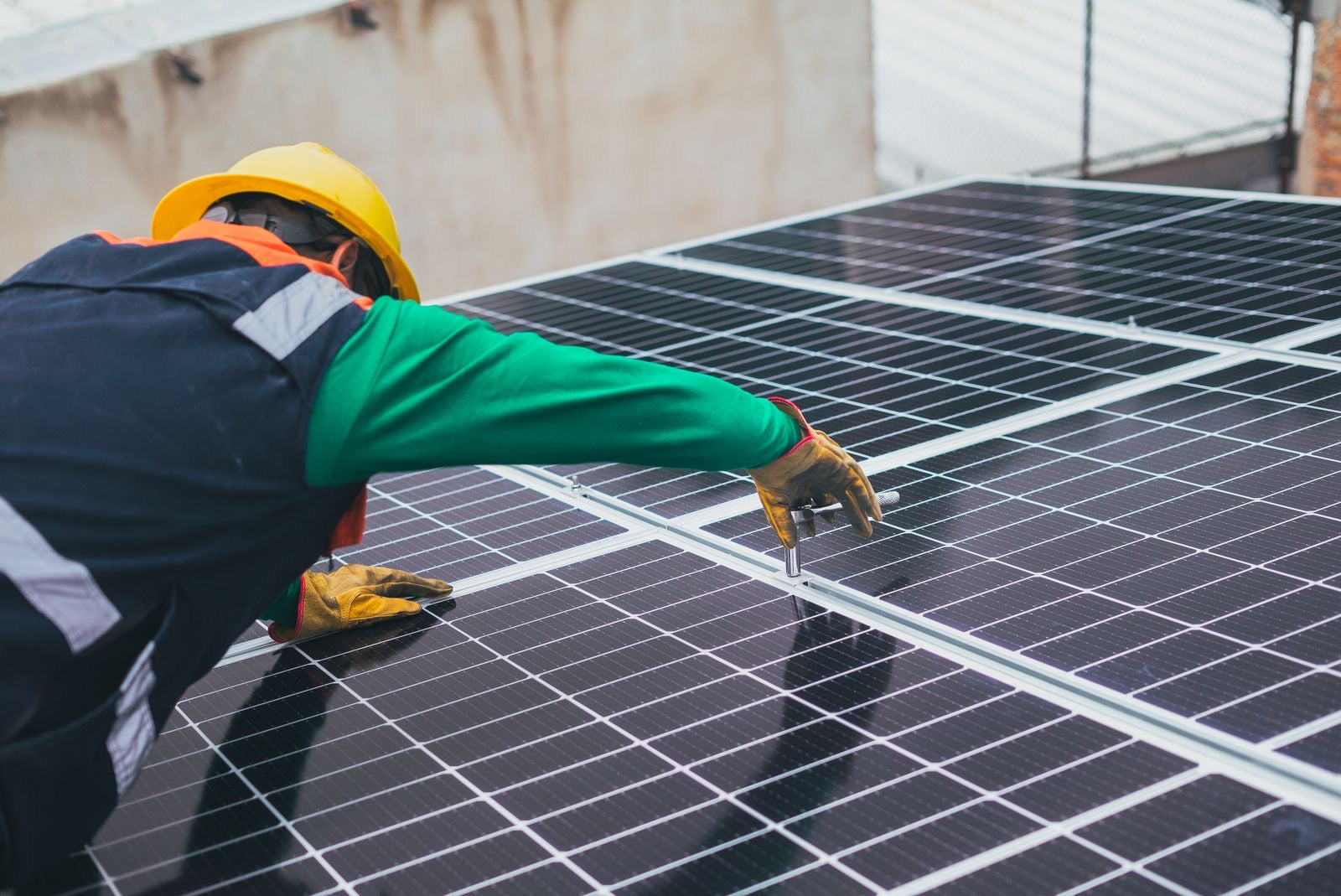

The phrase "green collar jobs" was coined to make a point: environmental work is not a niche profession but a full economy's worth of roles, wearing every collar from hard hat to suit. That economy is real and growing, but the phrase covers so much ground that career advice about it tends to dissolve into abstractions. The concrete version is a list: real roles, what each involves, and how each is entered. This guide delivers that list: 15 green collar jobs organized by sector, what the work involves, how the roles pay, why the building sector is the most accessible entry, and how to get started.
What are green jobs?
Green jobs, or green collar jobs, are roles whose work directly improves environmental outcomes: designing and constructing efficient buildings, generating clean energy, managing environmental compliance, and running sustainable operations, among others. The defining test is the work's effect, not its industry label.
The "green collar" coinage carries the category's most useful insight: these roles span every kind of work, from installers and retrofit crews through analysts and engineers to managers and directors. That breadth is good news for career changers, because the entry question is not "am I qualified for green work?" but "which of these roles matches the skills I already have?" The fifteen roles below answer that question sector by sector, starting with the sector that hires the widest range of people.
Green building jobs (5 roles)
The built environment is the largest green sector and the most accessible: buildings drive a major share of energy use and emissions, and the sector hires every collar, from trades through design professions to operations. These five roles carry most of its green work.
- Sustainable architect or designer. Shapes the decisions that set a building's environmental ceiling: orientation, envelope, daylight, materials. Entry: architecture path plus green building credentials.
- Green building engineer. Mechanical, electrical, civil, or energy engineers who deliver the point-heavy work of certified projects: energy performance, systems, commissioning. Our guide to the LEED engineer role covers this career in depth.
- Green contractor or construction manager. Delivers and documents the construction-phase requirements of certified projects: waste management, air quality, materials tracking. The credential path for builders and every other trade is mapped in our industry guide.
- Energy modeler or auditor. Builds the models that predict building performance and the audits that verify it; the analytical backbone of efficiency work. Entry: engineering or technical background plus modeling tools.
- Sustainable facility manager. Runs buildings to their targets: energy, water, waste, and the recertifications that verify operations. Entry: facilities path plus operations-focused credentials.
What makes this sector the recommended entry is its ladder: the LEED Green Associate has no degree or experience requirement, preparation takes weeks, and the credential reads across all five roles. No other green sector publishes an on-ramp that starts this close to the sidewalk.
Ready to earn your LEED credential?
 200,000+ Learners and Counting


Clean energy jobs (4 roles)
Clean energy is the green economy's fastest-visible sector: generation, storage, and efficiency work spanning trade installation roles through grid engineering. Four roles carry the breadth.
- Solar installer. The green economy's signature trade role: mounting, wiring, and commissioning photovoltaic systems on roofs and fields. Entry: trade training and certifications.
- Wind technician. Installs and maintains turbines; field-heavy, travel-heavy, and consistently among the fastest-growing trade roles in national employment projections.
- Energy efficiency specialist. Retrofits and tunes existing buildings and systems; the demand side of clean energy, where buildings and energy overlap.
- Renewable energy engineer. Designs generation and storage projects and integrates them with the grid. Entry: engineering degree plus renewable specialization.
The overlap with buildings is worth noticing: efficiency work happens in buildings, rooftop solar lands on buildings, and the building-sector credentials read well in the overlap zone.
Environmental management jobs (3 roles)
Environmental management is the compliance-and-science sector: measuring impacts, meeting regulations, and restoring sites, with entry running mostly through science and engineering degrees. Three roles define it.
- Environmental compliance specialist. Keeps organizations inside environmental regulations: permits, monitoring, reporting. Entry: environmental science or engineering.
- Environmental scientist or analyst. Assesses impacts, models outcomes, and produces the studies that projects and policies rest on.
- Remediation specialist. Restores contaminated sites to usable condition; field science with engineering execution.
This sector's roles are the most degree-dependent of the list, which is the honest trade-off: higher entry barriers, and correspondingly less crowding from career changers.
Corporate sustainability jobs (3 roles)
Corporate sustainability turns environmental performance into an organizational function: strategy, data, reporting, and the programs that move a company's footprint. Three roles anchor the sector.
- Sustainability manager. The in-house owner of targets, programs, and reporting; our dedicated guide to the sustainability manager role covers the path in full.
- Sustainability consultant. The advisory version: many clients, engagement-based work across buildings and strategy, mapped in our guide to becoming a sustainability consultant.
- ESG analyst. The finance-facing specialist: disclosure frameworks, ratings, and investor reporting, a career with a finance skillset at its core.
Buildings sit at the center of this sector too, since facilities usually drive the largest controllable share of a company's footprint; it is why building credentials appear in corporate sustainability requirements far from any construction site.
Do green jobs pay well?
Green jobs pay on their underlying occupation's scale: a green-building engineer earns as an engineer and a solar installer as a skilled tradesperson, with green expertise adding demand within each scale rather than creating a separate one. Be skeptical of any single "green jobs salary" figure.
Because green collar work spans every collar, averages across the category are meaningless: the span from installer to sustainability director is the span of the whole labor market. The reliable benchmarks are occupation-level wage data from the U.S. Bureau of Labor Statistics, applied to whichever of the fifteen roles you are considering. What the green layer changes is demand: certification requirements, disclosure rules, and decarbonization commitments keep expanding the work that must be done by credentialed people, and scarce, credentialed skills push individuals toward the top of their occupation's range, a dynamic our guide to whether LEED certification is worth it examines with the building sector's specifics.
How to get a green job
The pattern that works: pick the role from the list that matches your existing skills, add its sector's recognized credential to make the green layer visible, and collect one demonstrable project, because credentials plus evidence beat enthusiasm alone in every sector. The building sector publishes the clearest instructions.
In buildings, the pattern is concrete enough to schedule. The LEED Green Associate requires no degree and no experience, and a prepared candidate passes in weeks; our LEED Green Associate Complete Exam Prep Pack covers the whole exam scope, backed by the Projectific Passing Guarantee. From there, the demonstrable project can be modest: a certification effort joined at work, an energy audit assisted, a campus sustainability project led. Stack the specialty credential once your direction is clear, and you hold the sector's standard resume for the five building roles above, with the overlap zones into clean energy and corporate sustainability open as well.
Ready to earn your LEED credential?
200,000+ Learners and Counting
Frequently Asked Questions
What jobs are green collar?
Fifteen common examples: sustainable architects, green building engineers, green contractors, energy modelers, sustainable facility managers, solar installers, wind technicians, efficiency specialists, renewable energy engineers, compliance specialists, environmental scientists, remediation specialists, sustainability managers, sustainability consultants, and ESG analysts.
What is considered green collar work?
Work whose direct effect is environmental improvement, regardless of collar: trades installing clean energy, professionals designing efficient buildings, scientists managing compliance, and managers running sustainability programs all qualify. The test is the work's effect, not the industry label.
Do green jobs pay well?
They pay on the underlying occupation's scale, with green expertise adding demand within it. A green engineer earns as an engineer; a certified installer as a skilled tradesperson. Benchmark against occupation-level Bureau of Labor Statistics data rather than any category-wide average.
How do I get a green job with no experience?
Choose the listed role nearest your existing skills, then make the green layer visible with its recognized credential. In buildings, the LEED Green Associate has no prerequisites and takes weeks; pair it with one demonstrable project and you match how the sector actually hires.
Which green sector is easiest to enter?
The built environment: it is the largest, it hires every collar from trades to management, and its credential ladder is defined and open, with the LEED Green Associate as a no-prerequisites first step recognized across the industry.


LEED Jobs & Careers: Where the Credential Takes You [2026]
LEED jobs mapped: the roles that ask for the credential across design, construction, consulting, and operations, how they pay, and how to qualify for them.


Best Sustainability Certifications: 8 Compared [2026]
The best sustainability certifications compared honestly: LEED Green Associate, WELL AP, Fitwel, GPRO, Envision, SITES, TRUE, and ISSP, and who each one fits.


LEED Consultant: What They Do & How to Become One [2026]
What a LEED consultant does on a certification project, when project teams hire one, and the credential path for professionals who want to become one.
