

LEED AP: What It Is & The 5 Specialties Explained [2026]
 A. Togay Koralturk
Last updated on September 15, 2026
8 min read
A. Togay Koralturk
Last updated on September 15, 2026
8 min read
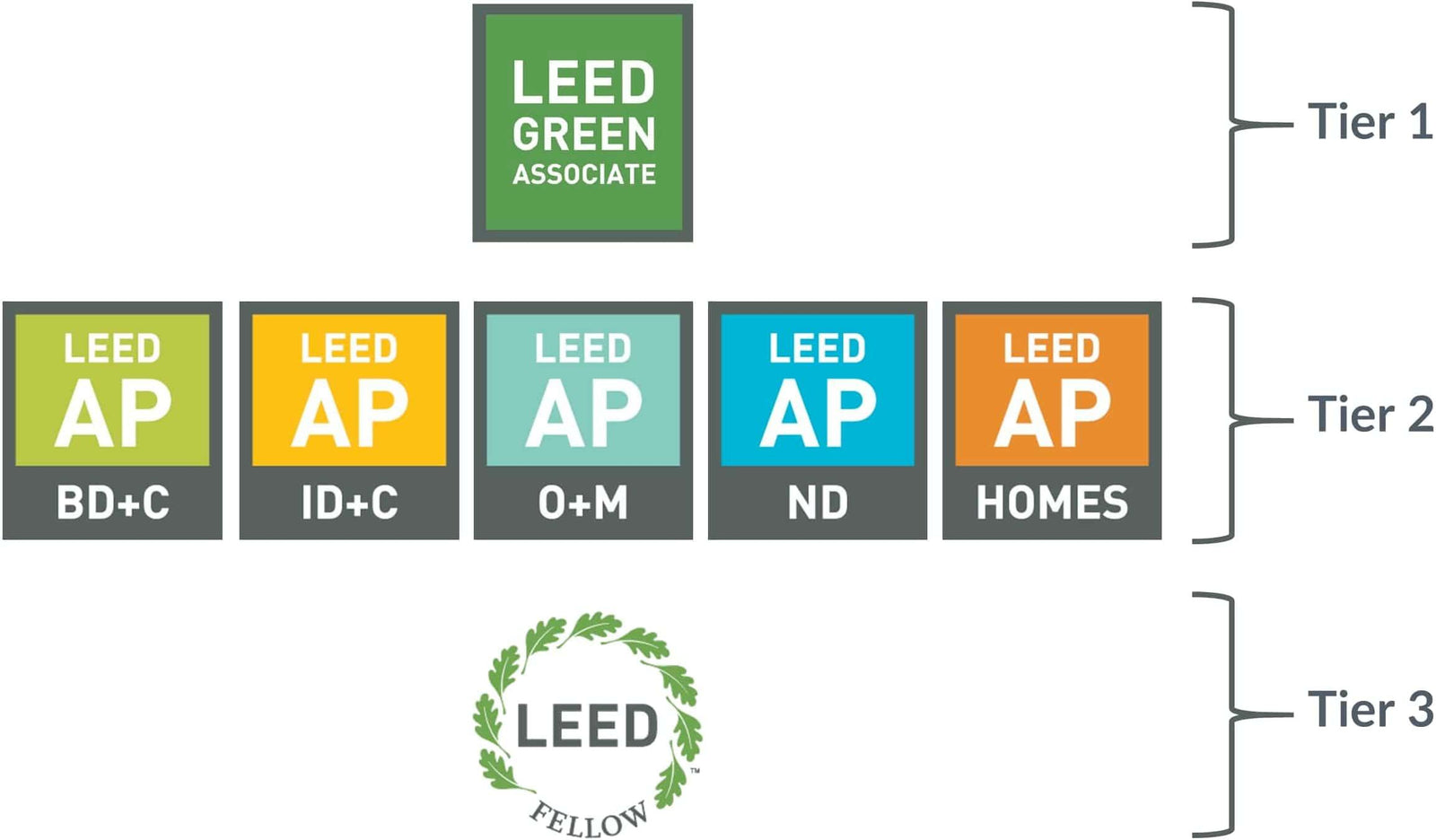

The letters "LEED AP" fit on a business card, but today they rarely travel alone: every newly earned LEED AP is a LEED AP with specialty, and which specialty follows the comma says what kind of green building work the person actually leads. Choosing among the five is one of the more consequential small decisions in a sustainability career, and most explanations of the options fit in a table footnote. This guide gives it the full treatment: what a LEED AP is, what "with specialty" means, all five specialties mapped to their rating systems and careers, the requirements and exam, and how to choose the one that fits your work.
What is a LEED AP?
A LEED AP, or LEED Accredited Professional, holds the advanced tier of the LEED credential system: a qualification earned by passing a demanding specialty exam on top of an active LEED Green Associate credential, verifying credit-level expertise in a specific rating system.
The credential (often searched as "LEED AP certification," although people are accredited rather than certified) is the industry's marker for professionals who can lead the LEED work, not just speak its language. Where the Green Associate verifies fundamentals, the AP tier verifies working command: which credits fit a project, what the documentation demands, and how certification actually reaches the finish line. The market's reasons for valuing it are concrete: the AP typically runs a project's certification process, and projects can earn a point for having a LEED AP with the relevant specialty on the team. Above the AP tier sits only LEED Fellow, the nomination-based recognition for ten or more years of exceptional impact.
What does "with specialty" mean?
"With specialty" means every LEED AP credential is anchored to one of the five rating-system families: the exam you pass, the expertise you verify, and the letters after your name all carry the specialty, from LEED AP BD+C to LEED AP Homes.
One historical footnote first: you will still meet professionals holding a plain legacy LEED AP designation, earned before 2009, when the specialties were introduced; that credential is no longer available to new candidates, who always test into a specialty. The anchoring exists because "advanced LEED expertise" is not one skill. The professional who optimizes an operating tower's energy performance and the one who steers a neighborhood master plan both deserve advanced credentials, and neither's exam should be diluted to cover the other's work. Each specialty therefore tests deep knowledge of its own rating system, which keeps the credential honest and tells employers precisely what they are hiring.
Exam tip: The five LEED AP specialties are BD+C, O+M, ID+C, ND, and Homes. It is very important to remember this list for exam purposes.
Ready to earn your LEED credential?
 200,000+ Learners and Counting


The five LEED AP specialties at a glance
The five specialties map one-to-one onto the rating-system families: BD+C for new construction, O+M for existing buildings in operation, ID+C for interiors, ND for neighborhood-scale development, and Homes for residential work.
| Specialty | Full name | Built for professionals who… |
|---|---|---|
| LEED AP BD+C | Building Design and Construction | Design and deliver new buildings and major renovations |
| LEED AP O+M | Building Operations and Maintenance | Run and optimize existing buildings |
| LEED AP ID+C | Interior Design and Construction | Design and build tenant interiors and fit-outs |
| LEED AP ND | Neighborhood Development | Plan district- and neighborhood-scale development |
| LEED AP Homes | Homes | Design and build residential projects |
Reading down the table is career navigation in miniature: your specialty should match the projects your name actually appears on. The sections below take each in turn, starting with the one most professionals mean when they say "LEED AP."
LEED AP BD+C: the flagship specialty
LEED AP BD+C is the most widely held specialty, serving the architects, engineers, contractors, and consultants who deliver new construction and major renovations, the projects with the most design decisions still open.
BD+C's dominance follows the market: new construction is where the largest share of certification work happens and where the most professionals touch LEED. Its exam tests the Building Design and Construction rating system at credit level, from the v5 decarbonization priorities to the documentation that survives GBCI review. Because it deserves more than a section, we maintain a dedicated complete guide to LEED AP BD+C covering its requirements, exam, and preparation in full; if you already know BD+C is your lane, start there.
LEED AP O+M and ID+C
LEED AP O+M serves professionals who run existing buildings, and LEED AP ID+C serves those who design and deliver interiors: two specialties for the enormous share of green building work that never involves a new foundation.
O+M (Building Operations and Maintenance) belongs to facility managers, portfolio operators, and consultants improving buildings that already exist, which is most buildings. Its rating system certifies measured operating performance and recertifies on a rolling cycle, so the specialty's expertise centers on data, systems, and continuous improvement; our O+M rating-system guide covers the project side. ID+C (Interior Design and Construction) belongs to the interiors world: designers and builders certifying tenant spaces inside buildings their clients do not own, with strategy concentrated in the categories a tenant controls, as our ID+C guide details. Both specialties' v5 exams are current alongside BD+C's.
LEED AP ND and Homes
LEED AP ND verifies expertise in neighborhood-scale development, where sustainability is measured in street grids, transit, and land use, and LEED AP Homes serves residential professionals working under the homes rating system with its Green Rater verification.
ND (Neighborhood Development) is the specialty for planners, urban designers, and developers whose canvas is bigger than a building; its concerns (connectivity, density, location efficiency) are the ones our ND guide walks through at project scale. Homes serves the residential side, where certification uniquely includes in-person verification. Both are smaller communities than the commercial specialties, which cuts two ways: fewer peers, but sharper differentiation inside their niches. One planning note: the ND and Homes exams currently remain on their existing exam version, while BD+C, O+M, and ID+C have moved to the newest generation, so check the candidate handbook for the current state before scheduling either.
Requirements and the specialty exam
Every specialty shares the same structure: an active LEED Green Associate credential at registration, a 100-question, 2-hour exam with 170 required to pass (per the candidate handbook), a $350 fee ($250 for USGBC members), and maintenance of 30 CE hours every two years.
| Exam fact | Detail (all specialties) |
|---|---|
| Prerequisite | Active LEED Green Associate credential |
| Questions | 100 multiple-choice |
| Time | 2 hours |
| Passing score | 170 or higher |
| Fee (per USGBC) | $350 standard · $250 USGBC members |
| Maintenance | 30 CE hours per 2 years (6 specialty-specific) |
The shared structure means the choice between specialties is purely a content-and-career decision, never a logistics one. The maintenance cycle is a single obligation: as a LEED AP you maintain one credential at the AP level, not a separate Green Associate, and professionals who later add a second specialty earn it through that specialty's own exam. The details of registration, scheduling, and policies live in the AP candidate handbook, which is worth reading before you book, exactly as its Green Associate counterpart was.
Which LEED AP specialty should you choose?
Choose the specialty that matches the projects you actually work on: the credential's value comes from pairing verified expertise with real project roles, so your portfolio, not the exam's popularity, should pick the letters.
For most candidates the answer takes one honest look at their work. Delivering new buildings points to BD+C, running existing ones to O+M, interiors to ID+C, master plans to ND, and houses to Homes; professionals whose work spans categories usually start with the specialty covering their largest project share, since additional specialties can follow later. If no project history tips the scale (a student or career-changer planning ahead), BD+C's breadth and market share make it the default first specialty, which is why our preparation line starts there: the LEED AP BD+C Complete Exam Prep Pack covers that exam as one system, and the combined GA and AP BD+C pack carries candidates who are starting from the Green Associate all the way through both credentials. Whichever specialty you choose, choose it the way the credential system itself thinks: by the rating system your work lives in, per USGBC's credential catalog.
Ready to earn your LEED credential?
200,000+ Learners and Counting
Frequently Asked Questions
What is a LEED AP?
A LEED Accredited Professional: the advanced tier of the LEED credential system, earned by passing a specialty exam while holding an active LEED Green Associate credential. It verifies credit-level expertise in one rating system and marks professionals who can lead LEED project work.
What is the difference between LEED AP and LEED Green Associate?
The Green Associate is the entry credential verifying green building fundamentals; the LEED AP is the advanced tier verifying deep, project-ready expertise in a chosen specialty. The Green Associate is also the AP's prerequisite, so the tiers are sequential.
How many LEED AP specialties are there?
Five: BD+C (Building Design and Construction), O+M (Building Operations and Maintenance), ID+C (Interior Design and Construction), ND (Neighborhood Development), and Homes, each anchored to its rating-system family.
Which LEED AP specialty is most common?
BD+C, reflecting where the most certification work and professionals are: new construction and major renovations. It is the default first specialty for candidates without a portfolio that points elsewhere.
What are the requirements for a LEED AP credential?
An active LEED Green Associate credential at registration, then a passing score of 170 on the specialty's 100-question, 2-hour exam. Per USGBC, the exam fee is $350, or $250 for USGBC member employees.
How is a LEED AP credential maintained?
With 30 continuing education hours every two years, of which 6 must be specialty-specific, reported through your usgbc.org credential dashboard. As a LEED AP you maintain a single credential at the AP level, not a separate Green Associate.
Can you hold more than one LEED AP specialty?
Yes. Each additional specialty is earned by passing that specialty's own exam, and professionals whose work spans rating systems sometimes add a second specialty as their project mix evolves.

LEED Green Associate V5 Exam: The Complete 2026 Guide
Complete LEED Green Associate v5 exam guide: format, cost, study time, registration steps, pass rate, exam tips, and FAQs. Updated for 2026.

How to Get LEED Certified: LEED Accreditation Guide [2026]
How to get LEED certified as a person: the LEED accreditation ladder from Green Associate to AP and Fellow, exam costs, which credential to earn first.

How to Become a LEED Green Associate: Exam & Steps [2026]
How to become a LEED Green Associate in four steps: what the exam covers, how to prepare, registration and fees, and what to expect on exam day. Start here.
