

What Is GBCI? The Organization Behind LEED Explained [2026]
 A. Togay Koralturk
Last updated on September 15, 2026
9 min read
A. Togay Koralturk
Last updated on September 15, 2026
9 min read


Spend a week around green building and you will keep meeting two sets of initials that look almost interchangeable: USGBC and GBCI. One of them writes the LEED rating system, and the other one reviews whether your building, or you, actually earned it. The two organizations are so closely related that even working professionals mix them up, which is exactly why exam writers love the distinction. This guide explains what GBCI is, how it differs from USGBC, which certification programs and exams it administers, and what its role means for your projects and your credential.
What does GBCI stand for?
GBCI stands for Green Business Certification Inc., the independent organization that provides third-party certification and credentialing services for LEED and several other sustainability rating systems. Founded in January 2008 with USGBC's support, GBCI reviews LEED project applications and administers the LEED professional exams, including the LEED Green Associate and LEED AP exams.
GBCI began its life in January 2008 as the Green Building Certification Institute, created with the support of the U.S. Green Building Council (USGBC) to provide independent oversight of project certification and professional credentialing under the Leadership in Energy and Environmental Design (LEED) rating system. As its portfolio grew beyond buildings into landscapes, power systems, and zero-waste operations, the name no longer fit the scope. On April 16, 2015, the organization was renamed Green Business Certification Inc., keeping the familiar acronym while widening the mission. You can read how GBCI describes its own role on the official GBCI website.
The word that matters most in all of this is independent. A rating system earns trust when the organization that writes the standard is not the same organization that grades against it, in the same way a school exam means more when it is graded by someone other than the student's own tutor. That separation is called third-party verification, and it is the reason a LEED plaque carries weight with tenants, buyers, and investors. GBCI takes the independence seriously in its own operations as well: since 2011, its LEED credentialing programs have been accredited by the American National Standards Institute (ANSI) under ISO/IEC 17024, the international standard for bodies that certify people.
GBCI vs. USGBC: what is the difference?
USGBC creates and maintains the LEED rating system, while GBCI independently verifies projects and people against it. USGBC is the membership-based nonprofit that develops LEED's credits and requirements; GBCI conducts the technical reviews that certify buildings and administers the exams that accredit professionals.
The two are sister organizations, and they interact constantly. USGBC publishes the rating system, the reference guides, and the candidate handbooks. When a project team submits documentation, or a candidate sits for an exam, the work lands on GBCI's desk for review and verification. Here is the comparison at a glance:
| Question | USGBC | GBCI |
|---|---|---|
| Core role | Writes and updates the LEED rating system | Verifies projects and people against LEED |
| For buildings | Develops the credits, prerequisites, and reference guides | Reviews project documentation and awards certification |
| For people | Publishes candidate handbooks and education | Administers the exams and awards credentials |
| Founded | 1993 | 2008 |
Notice the terminology on the people side, because USGBC and GBCI use it precisely: buildings are certified, while people are accredited. A project earns LEED certification; a professional earns a LEED credential and becomes accredited. If the vocabulary is new to you, our guide to what LEED stands for walks through the full set of terms from the ground up, and the USGBC website is the primary source for the rating system itself.
Exam tip: USGBC develops the LEED rating system; GBCI administers project certification and professional credentialing. Buildings are certified, people are accredited. It is very important to know this division of roles for exam purposes.
Ready to earn your LEED credential?
 200,000+ Learners and Counting


What does GBCI do? Inside a LEED certification review
GBCI's day-to-day work is verification: its technical experts review the documentation a project team submits, confirm whether each prerequisite and attempted credit is satisfied, and award the certification level the points support. The same verification role covers the professional side, where GBCI develops, delivers, and scores the credentialing exams.
Let's follow one project through the process to make it concrete. A team pursuing LEED certification registers the project on the Arc platform, which opens its workspace and formally starts the journey. As design and construction move forward, the team assembles documentation for every prerequisite and every credit it attempts: drawings, calculations, product data, and policies. When the documentation is submitted, GBCI's reviewers examine it, issue comments, and give the team a chance to clarify or supplement anything that falls short. Once the review is final, the project's verified points determine the outcome, and GBCI awards the certification. The fees a project pays for that review are a meaningful budget line, and we break them down in our guide to the cost of LEED certification.
The current version of the rating system shapes what those reviewers check. Under LEED v5, projects register through Arc and are verified by GBCI against the v5 requirements, which we cover in detail in our overview of LEED v5 and what it introduces.
Which certification programs does GBCI administer?
GBCI is the exclusive certification and credentialing body for eight programs: LEED, EDGE, PEER, WELL, SITES, Sustainability Excellence, Parksmart, and TRUE. LEED is the flagship, but the wider portfolio is the reason "Business" replaced "Building" in the organization's name.
Each program applies third-party verification to a different corner of the built environment:
| Program | What it certifies |
|---|---|
| LEED | Green buildings, interiors, and building operations |
| EDGE | Resource-efficient buildings, primarily in emerging markets |
| PEER | Sustainable, resilient power systems and microgrids |
| WELL | Buildings that support human health and well-being |
| SITES | Sustainable landscapes and outdoor spaces |
| Sustainability Excellence | Professional credentials for sustainability practitioners |
| Parksmart | Sustainable parking structures |
| TRUE | Zero-waste facilities and operations |
The pattern is the same everywhere: a standard defines what good performance looks like, a project or organization documents its work, and GBCI independently verifies the result. Think of GBCI as the examiner for the entire green-business world, with LEED as its largest classroom.
Which exams and credentials does GBCI administer?
GBCI develops and administers the LEED professional exams, including the LEED Green Associate and the LEED AP with specialty exams, along with credentials such as WELL AP, SITES AP, TRUE Advisor, and EDGE Expert. Exams are delivered through Prometric, either at a test center or by online proctoring.
For most readers, the LEED credentials are the ones that matter, and they form a ladder. The LEED Green Associate is the foundational credential, verifying a solid understanding of green-building principles and how LEED works. The LEED AP with specialty sits above it; the most popular specialty, LEED AP BD+C, focuses on building design and construction. At the top, LEED Fellow is an honorary designation recognizing exceptional contributors to the field. GBCI also administers the Green Rater and City Climate Planner programs, so the credentialing catalog reaches well beyond LEED itself.
When you register for a LEED exam, you do it through your usgbc.org account, and GBCI's role continues behind the scenes: it writes the exam questions using formal test-development practices, sets the scoring, and awards the credential when you pass. The exam fees, and the ways to keep them down, are covered in our guide to the LEED Green Associate exam cost.
GBCI continuing education: how credentials are maintained
LEED credentials are maintained through GBCI's credential maintenance program (CMP): a LEED Green Associate reports 15 continuing education hours every two years, and a LEED AP reports 30, with a required share of those hours being LEED-specific. Hours are earned through approved education, project work, and volunteering, and reported through your usgbc.org account.
The reasoning behind the requirement is straightforward. Green building evolves quickly, and a credential only signals competence if the person holding it keeps learning. Over each two-year cycle, a Green Associate needs 15 CE hours, of which 3 must be LEED-specific, while a LEED AP needs 30 CE hours, of which 6 must be LEED-specific. GBCI approves education providers and courses, which will also mean that the hours you report trace back to content GBCI has vetted. Every credential holder also receives a GBCI number, the certificate ID that identifies your credential; employers occasionally ask for it, and you can find it in your usgbc.org account or on your credential certificate.
What GBCI means for LEED exam candidates
For a candidate, GBCI is the organization on the other side of the table: it writes the exam you will sit, sets the passing standard, and awards the credential when you clear it. Knowing how GBCI operates removes a surprising amount of exam-day mystery.
It also tells you something about how to prepare. Because GBCI builds its exams with formal test-development practices and grounds every question in the published exam scope, preparation rewards genuine understanding over memorized trivia. That is precisely the philosophy behind our best-selling LEED Green Associate Complete Exam Prep Pack, which covers the entire exam scope and is backed by the Projectific Passing Guarantee: pass on your first attempt, or get a full refund. Study the system the way GBCI verifies it, and the exam becomes a confirmation rather than a gamble.
One last piece of orientation before you go. When you see USGBC, think "writes the standard." When you see GBCI, think "verifies against it." Keep that pair straight and an entire family of exam questions, and a fair amount of professional conversation, falls neatly into place.
Ready to earn your LEED credential?
200,000+ Learners and Counting
Frequently Asked Questions
What does GBCI stand for?
GBCI stands for Green Business Certification Inc. It was founded in January 2008 as the Green Building Certification Institute and adopted its current name on April 16, 2015, when its scope expanded beyond buildings to programs like SITES, PEER, and TRUE.
What is the difference between USGBC and GBCI?
USGBC creates and maintains the LEED rating system, including its credits, prerequisites, and reference guides. GBCI is the independent organization that verifies projects and people against that system: it reviews project documentation, awards LEED certification, and administers the LEED professional exams and credentials.
What does GBCI do?
GBCI provides third-party verification for green-business rating systems. Its reviewers examine LEED project documentation and award certification, and its credentialing arm develops and administers professional exams such as the LEED Green Associate. It also runs the credential maintenance program that keeps credentials current.
What certification programs does GBCI administer?
GBCI exclusively administers project certifications and professional credentials for eight programs: LEED, EDGE, PEER, WELL, SITES, Sustainability Excellence, Parksmart, and TRUE. LEED is the largest, covering green buildings, interiors, and operations.
How do I find my GBCI number?
Your GBCI number is the certificate ID attached to your credential. You can find it in your usgbc.org account under your credentials, and it also appears on your credential certificate. Employers sometimes request it to verify that a credential is active.
How many continuing education hours does a LEED credential require?
A LEED Green Associate must report 15 continuing education hours every two years, including 3 LEED-specific hours. A LEED AP must report 30 hours every two years, including 6 LEED-specific hours. Hours are reported through your usgbc.org account under GBCI's credential maintenance program.
Is GBCI on the LEED Green Associate exam?
Yes. The exam expects you to know the roles of the organizations behind LEED: USGBC develops the rating system, GBCI administers project certification and professional credentialing, buildings are certified, and people are accredited. Questions testing this division of roles are common.
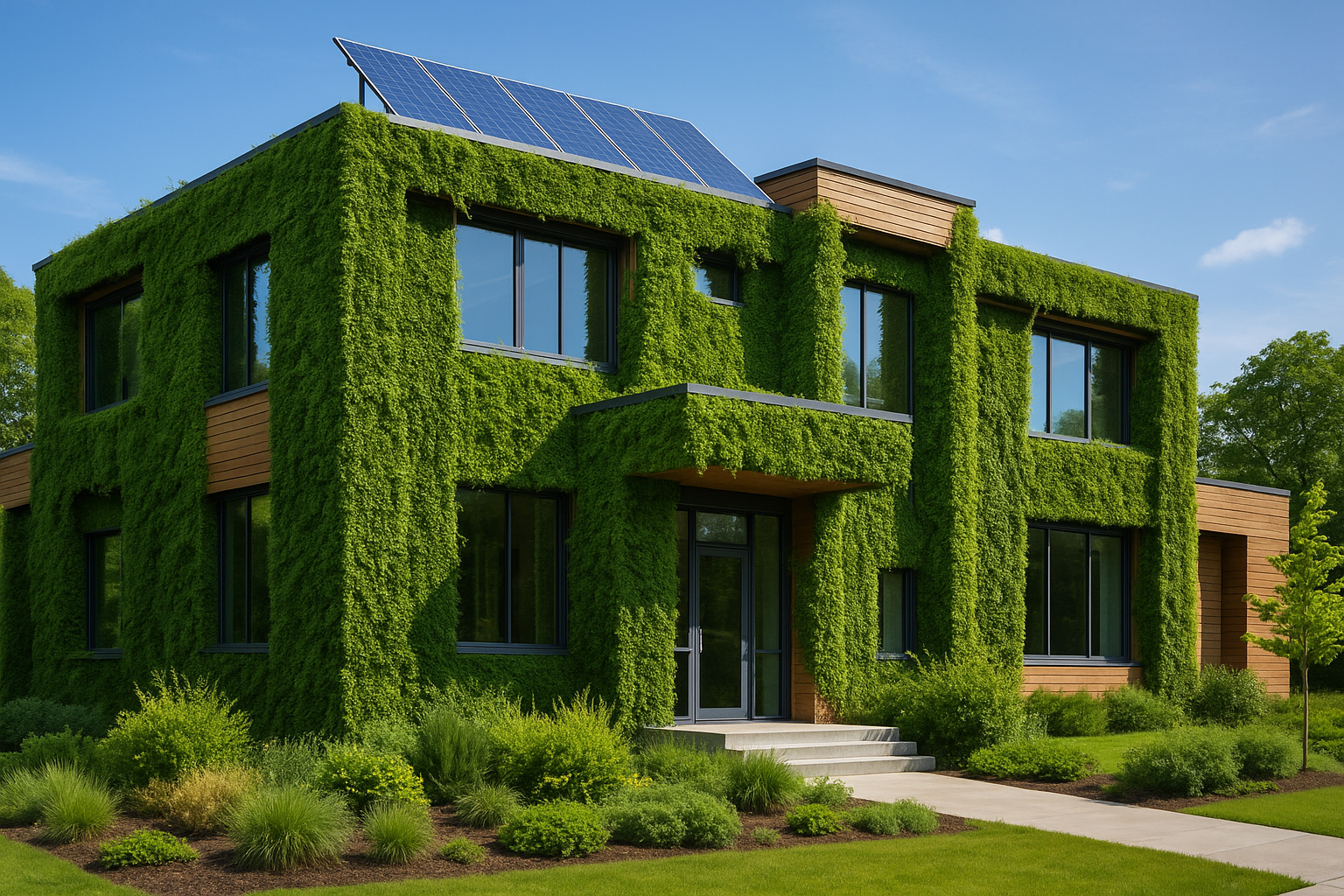

What Changes In LEED v5 & When Will The LEED Exams Will Be Based On LEED v5?
As building professionals prepare for this significant update, two critical questions arise: what are the major changes in LEED v5, and when will the LEED credential exams transition to the new version?


How LEED Handles Recyclables With The Storage And Collection Of Recyclables Prerequisite
Waste is one of the primary burdens...


LEED Heat Island Reduction Credit Explained
An example of the heat island effect would be the black asphalt surfaces radiating heat on a hot summer day...
