

FS Exam Guide: Fundamentals of Surveying Explained [2026]
 A. Togay Koralturk
Last updated on September 17, 2026
7 min read
A. Togay Koralturk
Last updated on September 17, 2026
7 min read
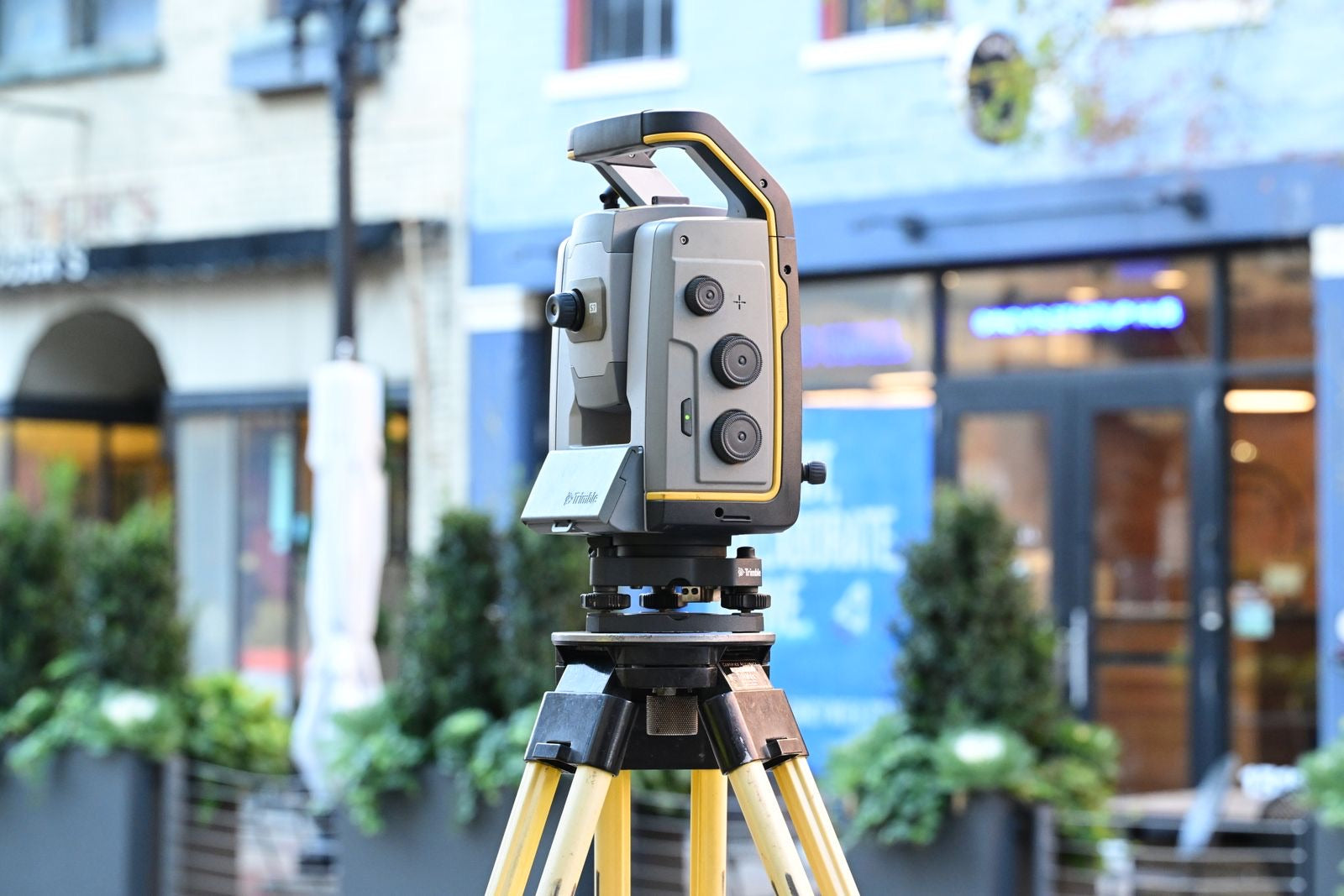

Surveying is the profession that decides where your property ends and your neighbor's begins, which is why its licensure exam spends more questions on law than on any instrument. Newcomers to the FS exam expect a test about levels and total stations and meet instead a test about deeds, easements, and evidence — with the mathematics wrapped around it. That surprise, multiplied across a candidate pool that averages nearly two decades older than engineering's, makes this exam worth understanding before scheduling. This guide covers the FS exam completely: the format, all seven knowledge areas, the pass-rate reality and its dramatic degree effect, the Surveyor in Training designation it earns, and how to prepare.
What is the FS exam?
The FS exam — Fundamentals of Surveying — is the NCEES exam that begins the path to licensure as a professional surveyor: 110 questions over 5 hours and 20 minutes of testing, computer-based, offered year-round at Pearson test centers for a $225 fee. It plays the same opening role for surveyors that the FE plays for engineers.
The mechanics will look familiar to anyone who knows the NCEES system: a 6-hour appointment (the same structure as the FE exam — a 2-minute nondisclosure agreement, 8-minute tutorial, two exam sections, and an optional 25-minute break), the FS Reference Handbook supplied onscreen as your only reference, and scaled scoring with no published passing score and no penalty for wrong answers. Per the official NCEES FS page, the exam is designed for students close to finishing an ABET-accredited surveying degree — though as the pass-rate data will show, the real candidate pool is far more varied than that design target.
One number frames the community you are joining: about 2,286 candidates sat the FS in NCEES's latest reporting year, a fraction of engineering's volumes. Surveying is a small profession with an aging licensed workforce, which makes the credential's scarcity part of its value — a theme the licensure path section returns to.
FS exam topics: all 7 knowledge areas
The FS exam covers seven knowledge areas, and the largest is not measurement but law: Boundary Law and Real Property Principles carries 19 to 29 of the 110 questions. Here is the complete blueprint, per the NCEES exam specifications:
| Knowledge area | Questions |
|---|---|
| Boundary Law and Real Property Principles | 19–29 |
| Survey Computations and Computer Applications | 17–26 |
| Surveying Processes and Methods | 16–24 |
| Mapping Processes and Methods | 14–21 |
| Surveying Principles | 13–20 |
| Business Concepts | 11–17 |
| Applied Mathematics and Statistics | 10–15 |
Read the table top-down and the exam's personality is unmistakable. Law leads: deeds, descriptions, easements, riparian rights, and the rules of evidence that govern where boundaries actually sit — the material fieldwork alone never teaches. Computation follows close behind: traverses, adjustments, coordinate geometry, and the state plane systems that turn measurements into legal positions. And notice Business Concepts at 11–17 questions, a heavier weight than most candidates expect, covering the contracts, liability, and professional-practice matters a licensed surveyor signs up for. The current specification is a free download, and confirming its vintage on ncees.org when you schedule is standard practice.
Pass your exam with confidence
 200,000+ Learners and Counting
Realistic practice exams for the FE, PE, FS, and PS exams are launching soon. Join the waitlist to be the first to know.
What is the FS exam pass rate?
The FS pass rate is 63% for first-time takers per NCEES Squared 2025 — but the degree effect underneath it is the most dramatic in the NCEES data: candidates with ABET-accredited surveying degrees pass at 76%, while the broader pool passes at 61%. Repeat takers pass at 35%.
Two features of the FS population explain the spread. First, routes into surveying vary more than in engineering: many states allow experience-based paths to the exam, so working field surveyors with years of practice but no surveying degree sit alongside fresh graduates — and the 15-point ABET gap shows exactly where coursework in boundary law and adjustments pays off. Second, the cohort is older: the average FS candidate is in their mid-to-late thirties, per NCEES's statistics, nearly a decade beyond the average FE taker. For degree-holders, the standard advice holds — test near graduation while the material is warm. For experience-route candidates, the lesson inverts: your fieldwork carries the measurement areas, and preparation should pour disproportionately into the law, computation theory, and business areas that the field does not drill.
The Surveyor in Training (SIT) designation
Passing the FS exam earns you the Surveyor in Training designation — SIT, or LSIT in some states — from your state licensing board: surveying's exact equivalent of the engineering EIT. It is a milestone on the license path, not a license itself.
The machinery mirrors the EIT process piece for piece: NCEES administers the exam and reports your pass, your state board issues the designation upon application, the exact title varies by state (Surveyor in Training, Land Surveyor in Training, Surveyor Intern), and the designation's job is to start the experience clock credibly. What the SIT signals to employers is worth spelling out in a small profession: you have cleared the national fundamentals bar and are formally on the licensure track — a meaningful differentiator in survey crews where licensed professionals are scarce and succession planning is a genuine business concern.
From the FS to the PS: the surveying licensure path
The surveying licensure path runs: FS exam, SIT designation, several years of progressive surveying experience under licensed professionals, then the PS exam — with your state board setting the exact experience requirement and any state-specific exams. At the end stands the Professional Surveyor license and its signing authority.
The structure is the engineering path transposed. Experience requirements typically run around four years, states vary in what they count and verify, and several add jurisdiction-specific exams covering local boundary law before licensure. The license at the end is worth the years it takes: there were 47,754 professional surveyor licenses in the US in 2025 per NCEES's annual report — against more than a million engineering licenses — and that scarcity, set against steady demand from construction, land development, and GIS-era mapping, is the economic argument for starting the path now. The full career walkthrough, from first field job to stamp, is the subject of our companion guide to becoming a licensed surveyor.
How to prepare for the FS exam
Prepare for the FS the way its blueprint demands: specification-driven, weighted to Boundary Law and Survey Computations, with every practice problem solved alongside the 47-page FS Reference Handbook — and with your weakest-third diagnosed early rather than discovered on exam day. Eight to twelve weeks of structured study fits most candidates.
The method transfers from the engineering playbook with one surveying-specific twist: the FS Reference Handbook is short (closer to a formula card than the FE's 506-page tome), which means the handbook will not save you on law and business questions. Formulas are supplied; the boundary-law reasoning and professional-practice judgment must live in your head, and that is where the heavyweight areas of the specification deserve their study hours. Diagnose first (a practice exam in week one, scored by area), drill the law and computation areas hardest, keep the handbook open for every quantitative problem so its organization becomes reflex, and close with timed two-section simulations. Building that practice volume with realistic, specification-mapped questions is exactly what our upcoming FS practice exams are designed for — the waitlist below will tell you the moment they launch.
Pass your exam with confidence
200,000+ Learners and Counting
Realistic practice exams for the FE, PE, FS, and PS exams are launching soon. Join the waitlist to be the first to know.
Frequently Asked Questions
What is the FS exam?
The Fundamentals of Surveying exam — the first NCEES exam toward professional surveyor licensure. It has 110 questions over 5 hours 20 minutes of testing, is computer-based and offered year-round at Pearson test centers, and costs $225.
What is on the FS exam?
Seven knowledge areas: Boundary Law and Real Property Principles (the largest, at 19–29 questions), Survey Computations, Surveying Processes and Methods, Mapping, Surveying Principles, Business Concepts, and Applied Mathematics and Statistics.
How many questions is the FS exam?
110 questions in two sections with an optional 25-minute break between them, over 5 hours 20 minutes of testing time — the same appointment structure NCEES uses for the FE exam.
What is the FS exam pass rate?
63% for first-time takers per NCEES Squared 2025, with a dramatic degree effect: ABET-accredited surveying graduates pass at 76%. Repeat takers pass at 35%.
What is a Surveyor in Training?
The state-issued designation (SIT, or LSIT in some states) earned by passing the FS exam — surveying's equivalent of the engineering EIT. It marks you as formally on the licensure path and starts the experience years toward the PS exam.
What is the difference between the FS and PS exams?
The FS tests surveying fundamentals at graduation depth and starts the path; the PS (Principles and Practice of Surveying) comes after several years of experience, tests practice-level competence in 100 questions over 7 hours, and completes the exam requirements for licensure.

How to Become a Land Surveyor: License in 5 Steps [2026]
How to become a land surveyor: the 5-step path to a surveyor license, degree and no-degree routes, the FS and PS exams, and how long the whole path takes.
