

How to Become a Land Surveyor: License in 5 Steps [2026]
 A. Togay Koralturk
Last updated on September 17, 2026
8 min read
A. Togay Koralturk
Last updated on September 17, 2026
8 min read
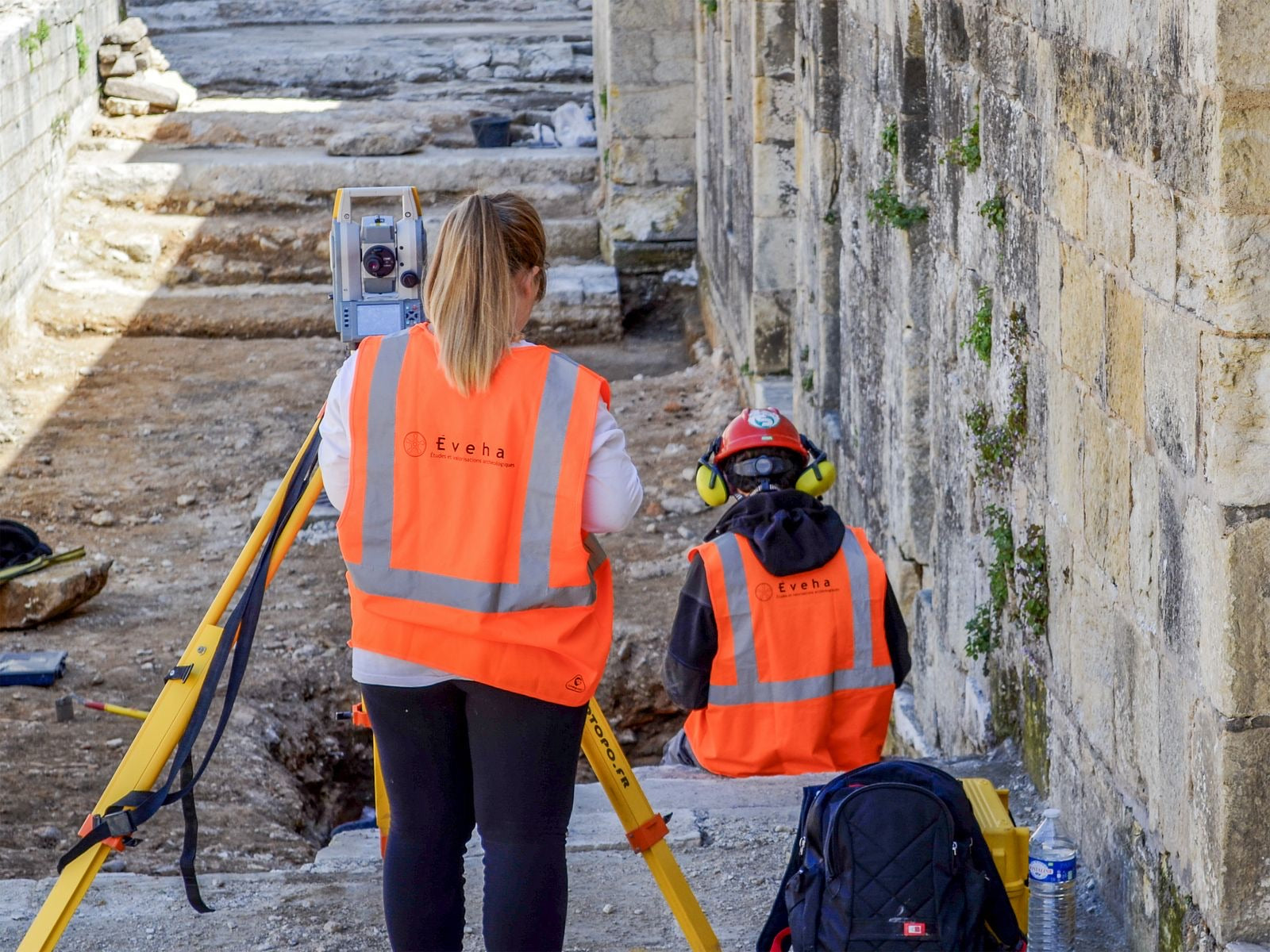

Every parcel of land you have ever stood on has a legal description, and somewhere behind that description stands a licensed surveyor who signed their name to it. That signature is the profession's entire economy: courts, lenders, builders, and neighbors all rely on it, only license holders can provide it, and the license holders are retiring faster than they are being replaced. For anyone eyeing a licensed profession with genuine scarcity on their side, surveying is one of the last open doors. This guide lays out how to become a land surveyor step by step: the education and no-degree routes, the two NCEES exams, the experience years, and what the license is worth at the end.
How to become a licensed land surveyor: the 5 steps
The path to a surveyor license runs through five steps: qualify through education or experience, pass the NCEES FS exam to become a Surveyor in Training, complete your state's required years of progressive experience, pass the PS exam plus any state-specific exams, and apply to your state licensing board. The structure is national; the details are your state's.
Here is the whole road at a glance:
| Step | What happens | Typical timeline |
|---|---|---|
| 1. Qualify | Surveying degree, related degree, or experience-based eligibility per your state | 0–4 years |
| 2. FS exam → SIT | Pass the 110-question Fundamentals of Surveying exam; state issues the SIT designation | Months |
| 3. Experience | Progressive surveying work under licensed professionals | ~4 years (state rules) |
| 4. PS exam | Pass the 100-question Principles and Practice of Surveying exam + any state exams | Months |
| 5. License | State board application, references, and issuance | Weeks to months |
Two framing facts before the details. First, licensure is a state matter: NCEES builds and administers the exams, but your state board owns eligibility, experience counting, extra exams, and the license itself, so its website travels with you through every step. Second, the timeline is honest, not discouraging — six to ten years from first field job to stamp — and nearly all of it is paid, working time in a profession that hires eagerly at every rung.
Step 1: Qualify — the degree route and the experience route
There are two doors into surveying licensure: an ABET-accredited surveying (or related) degree, which is the fastest route in every state — or an experience-based route without a degree, which most states offer at the price of additional field years. Both routes are legitimate: the degree route costs tuition and saves years, while the experience route costs years and saves tuition.
The degree route is the design case: a bachelor's in surveying, geomatics, or a related program with surveying coursework satisfies education requirements broadly, and its coursework in boundary law and adjustments pays off measurably — ABET-degree candidates pass the FS exam at 76% versus 61% for the broader pool, the largest degree effect in NCEES's published data. The experience route is surveying's honorable tradition: many states qualify candidates through years of documented field and office experience under licensed surveyors, commonly six or more years in place of the degree, sometimes with an associate degree shortening the count. It is the route by which crew chiefs become license holders, and its price is visible in that same pass-rate gap: day-to-day fieldwork teaches measurement thoroughly but covers very little boundary law, so no-degree candidates should budget serious study for the law-heavy exam content. Whichever door fits, confirm it against your state board first; California's licensure application overview shows how specific the rules get.
Pass your exam with confidence
 200,000+ Learners and Counting
Realistic practice exams for the FE, PE, FS, and PS exams are launching soon. Join the waitlist to be the first to know.
Step 2: Pass the FS exam and become a Surveyor in Training
The Fundamentals of Surveying (FS) exam is the national entry exam: 110 questions over 5 hours 20 minutes, computer-based, year-round, $225 — and passing it earns the Surveyor in Training (SIT or LSIT) designation from your state board. It is the milestone that formally starts your licensure record.
Everything about this exam has a dedicated breakdown in our FS exam guide, so here is the step-level view: the exam's biggest knowledge area is Boundary Law and Real Property Principles (19–29 questions), 63% of first-time takers pass, and the official NCEES FS page carries the registration machinery. The SIT designation that follows mirrors engineering's EIT exactly — a state-issued milestone, not a license — and in a profession this small, it is a visible signal to employers that you are on the track they need to staff their future.
Timing advice differs by route. Degree candidates should sit the FS as close to graduation as possible, while the coursework is warm. Experience-route candidates should sit it once their law and computation study is genuinely done, because field experience with traverses will not compensate for missed deed-interpretation questions.
Step 3: The experience years
Most states require around four years of progressive surveying experience under licensed professionals before the PS exam or license — "progressive" meaning growing responsibility, from rodman toward party chief toward boundary analysis, verified by the license holders who supervised it. These years are the curriculum for everything the final exam tests.
The word to build your record around is verifiable. Boards will ask your supervising licensed surveyors to attest to your work, some states want experience itemized by category (field, office, boundary), and the applicants who struggle usually have enough experience but lack the documentation to prove it. The habit that fixes it costs minutes: log projects, roles, dates, and supervisors from your first SIT week, the same discipline our PE requirements guide prescribes for engineers. And use the years deliberately: seek boundary work, not just construction staking, because the PS exam and the license both live in the boundary world, and four years of layout alone leaves the law muscles untrained.
Step 4: Pass the PS exam (and any state exams)
The Principles and Practice of Surveying (PS) exam is the final national exam: 100 questions over 7 hours, computer-based, year-round, $375 — and many states add a jurisdiction-specific exam covering local boundary law on top of it. Clearing this step completes your examination requirements.
The PS assumes everything the experience years built: its heaviest areas are professional survey practices and the legal principles that govern boundaries, tested at practice depth. Per NCEES's published data, 60% of first-time takers pass (70% among ABET-degree holders), repeat takers drop to 43%, and the average candidate sits it around age 38 — a working professional's exam in every sense. The state exam layer matters more in surveying than in engineering: boundary law is genuinely state-specific (riparian rules, recording acts, PLSS versus metes-and-bounds traditions), so a meaningful number of boards test it separately. Your board's exam page tells you whether yours does, and its passing is a scheduling item, not an afterthought.
Step 5: The license — and what it is worth
The final step is your state board's licensure application — experience verification, references, and fees — and what it buys is membership in one of the scarcest licensed professions in the country: 47,754 professional surveyor licenses existed in the US in 2025, per NCEES, and the licensed workforce skews toward retirement age. That combination of scarcity and signing authority keeps licensed surveyors in steady demand.
Spell the economics out plainly, because they are the reason to walk this whole road. Every boundary survey, subdivision plat, and legal description requires a licensed signature; the supply of signatures is small and aging (the average PS exam candidate is pushing 40, and the licensed population has hovered near flat for a decade per NCEES's historical tables); and demand from construction, land development, GIS-era mapping, and renewable-energy siting keeps growing. Licensed surveyors command a meaningful premium over unlicensed field staff, and many build firms of their own on the strength of the stamp, since the license is the business's legal foundation. The exams between you and that position are demanding but documented, and preparing for them with realistic, specification-mapped practice is exactly what our upcoming FS and PS practice exams are built for — the waitlist below will tell you the moment they launch.
Pass your exam with confidence
200,000+ Learners and Counting
Realistic practice exams for the FE, PE, FS, and PS exams are launching soon. Join the waitlist to be the first to know.
Frequently Asked Questions
How long does it take to become a licensed land surveyor?
Typically six to ten years from first field job to license: education or qualifying experience, the FS exam, roughly four years of progressive experience (state rules vary), the PS exam plus any state exams, and the board application. Nearly all of it is paid working time.
Can you become a land surveyor without a degree?
In many states, yes: experience-based routes qualify candidates through documented years under licensed surveyors, commonly six or more in place of a degree. The trade-off shows in exam data — degree holders pass the FS at 76% versus 61% for the broader pool — so no-degree candidates should study the law-heavy content deliberately.
What are the requirements for a surveyor license?
The national skeleton: qualifying education or experience, a passing FS exam (SIT designation), progressive experience under licensed surveyors, a passing PS exam plus any state-specific exams, and a state board application with verified references. Every number in that skeleton belongs to your state board.
What exams do you need to become a licensed surveyor?
Two NCEES exams — the FS (110 questions, $225) and the PS (100 questions, 7 hours, $375) — plus, in many states, a jurisdiction-specific exam covering local boundary law and rules.
What does a licensed surveyor earn?
Salaries vary widely by state and role, but the license itself commands a durable premium: only about 47,754 professional surveyor licenses existed in the US in 2025 per NCEES, every boundary document requires a licensed signature, and many license holders build their own firms on that authority.
What is a Surveyor in Training (SIT)?
The state-issued designation earned by passing the FS exam — surveying's equivalent of the engineering EIT. It marks you as formally on the licensure path and starts the experience years the license requires.
Do surveyor license requirements differ by state?
Substantially — more than engineering's. Experience years, degree alternatives, state-specific exams, and boundary-law content all vary, because boundary law itself is state law. Your state licensing board's website is the authority for every step.


FS Exam Guide: Fundamentals of Surveying Explained [2026]
The FS exam explained: the fundamentals of surveying test's 110 questions, all 7 knowledge areas, the 63% pass rate, and the road to surveyor in training.
