

How Long Is the PE Exam? Time, Breaks & Results [2026]
 A. Togay Koralturk
Last updated on August 31, 2026
7 min read
A. Togay Koralturk
Last updated on August 31, 2026
7 min read
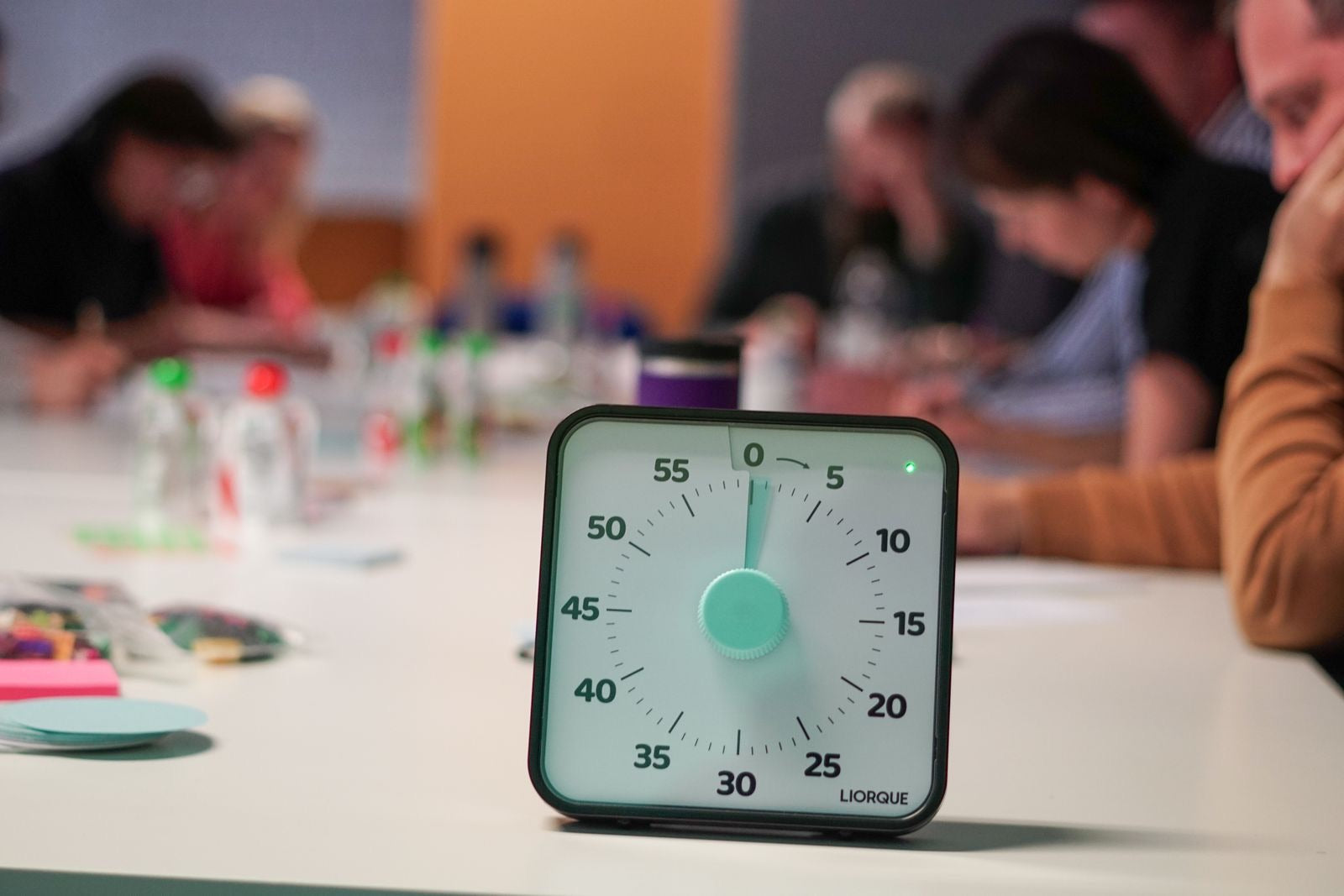

The PE exam fills a full working day, and candidates who worry about the length are usually worrying about its unknown parts: where the break falls, whether sections are timed, and how the clock actually behaves. Every one of those parts is published, and knowing them in advance changes how the exam day feels. This guide breaks down exactly how long the PE exam is, how the 9-hour appointment is spent, the pacing math per question, how the break works, when results arrive, and where the SE exam breaks all these rules.
How long is the PE exam?
Most PE exams give you 8 hours of testing time for 80 questions, inside a total appointment of 9 hours. The difference is administrative: a nondisclosure agreement, a tutorial, and the scheduled break.
Here is where the nine hours go, per the NCEES Examinee Guide:
| Appointment segment | Time |
|---|---|
| Nondisclosure agreement | 2 minutes |
| Tutorial | 8 minutes |
| Exam (80 questions, two sections) | 8 hours |
| Scheduled break (optional) | 50 minutes |
Two structural facts carry over from the FE and matter just as much here. There are no individually timed sections: the 8 hours are yours to distribute across both halves as you judge best. And the exam is computer-based and offered year-round for most disciplines at Pearson test centers, per the official NCEES PE page, so the appointment length is identical whenever you schedule. If you took the FE exam in recent years, the day will feel like that one scaled up, with fewer questions, deeper problems, and more time overall.
How much time per question do you get?
With 80 questions in 480 minutes, the PE exam allows an average of 6 minutes per question — double the FE's pace, and the difference is the point. PE problems chain judgment, code lookups, and multi-step calculations the way real practice does, and the clock is budgeted for it.
The pacing discipline that works is the FE's, adjusted for depth. Bank time on the questions your practice years make quick (and every depth has them: the working transportation engineer reads a signal-timing question the way others read a menu), flag the long chains rather than sinking into them, and return with your banked minutes. Six minutes is generous for one lookup and a calculation, but tight for a wrong turn followed by a restart. That is why it pays to recognize a stuck approach by minute three and move on, rather than pushing through to minute eleven. And the standing rule holds: wrong answers cost nothing, so no blank should survive to the end of a section.
One more clock worth respecting: the 8-hour day itself. Endurance degrades accuracy quietly, in hours six through eight, which is exactly the stretch where practice simulations pay for themselves — a topic the preparation section returns to below.
Pass your exam with confidence
 Trusted by 200,000+ Learners
Realistic practice exams for the FE, PE, FS, and PS exams are launching soon. Join the waitlist to be the first to know.
How does the PE exam break work?
The PE exam offers one optional 50-minute scheduled break, available after you complete and submit the first section — and once taken, the first section locks permanently. Unscheduled breaks are allowed anytime, but the exam clock keeps running through them.
The mechanics mirror the FE's, with double the break. Finish the first section (roughly half your 80 questions), submit it, and the system offers the break; take all 50 minutes, some, or none. You may leave the testing room and even the building — re-entry security applies — and returning late costs time from your second section. The one-way door is the strategic detail: any question you might want to revisit in section one must be resolved before you submit it, so the flag-and-review pass happens within each section, not across them.
Use the 50 minutes as the performance tool they are. Eat something substantial, move, reset — an 8-hour exam is as much a physiology problem as an engineering one, and the candidates who treat the break as part of their exam plan consistently report stronger second halves than those who wave it off.
The SE exception: a different clock entirely
The PE Structural (SE) exam ignores everything above: it runs as separate Vertical Forces and Lateral Forces components, each with its own breadth and depth sections, and its depth sections alone run 6.5 hours with 60 questions built from five long scenarios. Never plan an SE attempt using standard PE timing.
The SE is the licensure system's structural specialist credential, and its format matches its reputation: multiple components scheduled separately at $350 each, a Buildings-or-Bridges choice locked across both, depth sections composed of scenario problems rather than independent questions, and — as its pass rates attest — the most demanding grading in the NCEES catalog. Candidates deciding between the Structural depth of PE Civil (a standard 8-hour exam) and the SE should treat them as different credentials with different clocks, different costs, and a very different preparation scale. Our full SE guide covers that decision; for this page, the rule is simply: the SE's timing is its own, and its components' details live in its own specifications.
How long do PE exam results take?
PE exam results typically arrive 7 to 10 days after your exam through your MyNCEES account — with one exception: SE depth-section results take 10 to 13 weeks. Either way, you leave the testing center without a score.
The 7-to-10-day wait covers the scaled-scoring process every NCEES exam runs: your raw score (total correct, no penalty for wrong answers) converts to a scaled score against a fixed competency standard, on NCEES's schedule rather than the test center's. Results are pass or fail — no number attaches to a pass, and there is no "high pass" to chase — and failing candidates receive a diagnostic report by knowledge area, the single best foundation for a retake plan. The SE's long wait reflects its scenario-based depth sections, which involve more elaborate scoring. Once the pass posts, what remains between you and the license is your state board's paperwork: experience verification and the license application itself.
How long should you study for the PE exam?
The other clock: plan three to six months of preparation, longer than the FE's runway, because you are studying around a full-time job and the material runs deeper. The exam's 8 hours are identical for everyone; the months before it are where the outcome is decided.
The method scales up from the FE playbook: your depth's specification first, an early diagnostic, months of problem volume against the supplied references, and full-length 8-hour simulations at the end — including the 50-minute break, rehearsed as part of the performance. Our PE Civil exam guide covers the discipline-specific weighting, and the timing wisdom from the EIT path applies at this end too: NCEES data shows candidates peaking at four to five years of experience, so taking the exam on schedule means taking it when your odds are best. The realistic practice volume that fills those months is exactly what our upcoming PE practice exams are built for — the waitlist below will tell you the moment they launch.
Pass your exam with confidence
Trusted by 200,000+ Learners
Realistic practice exams for the FE, PE, FS, and PS exams are launching soon. Join the waitlist to be the first to know.
Frequently Asked Questions
How long is the PE exam?
Most PE exams provide 8 hours of testing time for 80 questions, inside a 9-hour appointment that includes a 2-minute nondisclosure agreement, an 8-minute tutorial, and an optional 50-minute scheduled break. The SE exam uses its own multi-component format.
How many questions is the PE exam?
80 questions in most disciplines, presented in two sections of roughly 40 with the break between them. The SE exam differs, with 60-question depth sections built from long scenarios.
How much time do you get per question on the PE exam?
Six minutes on average — double the FE's pace, matching the deeper, multi-step problems. Effective pacing banks time on questions your practice makes quick and flags the long chains for a second pass.
How does the PE exam break work?
After submitting the first section, you may take up to 50 minutes; the first section locks permanently once you do. You can leave the building during the scheduled break, while unscheduled breaks are allowed anytime with the clock running.
When do PE exam results come out?
Typically 7 to 10 days after the exam, posted to your MyNCEES account as pass or fail, with a diagnostic report by knowledge area for failing candidates. SE depth-section results take 10 to 13 weeks.
Does a passing PE exam result expire?
No — NCEES maintains the result permanently, and you never retake a passed exam. The license built on it is governed by your state board, with its own renewal and continuing-education rules.


PE Civil Exam Guide: Depths, Format & Pass Rates [2026]
The PE Civil exam explained: the 80-question format, all five depth exams compared, real pass rates from NCEES data, and how to pick and pass your depth.


PE Exam Cost: Fees, Retakes & the Full Bill [2026]
How much does the PE exam cost? The $400 NCEES fee, the SE exception, state application fees, retake costs, and what the whole PE license really costs.


PE Exam Requirements: Who Can Take It & When [2026]
PE exam requirements explained: the degree, FE exam, and experience you need, how state rules differ, decoupling, and paths for non-ABET and international.
