

Permeable Pavement: Types, Benefits & How It Works [2026]
 A. Togay Koralturk
Last updated on October 07, 2026
9 min read
A. Togay Koralturk
Last updated on October 07, 2026
9 min read
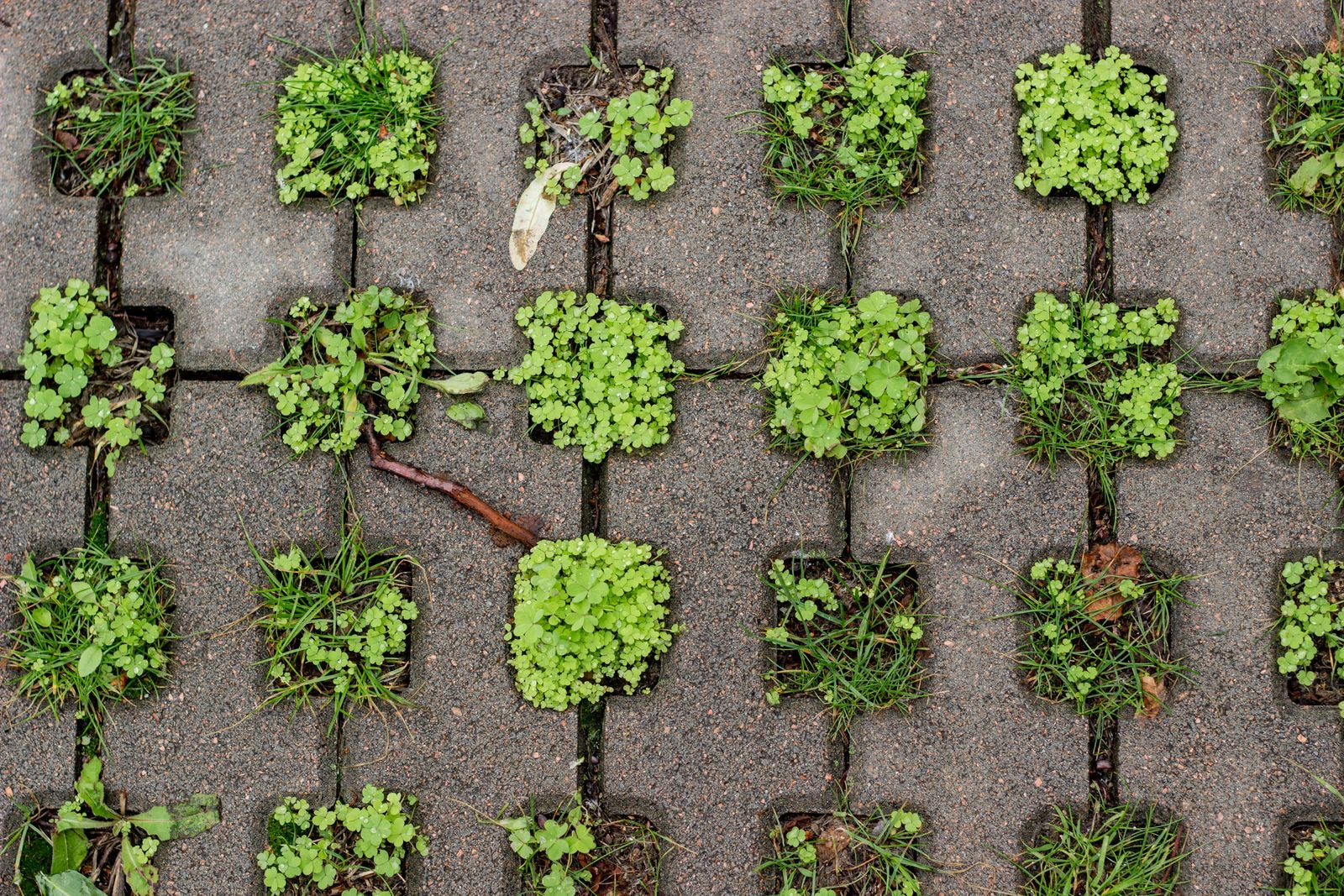

A standard parking lot has one answer to rain: get it off the surface as fast as possible, into a drain, and away to wherever the pipe goes. Permeable pavement gives the same rain the opposite instruction: come through the surface, slow down in the stone below, and soak back into the ground where you fell. That single reversal turns the largest paved surfaces on a site from the stormwater problem into part of the stormwater solution. This guide covers what permeable pavement is, how the layered system actually works, the main types, the benefits, the honest downsides, cost and lifespan, maintenance, where it works best, and how LEED rewards it.
What is permeable pavement?
Permeable pavement (also called pervious or porous pavement) is a paved surface designed to let water pass through it rather than run off it: rain and snowmelt move through pores or joints in the surface into a crushed-stone reservoir beneath, then infiltrate into the soil or drain away at a controlled rate.
The definition is easiest to hold onto as a contrast. Conventional pavement is deliberately impervious: it sheds every drop, which is exactly the behavior that makes paved sites the biggest generators of polluted runoff, as our guide to stormwater management explains. Permeable pavement keeps the useful properties of a paved surface (you can drive, park, and walk on it) while giving up the imperviousness. The EPA describes the family as alternative materials that allow precipitation to seep through the surface into the layers of stone and soil below, reducing runoff and filtering pollutants on the way. In other words, it is pavement that behaves, hydrologically, a little more like the ground it replaced.
How permeable pavement works
A permeable pavement is a layered system, not just a porous surface: water passes through the surface course, crosses a thin bedding layer, and enters an open-graded stone reservoir whose voids store it while it infiltrates into the soil below — with an overflow or underdrain handling the storms the system cannot hold.
Each layer has one job. The surface course (porous material or pavers with open joints) lets water in while carrying traffic. The bedding layer of small stone seats the surface evenly. The stone reservoir is the heart of the system: open-graded crushed stone placed so its void spaces hold water the way a bucket of marbles holds it between the marbles, buying time for infiltration. And the subgrade below is left uncompacted where possible, because compaction closes the very soil pores the system depends on. When a storm delivers more than the reservoir can store, an overflow route or a perforated underdrain carries the excess away, which means the system degrades gracefully instead of flooding.
Ready to earn your LEED credential?
 200,000+ Learners and Counting


The main types of permeable pavement
The three main types of permeable pavement are pervious concrete, porous asphalt, and permeable interlocking concrete pavers, with grid systems (plastic or concrete grids filled with gravel or turf) as the common fourth family — all named by the EPA among the standard permeable alternatives.
| Type | How it passes water |
|---|---|
| Pervious concrete | Concrete mixed with little or no fine aggregate, leaving connected pores through the slab itself |
| Porous asphalt | Asphalt with the fine particles left out, so water drains through the mat into the stone below |
| Permeable interlocking pavers | Solid concrete units with widened, stone-filled joints that act as the drainage paths |
| Grid systems | Plastic or concrete grids filled with gravel or turf, pairing high permeability with a reinforced surface |
The choice among them is practical rather than philosophical. Pervious concrete and porous asphalt give a continuous surface that looks much like conventional paving and suits larger areas like parking bays. Interlocking pavers trade a higher unit cost for easy spot repairs (lift the pavers, fix the base, relay them) and a finished look that designers often prefer for plazas and walkways. Grid systems are the light-duty specialists, at home on overflow parking and fire lanes where a reinforced green surface is welcome. All four share the same underlying anatomy from the previous section; they differ mainly in what the top layer is made of.
Benefits of permeable pavement
Permeable pavement attacks stormwater at its source: it cuts runoff volume and peak flow, filters pollutants as water passes through the stone layers, recharges groundwater, reduces the need for separate drainage infrastructure and the land it consumes, and can even reduce wintertime salt use.
The benefits compound because they all flow from the same mechanism. Water that soaks in is water that never becomes runoff, so streams receive less of the fast, dirty surge that paved sites produce; the stone layers strip sediment and other pollutants on the way down; and the ground below gets the recharge that impervious surfaces deny it. The site-design benefits follow: a parking lot that manages its own rain may shrink or eliminate the detention basin a conventional lot would require, returning that land to use. The EPA also notes a quieter winter benefit — permeable surfaces can reduce the need for road salt, because meltwater drains away instead of refreezing into ice sheets. For the broader context of why source control beats end-of-pipe control, the low impact development section of our stormwater guide tells that story.
The downsides and limitations
The main downsides of permeable pavement are a higher upfront surface cost than conventional paving, a genuine maintenance obligation (the surface clogs without periodic vacuum-sweeping), and siting limits: it suits low-speed, light-to-medium traffic areas on gentle slopes with soils that can actually infiltrate.
Honesty about the limits is what separates good specifications from disappointments. Clogging is the big one: sediment gradually fills the surface pores or joints, and a system that is never cleaned slowly turns back into ordinary pavement, which is why the maintenance section below is not optional reading. Traffic is the second: these surfaces serve parking areas, driveways, walkways, and low-speed lanes well, but they are not built for high-speed or heavy-haul roadways. Slopes matter, because steep grades move water sideways faster than it can soak downward — guidance from the Green Building Alliance puts the practical ceiling at roughly 20% grades, with flatter being better. And the soil underneath has a vote: tight clays infiltrate slowly, so systems above them lean harder on underdrains and store-and-release operation. None of these limits argues against the technology; they define where it belongs.
Permeable pavement cost and lifespan
Permeable pavement typically costs more per square foot than conventional paving — commonly estimated at around two to three times the surface cost, per the Green Building Alliance — but whole-site comparisons narrow the gap, because the permeable system can replace detention basins, piping, and inlets. With maintenance, service lives of roughly 20 to 40 years are reported.
The fair comparison is system to system, not slab to slab. A conventional lot's true price includes the drainage network and the detention capacity regulations require; a permeable lot carries much of that function inside its own section. On constrained urban sites, the land a detention basin would occupy can be worth more than the entire paving premium. Lifespan follows maintenance more than material: a vacuumed, well-built system delivers decades of service, while a neglected one loses its permeability (and with it, the reason it was built) much sooner. Treat the numbers above as planning approximations and price the specific site — the honest claim is not that permeable pavement is cheap, but that its premium buys stormwater infrastructure that would otherwise be purchased separately.
Maintenance: keeping the surface open
Permeable pavement maintenance centers on one task: removing the sediment that would otherwise clog the surface, typically by vacuum-sweeping a few times per year, plus housekeeping rules — keep soil, mulch, and sand off the surface, and repair small failures before they spread.
The maintenance story is simple once the mechanism is clear: everything that lands on the surface either washes through, gets swept away, or stays to clog it. Regenerative-air or vacuum sweepers pull fine sediment back out of pores and joints before it consolidates. The housekeeping rules protect the investment between sweepings: no stockpiled soil or mulch on the pavement, landscape areas graded so they do not wash onto it, and winter sand used sparingly or not at all (one more reason the reduced-salt behavior helps). Interlocking paver systems add an easy repair path, since individual units can be lifted and relaid. A maintenance plan with an owner and a schedule belongs in the project documents, because the surface's performance is a practice, not a property.
Where permeable pavement works best
Permeable pavement shines on low-speed, frequently paved surfaces: parking lots and overflow parking, driveways, alleys, sidewalks and plazas, and fire lanes — the places that dominate a site's impervious area but never see heavy, fast traffic.
Think of a typical commercial site plan and notice where the imperviousness actually lives: the building's roof, and then acres of parking and circulation. The parking stalls are the classic application, sometimes in a hybrid layout where drive aisles stay conventional and the stalls go permeable. Residential driveways and shared alleys are natural fits, as are campus walkways and plazas where the paver aesthetic earns its keep. Municipalities use grid and paver systems for on-street parking lanes and fire access routes. In every case the logic is the same: capture the rain where it falls, on the surfaces that would otherwise shed it, which is precisely the principle the next section shows LEED rewarding.
Permeable pavement and LEED
In LEED, permeable pavement is a core green-infrastructure strategy for the Sustainable Sites category: on the v5 BD+C scorecard, the Rainwater Management credit (SSc3, 3 points) rewards managing precipitation where it falls, and permeable paving is one of the standard ways projects do exactly that.
The fit is direct. The rainwater credit asks projects to handle rain on site using approaches that mimic natural hydrology, and a parking area that infiltrates its own precipitation converts the site's largest runoff generator into managed green infrastructure. The strategy also supports the category's broader pattern — protecting and restoring site hydrology rather than exporting the problem — and it pairs naturally with the landscape-based practices (bioswales, rain gardens) covered in our stormwater management guide. For exam candidates, permeable pavement belongs to the green-infrastructure vocabulary the exams expect you to recognize on sight, alongside the manage-rain-where-it-falls principle it embodies. That connected, systems-level understanding is how our LEED Green Associate Complete Exam Prep Pack teaches the Sustainable Sites category, with our flashcards keeping terms like pervious, porous, and permeable exam-ready.
Ready to earn your LEED credential?
200,000+ Learners and Counting
Frequently Asked Questions
What is permeable pavement?
A paved surface designed to let rain and snowmelt pass through it into a crushed-stone reservoir below, where the water infiltrates into the soil or drains away slowly. It provides a usable driving or walking surface while sharply reducing stormwater runoff.
What are the three main types of permeable pavements?
Pervious concrete, porous asphalt, and permeable interlocking concrete pavers. Grid systems filled with gravel or turf are the common fourth family. All share the same layered anatomy and differ mainly in the surface course.
What are the downsides of permeable pavement?
A higher upfront surface cost than conventional paving, a real maintenance requirement (periodic vacuum-sweeping to prevent clogging), and siting limits: it belongs on low-speed, light-to-medium-traffic surfaces with gentle slopes and soils or underdrains that can handle the water.
Is permeable pavement expensive?
The surface itself typically costs more than conventional paving — commonly cited at roughly two to three times, per the Green Building Alliance. Whole-site costs are often closer, because the system can replace detention basins, piping, and inlets and free the land they would occupy.
What is the lifespan of permeable pavement?
Reported service lives run roughly 20 to 40 years for well-built, maintained systems. Longevity tracks maintenance more than material: regular sweeping preserves permeability, while neglect lets clogging erase the system's function years early.
How is permeable pavement maintained?
Primarily by vacuum- or regenerative-air sweeping a few times a year to remove the sediment that causes clogging, plus housekeeping: keep soil, mulch, and sand off the surface, grade landscapes away from it, and repair small failures promptly.
Is permeable pavement on the LEED Green Associate exam?
Yes, as core Sustainable Sites content: recognize it as a green infrastructure and low impact development strategy that manages rain where it falls, reduces runoff, and supports the rainwater-management credit on the v5 scorecard.
Is permeable pavement on the LEED AP BD+C exam?
Yes, at project depth: the exam expects familiarity with rainwater-management strategies and documentation, where permeable paving fits among green-infrastructure options, and how site conditions like soils, slopes, and traffic shape the design.


Stormwater Management: Strategies, BMPs & LEED [2026]
Stormwater management explained: why runoff is a problem, gray vs green infrastructure, the BMP toolbox, low impact development, and how LEED rewards it.
