

Stormwater Management: Strategies, BMPs & LEED [2026]
 A. Togay Koralturk
Last updated on October 05, 2026
8 min read
A. Togay Koralturk
Last updated on October 05, 2026
8 min read
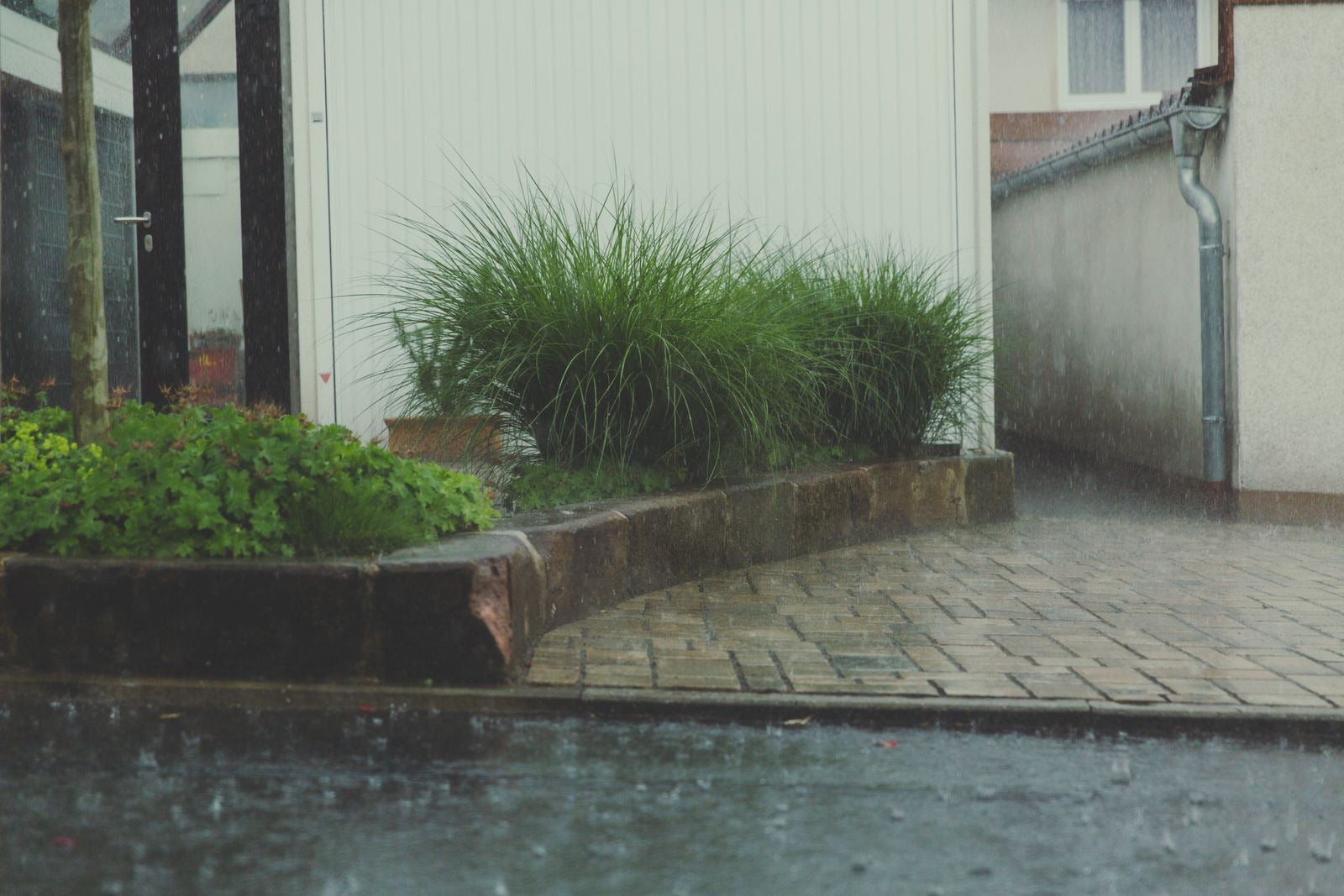

Think about what happens when rain falls on a meadow: the ground absorbs most of it, plants release some of it back into the air, and the small remainder reaches the nearest creek slowly, over hours. Now pave that meadow for a parking lot, and the same storm rushes off the surface in minutes, carrying oil, sediment, and heat straight into the creek. Managing that difference is what stormwater management is all about, and the field has been steadily shifting from pipes that move the problem to landscapes that absorb it. This guide covers what stormwater management is, why runoff does so much damage, gray versus green infrastructure, the BMP toolbox, low impact development, and how LEED rewards doing it well.
What is stormwater management?
Stormwater management is the practice of controlling the quantity and quality of runoff from rain and snowmelt: slowing it, reducing it, treating it, and where possible returning it to the ground, so that development does not translate every storm into downstream flooding, erosion, and pollution.
Let's unpack the two halves of that definition: quantity and quality. Quantity is the volume-and-speed problem. A developed site sheds water much faster and in much greater volume than the landscape it replaced, and the streams receiving that water were never shaped by flows like these. Quality is about what the water picks up along the way: sediment, oil, fertilizer, bacteria, and trash all collect on pavement between storms, and each new rain delivers that load to the nearest waterway. In the United States, the EPA regulates stormwater through permits under the Clean Water Act. However, the underlying idea is older and simpler than any regulation: development changed how water behaves on the land, and someone has to manage the difference.
Why stormwater is a problem
Because impervious surfaces rewire a site's hydrology: where soil and vegetation once absorbed, filtered, and slowly released rainfall, roofs and pavement shed nearly all of it immediately, concentrating flow, scouring streams, overwhelming drainage, and carrying accumulated pollutants directly to waterways.
Consider the same inch of rain falling on two versions of one acre. On the meadow, most of the water soaks into the ground, some returns to the air through plants (a process called evapotranspiration), and only a small share reaches the stream, slowly and filtered by soil along the way. On the paved acre, nearly the entire inch turns into surface flow within minutes and arrives at the stream as a fast, warm, polluted surge. Now multiply that difference by every developed acre in a watershed, and the consequences add up: flash flooding in places that never used to flood, stream channels eroded by repeated surges, groundwater left unreplenished because the water that should have soaked in was piped away, and waterways polluted by everything the runoff carried. Notice that none of this requires extreme weather; it is simply what ordinary rain does when it lands on ground that development has sealed.
Ready to earn your LEED credential?
 200,000+ Learners and Counting


Gray vs green infrastructure
Gray infrastructure manages stormwater with built conveyance and storage (storm sewers, culverts, detention basins) that collect runoff and move or hold it; green infrastructure manages it by mimicking the hydrology development erased, using soil, plants, and permeable surfaces to infiltrate, filter, and slow water where it falls.
The two approaches answer different questions. Gray infrastructure asks: the runoff already exists, so where do we put it? Its pipes and basins do essential work, and every developed place depends on them. Green infrastructure asks an earlier question: how much of this runoff needs to exist in the first place? A bioswale soaks up the street's first flush of runoff, a green roof holds the rooftop's share, and permeable pavement lets the parking lot absorb rain instead of shedding it. As a result, the pipe downstream has a smaller, cleaner job to do. Modern practice deliberately combines the two: green infrastructure reduces the everyday volume, gray infrastructure handles the extreme storms, and the landscape that manages the water also shades and cools the site, which is exactly the kind of double duty integrative design looks for.
The stormwater BMP toolbox
Stormwater best management practices (BMPs) are the field's standard toolbox: structural practices like bioswales, rain gardens, permeable pavement, green roofs, detention and retention basins, and cisterns, plus non-structural practices like preserving vegetation, limiting disturbance, and housekeeping that keeps pollutants off surfaces.
| BMP | What it does |
|---|---|
| Bioswales and rain gardens | Infiltrate and filter runoff through soil and plants |
| Permeable pavement | Lets paved surfaces absorb rather than shed rain |
| Green roofs | Capture and evapotranspire rooftop rainfall |
| Detention and retention basins | Hold runoff and release it slowly (or keep a permanent pool) |
| Cisterns and rain barrels | Capture rooftop water for reuse |
| Non-structural practices | Preserve soil and vegetation; prevent pollution at the source |
Two points make this table more than a list. First, BMPs are sized to different kinds of storms. The small, frequent storms carry most of the year's pollution, and treating them is green infrastructure's specialty; the rare large storms are what justify basins and overflow paths. Second, construction sites carry a temporary, mandatory version of the toolbox: erosion and sediment controls, organized under a stormwater pollution prevention plan (SWPPP). Why the special treatment? Because a site stripped bare for grading erodes more easily than at any other point in its life. The permanent BMPs arrive with the finished landscape; the temporary ones protect the watershed until then.
Low impact development (LID)
Low impact development is the design philosophy behind modern stormwater practice: manage rain as close to where it falls as possible, using many small, distributed practices integrated into the site's design, so the developed site behaves hydrologically as much like the pre-developed one as it can.
LID reverses the older habit of centralizing runoff. Instead of collecting a whole site's water and piping it to one large facility at the low corner, LID spreads the response across the site: this downspout drains to that rain garden, this drive aisle gets permeable pavement, this median becomes a swale, and each practice handles its own small area. The distributed approach wins on several fronts at once. It treats the polluted first flush where it lands, it recharges soil moisture and groundwater across the whole site instead of at a single point, and it turns stormwater areas into landscape people actually enjoy. In other words, LID is site design and water engineering working as one, which is why it reads less like a technology and more like the whole-systems habit applied to rain.
Stormwater in LEED
LEED v5 embeds stormwater across the Sustainable Sites category: the Rainwater Management credit (SSc3) offers 3 points for managing rain on site, the Minimize Site Disturbance prerequisite (SSp1) protects the soil and vegetation that make natural hydrology possible, and Enhanced Resilient Site Design (SSc4) rewards designing for the hazards water brings.
The category follows the same logic as the discipline itself. The prerequisite protects what already exists, because undisturbed soil and vegetation are stormwater infrastructure the site gets for free. The Rainwater Management credit then rewards performance: managing precipitation where it falls instead of exporting it downstream. Finally, the resilience credit connects stormwater to the bigger risk picture, since the Climate Resilience Assessment that every v5 project completes is designed to surface exactly the kind of hazard that intensifying rainfall represents. Taken together, the three items show a pattern that repeats throughout v5: protect what exists first, reward performance next, and prepare for hazards throughout.
Exam tip: Anchor the v5 Sustainable Sites facts: Minimize Site Disturbance (SSp1) is the required prerequisite and Rainwater Management (SSc3) is worth 3 points. Connect green infrastructure to the concept the exam loves: managing rain where it falls, mimicking natural hydrology.
Building a site strategy
A sound site strategy follows the water: preserve the site's absorbent assets first, minimize new imperviousness second, manage what remains with distributed green infrastructure sized to the frequent storms, and back the system with conveyance and storage for the rare big ones.
The sequence is cheapest at the top, which is why it starts before design does. Preserving soil and tree canopy costs nothing more than an early decision; replacing their function later requires building an engineered system. From there, each step shrinks the job of the next one: less pavement means less runoff to manage, distributed BMPs mean smaller pipes, and the gray backbone only handles what the landscape truly cannot. For exam candidates, stormwater is one of green building's most intuitive stories, and it rewards learning the way our Green Associate Complete Exam Prep Pack teaches: concepts connected into systems, with our flashcards keeping the vocabulary (BMP, LID, green infrastructure, the v5 credit names) exam-ready.
Ready to earn your LEED credential?
200,000+ Learners and Counting
Frequently Asked Questions
What is stormwater management?
The practice of controlling the quantity and quality of runoff from rain and snowmelt: slowing, reducing, treating, and infiltrating it so development does not convert ordinary storms into flooding, erosion, and water pollution downstream.
Why is stormwater management important?
Because impervious surfaces rewire site hydrology: runoff leaves developed sites faster, in greater volume, and dirtier than the landscapes they replaced, causing flash flooding, stream erosion, missed groundwater recharge, and pollutant delivery to waterways.
What are stormwater BMPs?
Best management practices, the field's standard toolbox: structural practices like bioswales, rain gardens, permeable pavement, green roofs, basins, and cisterns, plus non-structural practices like preserving vegetation and preventing pollution at the source.
What is the difference between gray and green infrastructure?
Gray infrastructure conveys and stores runoff with pipes, sewers, and basins; green infrastructure reduces and treats runoff by mimicking natural hydrology with soil, plants, and permeable surfaces. Modern practice combines them, green shrinking the load and gray handling extremes.
What is low impact development?
A design philosophy that manages rain as close to where it falls as possible, using many small, distributed practices (rain gardens, swales, permeable surfaces) integrated into site design, so the developed site behaves hydrologically like the pre-developed one.
How does LEED address stormwater?
Under v5's Sustainable Sites category: the Minimize Site Disturbance prerequisite (SSp1) protects existing soil and vegetation, the Rainwater Management credit (SSc3) offers 3 points for managing precipitation on site, and Enhanced Resilient Site Design (SSc4) rewards designing for water-related hazards.
Is stormwater management on the LEED Green Associate exam?
Yes, as core Sustainable Sites content: know the runoff problem, the gray-versus-green distinction, the manage-rain-where-it-falls principle, and the v5 prerequisite and credit that encode them.
Is stormwater management on the LEED AP BD+C exam?
Yes, at project depth: the exam expects familiarity with rainwater-management strategies and documentation, the site-disturbance prerequisite, and how stormwater design interacts with resilience and site credits on a real scorecard.
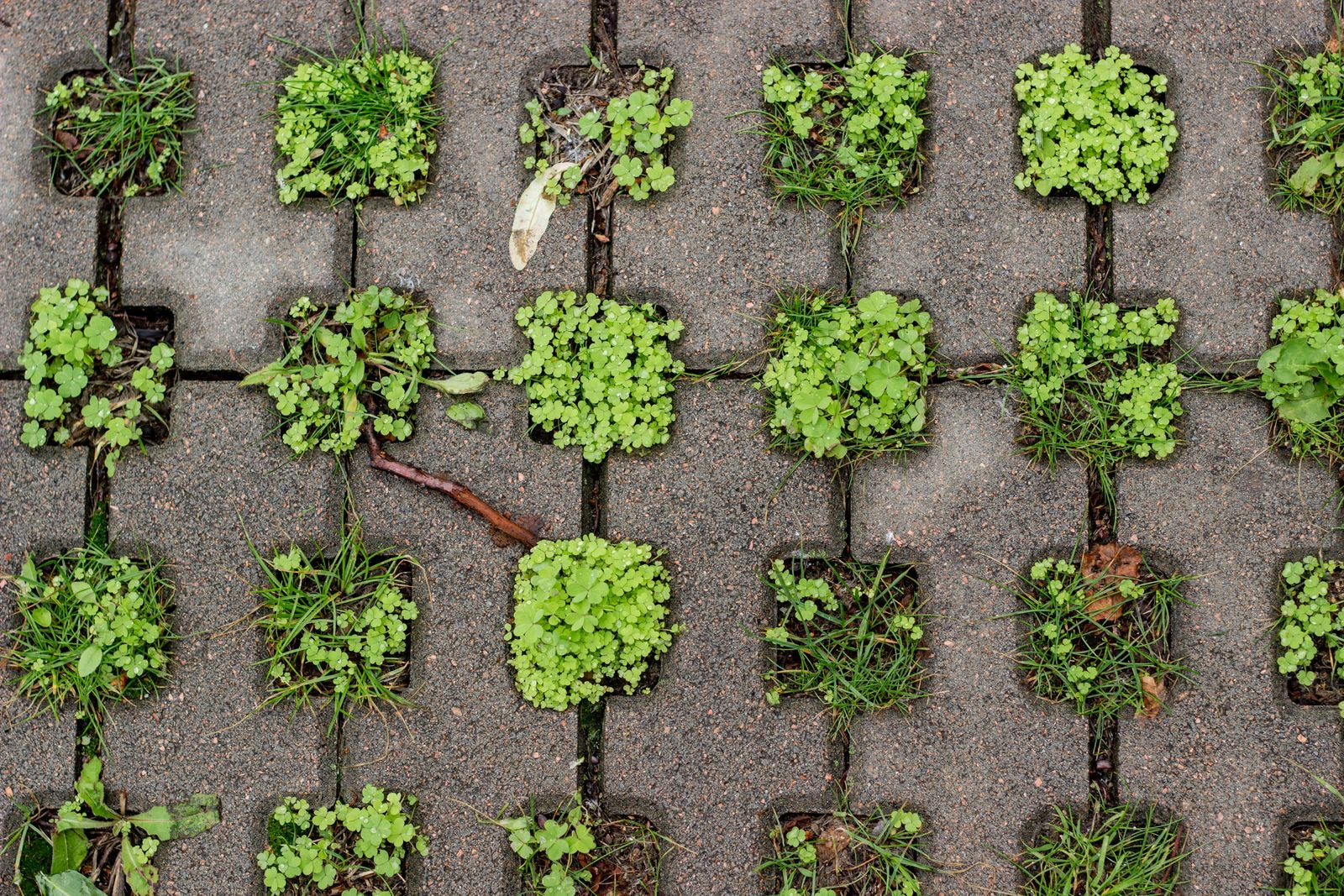

Permeable Pavement: Types, Benefits & How It Works [2026]
Permeable pavement explained: how the layered system absorbs stormwater, the main types, benefits, costs, maintenance, limitations, and how LEED rewards it.
