

LEED v5 Assessments: Climate, Human & Carbon [2026]
 A. Togay Koralturk
Last updated on October 05, 2026
8 min read
A. Togay Koralturk
Last updated on October 05, 2026
8 min read
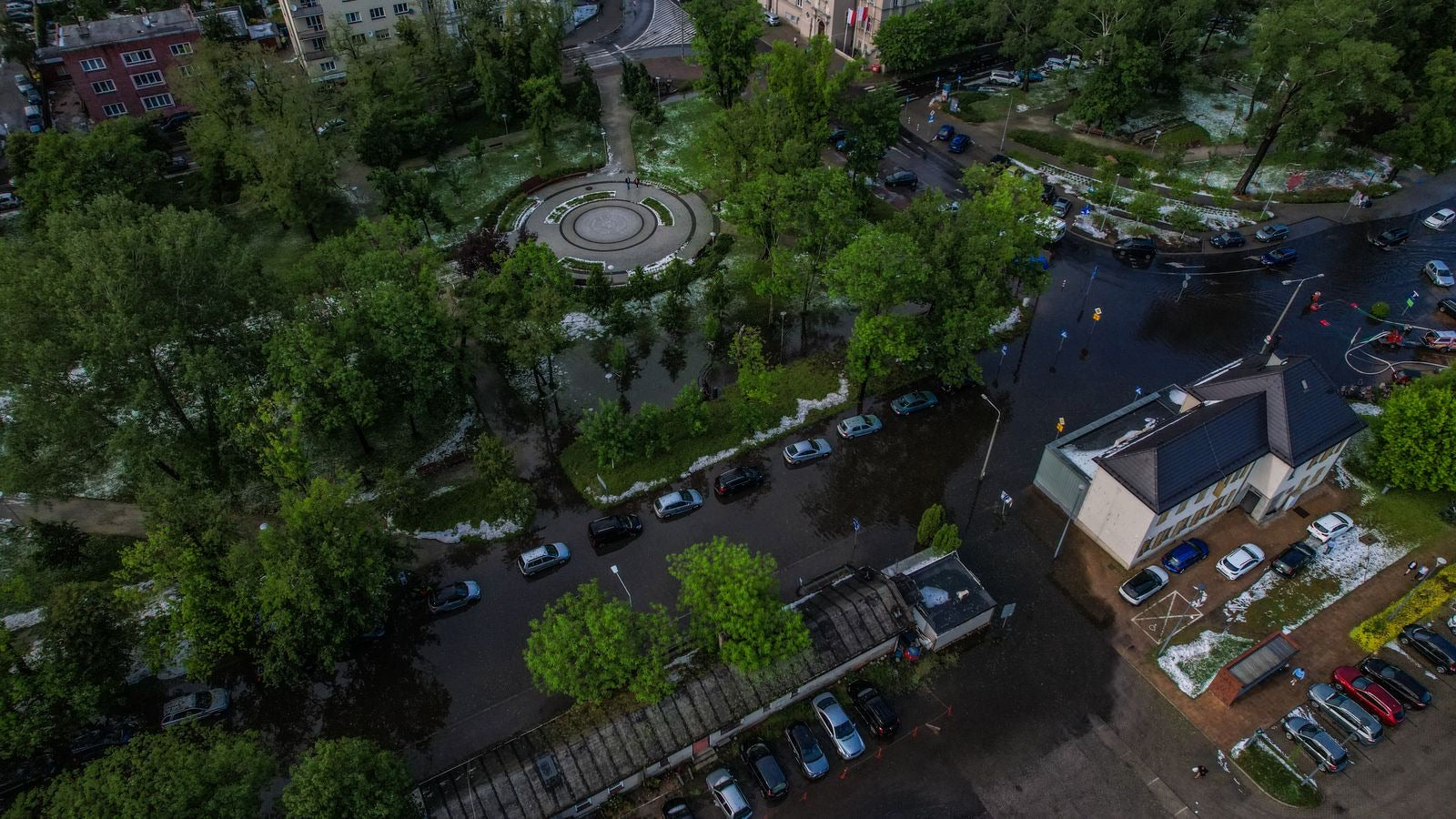

Every LEED version has a signature move, and v5's is disarmingly simple: before your project pursues a single point, it must understand three things about itself (what the climate will do to it, who its people are, and how much carbon it will be responsible for over the next quarter century). Those three questions became the three required assessments that now open the scorecard. They are the clearest single expression of what changed in LEED's newest version. This guide covers what each of the three LEED v5 assessments requires, why USGBC made them prerequisites, how they feed the credits that follow, and what they mean for exam candidates.
What are the LEED v5 assessments?
The LEED v5 assessments are three prerequisites that open the BD+C scorecard, per USGBC's v5 fact sheet: IPp1 Climate Resilience Assessment, IPp2 Human Impact Assessment, and IPp3 Carbon Assessment, all required for both New Construction and Core and Shell, all worth zero points.
Their position in the scorecard tells you how USGBC intends them to be used. They sit in the Integrative Process, Planning and Assessments category, the first thing a project team encounters, and they behave differently from almost everything else in LEED: they do not ask the project to achieve anything yet. Each is a structured act of understanding (the site's hazards, the project's people, the building's carbon future) whose findings then shape the design and the credit strategy. Think of them as LEED formalizing the discovery phase that the integrative process has always demanded: v5 simply stopped treating that understanding as optional.
The Climate Resilience Assessment (IPp1)
The Climate Resilience Assessment requires the project team to assess the site's exposure to natural hazards and a changing climate (think extreme heat, flooding, wildfire) and to carry what it finds into design decisions, so vulnerability is addressed while the design can still respond.
The prerequisite takes a vague virtue, designing for resilience, and turns it into a concrete early task. Every site carries a specific hazard profile: the coastal parcel floods, the urban lot bakes, the wildland edge burns, and a building designed without identifying that profile leaves those risks unaddressed. The assessment names it, and the naming has consequences downstream: its findings feed the credits that reward acting on them, most directly Enhanced Resilient Site Design (SSc4) and Resilient Spaces (EQc4) in the scorecard's Quality of Life family. For the wider design philosophy this belongs to, our guide to resilient building design covers how buildings are made to withstand and recover; the v5 assessment is that philosophy's mandatory first step.
Ready to earn your LEED credential?
 200,000+ Learners and Counting


The Human Impact Assessment (IPp2)
The Human Impact Assessment requires the team to understand the project's social context: who its occupants and neighbors are, what the local infrastructure and land-use reality looks like, and how the project may affect human health and experience, so social outcomes are designed rather than assumed.
This is the assessment that would have sounded surprising in an earlier LEED, and it marks how far the program's definition of performance has widened. A building's consequences do not stop at the meter: it changes who can access what, how a block feels, and whose health improves or degrades, and v5 asks every project to look at that honestly before designing. As with its climate sibling, the findings flow into a credit family, the Quality of Life impact area, whose strategies USGBC describes as human-centric approaches to health, well-being, resilience, and equity: Equitable Development (LTc2), Accessibility and Inclusion (EQc3), and Accessible Outdoor Space (SSc2) among them. The assessment supplies the local facts those credits need in order to respond to real people rather than to assumptions.
The Carbon Assessment (IPp3)
The Carbon Assessment requires a 25-year carbon projection for the project, covering energy use, refrigerants, embodied carbon, and transportation, so the team sees the building's whole carbon picture (operational and embodied, direct and induced) before designing its reductions.
The 25-year horizon is the detail that changes behavior. A short-term view can make a building that is cheap to build but expensive to run look better than it is. A quarter-century projection reveals that trade-off, and it forces the four carbon streams into one picture: the energy the building buys, the refrigerants it leaks, the embodied carbon built into its materials, and the transportation its location induces. That picture then drives the deepest credit family in v5, the Decarbonization impact area, where the assessment's operational sibling (the Operational Carbon Projection and Decarbonization Plan, EAp1) and the embodied-carbon prerequisite (MRp2) turn understanding into required action, and credits from Electrification to Reduce Embodied Carbon turn action into points.
Why v5 made the assessments required
Because prerequisites set floors, and v5 uses these three to set a floor of understanding: per USGBC, every v5 credit advances one of three impact areas (Decarbonization, Quality of Life, and Ecological Conservation and Restoration), and the assessments guarantee every project enters the scorecard knowing its own facts on the first two.
| Assessment | What it examines | What it feeds |
|---|---|---|
| Climate Resilience (IPp1) | The site's natural-hazard and climate exposure | Resilient site design and resilient spaces credits |
| Human Impact (IPp2) | The project's people, context, and health effects | Equity, inclusion, and occupant experience credits |
| Carbon (IPp3) | A 25-year projection across four carbon streams | The decarbonization plan and carbon credits |
The table's third column is the design logic of the whole arrangement. LEED cannot require every project to, say, achieve full electrification, because context varies; what it can require is that no project chooses its strategy blind. The assessments are cheap relative to construction, early enough to change anything, and produce exactly the information the point-bearing credits consume. It is the same bargain the certification process has always struck: floors are required, ambition is rewarded, and in this category the floor is knowing your own project's facts.
How the assessments connect to the integrative process
The assessments are discovery-phase work by definition: they demand the site analysis, stakeholder understanding, and performance projection that the integrative process has always placed before design, which is why they live in the same scorecard category as the Integrative Design Process credit.
The category's architecture tells the story compactly: three required acts of understanding (the assessments), then one point for teams that keep working that way (IPc1, the Integrative Design Process credit). In practice the assessments make the strongest case for running a real discovery phase, often anchored by a design charrette, because their findings are precisely the inputs a goal-setting workshop needs on the table: the hazard profile shapes the resilience conversation, the human context shapes the equity goals, and the carbon projection shapes everything from massing to mechanical strategy. Run well, the three assessments stop being paperwork and become the agenda of the project's most important meeting. The integrative process credit rewards exactly that continuation.
What the assessments mean for the LEED exams
Since the v5 exams arrived (the Green Associate exam in spring 2026 and the BD+C, O+M, and ID+C specialty exams on June 30, 2026), the three assessments are testable content, and their pattern (three required, zero points, category-opening) is exactly the kind of structure exam questions probe.
Exam tip: Memorize the trio as a unit: Climate Resilience, Human Impact, and Carbon Assessments — all three are required prerequisites (New Construction and Core and Shell) in the category that opens the v5 scorecard, and the Carbon Assessment is a 25-year projection. It is very important to remember these for exam purposes.
The assessments also reward the understanding-first study method, because they only make sense as part of v5's larger argument: impact areas name the goals, assessments supply the knowledge, prerequisites set the floors, and credits reward the climb. That connected story is how our Green Associate Complete Exam Prep Pack teaches the rating system, with the course and study guide built as one teaching system, and our flashcards drilling the assessment names and facts until they surface without effort. Candidates at the AP tier should know the trio at project depth, where the assessments stop being vocabulary and become the documents their projects actually produce.
Ready to earn your LEED credential?
200,000+ Learners and Counting
Frequently Asked Questions
What are the LEED v5 assessments?
Three required prerequisites that open the v5 BD+C scorecard: the Climate Resilience Assessment (IPp1), the Human Impact Assessment (IPp2), and the Carbon Assessment (IPp3). All are required for New Construction and Core and Shell, earn zero points, and exist to inform the design and credit strategy that follow.
What is the Climate Resilience Assessment in LEED v5?
A required assessment of the site's exposure to natural hazards and climate change, such as extreme heat, flooding, and wildfire, with the findings carried into design. It feeds the resilience credits, including Enhanced Resilient Site Design and Resilient Spaces.
What is the Human Impact Assessment in LEED v5?
A required assessment of the project's social context: its occupants, neighbors, local infrastructure and land use, and effects on human health and experience. Its findings inform the Quality of Life credits, from Equitable Development to Accessibility and Inclusion.
What is the Carbon Assessment in LEED v5?
A required 25-year carbon projection covering energy, refrigerants, embodied carbon, and transportation. It gives the team the building's whole carbon picture before design, feeding the decarbonization plan and the carbon-reduction credits.
Are the LEED v5 assessments required for all projects?
Within BD+C, yes: per USGBC's v5 scorecard, all three are prerequisites for both New Construction and Core and Shell, meaning no project certifies without completing them.
Do the assessments earn points?
No. Like all prerequisites they are worth zero points; their value is informational. The points live in the credits their findings feed, such as the resilience, equity, and decarbonization credit families.
Are the LEED v5 assessments on the LEED Green Associate exam?
Yes. The v5 Green Associate exam tests the current scorecard, and the three category-opening assessments are core structural knowledge: their names, their required status, and the 25-year carbon projection are exactly the facts exams probe.
Are the LEED v5 assessments on the LEED AP BD+C exam?
Yes, at project depth. The v5 BD+C exam expects you to know what each assessment examines, how its findings flow into credits like Enhanced Resilient Site Design or the decarbonization plan, and how the trio anchors the integrative process on a real project.


Integrative Design: Whole-Systems Buildings [2026]
Integrative design explained: how whole-systems thinking, early collaboration, and iterative analysis create better buildings, and how LEED rewards it.


Design Charrette: Meaning, Process & LEED Role [2026]
A design charrette is the intensive workshop where a building's goals take shape. Learn the charrette meaning, the process, and its role in LEED projects.
