

Demand Response: How Buildings Help the Grid [2026]
 A. Togay Koralturk
Last updated on September 30, 2026
8 min read
A. Togay Koralturk
Last updated on September 30, 2026
8 min read
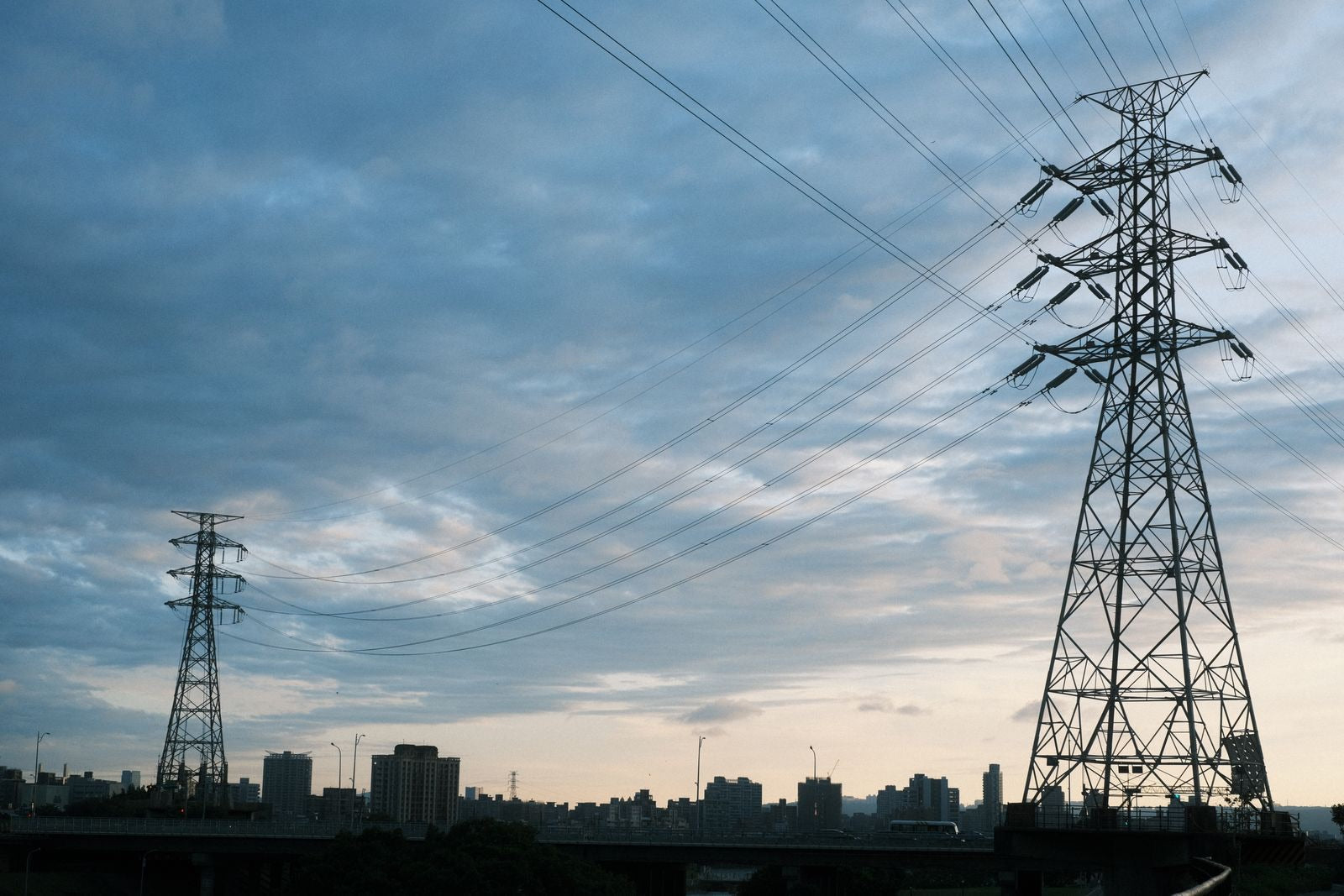

Think about a hot summer afternoon when every air conditioner in the city is running: the grid meets that spike by firing up its most expensive and dirtiest power plants, machines that exist only to run a few hundred hours a year. Demand response grew out of a simple realization about those hours: it is usually cheaper and cleaner to pay buildings to use less electricity during them than to build another plant that mostly sits idle. For building owners, this means the flexibility they already have (a thermostat nudged, a load delayed) can earn real revenue, and green building rating systems now reward it too. This guide covers what demand response is, why grids need it, how the programs and events actually work, the strategies buildings use, the grid-interactive building it is evolving into, and how LEED v5 rewards all of it.
What is demand response?
Demand response is the intentional reduction or shifting of electricity use during peak-demand periods in response to a signal from the utility or grid operator, typically in exchange for payments, bill credits, or favorable rates. Instead of the grid always adjusting supply to meet demand, demand itself briefly adjusts to help the grid.
To see why this is a big idea, consider how the grid has always worked: generation chased consumption wherever it went. Demand response recognizes that consumption itself can flex, and that a megawatt not consumed at the critical hour serves the grid exactly as well as a megawatt generated, at a fraction of the cost. The U.S. Department of Energy describes the two basic mechanisms: programs that pay participants to reduce load during called events, and time-variable pricing, where peak-hour electricity simply costs more, so shifting away from those hours pays by itself. Either way, the participating building becomes a small resource the grid can count on, which is a genuinely new role for a building to play.
Why the grid needs demand response
Because the grid must be built for its single worst hour: generation, wires, and transformers are all sized for peak demand, so the peaks (not the averages) drive the system's cost, and the dirtiest generation runs precisely when demand spikes. That is why reducing the peaks is the cheapest and cleanest way to add capacity.
Picture the summer afternoon that sets the year's record: air conditioning everywhere, every plant online, including the inefficient "peaker" plants kept in reserve for exactly this moment. Every kilowatt-hour avoided in that window displaces the grid's most expensive and most carbon-intensive supply, which is why even a modest reduction during a peak saves far more money and carbon than the same reduction would at any other hour. The IEA adds the forward-looking reason: as grids fill with wind and solar, supply itself becomes variable, and flexible demand becomes the partner that keeps a renewable-heavy system balanced. Demand response began as a way to manage rare peak events, and it is becoming a routine, continuous part of how a decarbonized grid stays balanced.
Ready to earn your LEED credential?
 200,000+ Learners and Counting


How demand response programs work
A program enrolls a building's flexible capacity in advance; when the grid approaches stress, the operator calls an event for a defined window, enrolled participants curtail or shift their loads (manually or automatically), and compensation follows as event payments, bill credits, or reduced rates.
| Program element | How it works |
|---|---|
| Enrollment | The building commits flexible load capacity in advance |
| The event | The utility or grid operator signals a defined curtailment window |
| The response | Loads are reduced or shifted, manually or by automated controls |
| Compensation | Event payments, bill credits, or favorable rate structures |
Two refinements matter in practice. The first is automation: mature programs increasingly execute through building controls, where the event signal triggers pre-programmed sequences without anyone touching a thermostat, making participation reliable for the grid and effortless for the operator. The second is pricing-based participation, where no explicit event exists at all: under time-variable rates, every peak hour is more expensive, so the building's controls shift load away from those hours as a matter of routine. Both paths reward the same underlying ability to flex, and both depend on the metering and controls that modern energy management (and LEED's required energy metering) put in place.
Demand response strategies in buildings
Commercial buildings curtail through a repertoire of moves: pre-cooling before the event and coasting through it, resetting thermostat setpoints, dimming lighting, pausing non-critical equipment, shifting EV charging, and discharging on-site batteries, with the best strategies invisible to occupants.
The skill lies in balancing occupant comfort against the savings. Pre-cooling is the classic example: run the cooling harder through the morning, while grid demand and prices are still low, then let the building's thermal mass carry occupants through the afternoon event with the chillers throttled back. Done well, nobody notices. Lighting trims of a few percent are similarly imperceptible, flexible loads like pumping or charging simply wait, and batteries make the timing itself profitable, charging when electricity is cheap and discharging into the event. Notice what every strategy assumes: controls that can execute it, meters that can prove it, and a building whose systems were commissioned to actually do what the sequence says. Demand response is one of the places where that verification work produces a direct financial return.
Grid-interactive efficient buildings (GEB)
The grid-interactive efficient building (GEB) is demand response matured into a design philosophy: a building that combines deep efficiency, smart controls, on-site storage or generation, and load flexibility to interact with the grid continuously, rather than only answering emergency calls a few times a year.
The progression is easiest to picture as a relationship with the grid. A conventional building is a pure consumer. A demand-response participant is a consumer that helps out when asked. A grid-interactive building goes one step further and becomes a partner: it shapes its load hour by hour against price and carbon signals, stores energy when supply is abundant, and flexes when supply is scarce. Efficiency comes first in the acronym for a reason: the smaller and smarter the underlying load, the more valuable every unit of flexibility becomes. In other words, this is the same whole-systems thinking of the integrative process, applied to the relationship between the building and the grid.
Demand response in LEED
LEED v5 rewards grid-friendly operation directly: the Grid Interactive credit (EAc6) offers 2 points for buildings that can interact with the grid, Reduce Peak Thermal Loads (EAc2) offers 5 points for flattening the building's own peaks, and the required Energy Metering and Reporting prerequisite (EAp4) supplies the data foundation.
The trio shows how deliberately v5 was framed around decarbonization rather than efficiency alone. A building can be efficient and still lean on the grid at the worst hour; the new Energy and Atmosphere credits pay for the shape of the load, not just its size, because on a renewable-heavy grid, when a building consumes is becoming as important as how much. Both credits are new to v5, both are pure demand-side flexibility, and both sit in the category's decarbonization impact area alongside electrification, which tells exam candidates exactly how USGBC sees the modern building: as a grid resource.
Exam tip: Remember the v5 pairing: Grid Interactive (EAc6, 2 points) rewards buildings that respond to the grid, and Reduce Peak Thermal Loads (EAc2, 5 points) rewards flattening the building's own peak. Both are Energy and Atmosphere credits serving the decarbonization impact area.
The benefits of demand response
Demand response pays three parties at once: the owner earns revenue and avoids peak rates for flexibility the building already had, the grid gets capacity cheaper than any plant, and the climate benefits because the kilowatt-hours avoided are the grid's dirtiest.
For owners, the honest framing is that the money is real but not automatic: the revenue recurs year after year, but capturing it reliably requires controls, metering, and a team that knows how far the building can flex without hurting comfort. That is why demand response usually arrives as part of a broader energy-management practice rather than as a standalone add-on. For exam candidates, the topic is a rewarding one, because it connects metering, controls, peak loads, carbon, and the grid into one story, and a story is far easier to carry into the exam than a list of labels. That connected approach is how our Green Associate Complete Exam Prep Pack teaches the entire Energy and Atmosphere category, with the course and study guide working as one system and our flashcards keeping the credit names and point values ready for exam day.
Ready to earn your LEED credential?
200,000+ Learners and Counting
Frequently Asked Questions
What is demand response?
The intentional reduction or shifting of electricity use during peak-demand periods in response to a utility or grid-operator signal, usually compensated through payments, bill credits, or favorable rates. It treats flexible demand as a grid resource, equivalent to generation.
How do demand response programs work?
Buildings enroll flexible capacity in advance; when the grid approaches stress, the operator calls an event for a defined window, participants curtail or shift loads (often automatically through building controls), and compensation follows the performance.
What is a demand response event?
The called curtailment window: a defined period, typically during extreme peaks, when the grid operator asks enrolled participants to reduce load. Buildings respond with strategies like pre-cooling, setpoint resets, dimming, and battery discharge.
What is the difference between demand response and load shedding?
Demand response is voluntary, compensated, and planned: participants choose to curtail in exchange for value. Load shedding is the involuntary version, where a grid under severe stress cuts supply outright. Demand response exists largely to keep grids far away from that point.
What is a grid-interactive efficient building?
A building that combines deep efficiency, smart controls, storage or on-site generation, and load flexibility to interact with the grid continuously, shaping its consumption against price and carbon signals rather than only responding to occasional events.
Does LEED reward demand response?
Yes. Under the v5 BD+C scorecard, the Grid Interactive credit (EAc6) offers 2 points and Reduce Peak Thermal Loads (EAc2) offers 5 points, both within the Energy and Atmosphere category's decarbonization focus, on top of the required energy metering prerequisite.
Is demand response on the LEED Green Associate exam?
Yes, within the Energy and Atmosphere content: understand the concept (shifting or reducing load in response to grid signals), why it cuts costs and emissions, and that v5 rewards grid interaction and peak reduction with dedicated credits.
Is demand response on the LEED AP BD+C exam?
Yes, at project depth: the v5 exam expects you to know the relevant credits (Grid Interactive, Reduce Peak Thermal Loads), the strategies buildings use to earn them, and how metering and controls make the flexibility verifiable.

Energy Use Intensity (EUI): The Core Metric [2026]
Energy use intensity (EUI) explained: the formula, site vs source EUI, what counts as a good number, and how this metric drives benchmarking and LEED.

Energy Modeling: How It Works, Software & LEED [2026]
Energy modeling explained: how building energy simulation works, the inputs and outputs, the major software tools, and the LEED credits that run through it.

Building Commissioning: Process, Types & LEED [2026]
Building commissioning explained: the process from OPR to occupancy, the commissioning authority, retro- and re-commissioning, and what LEED requires.
