

Energy Use Intensity (EUI): The Core Metric [2026]
 A. Togay Koralturk
Last updated on October 05, 2026
8 min read
A. Togay Koralturk
Last updated on October 05, 2026
8 min read
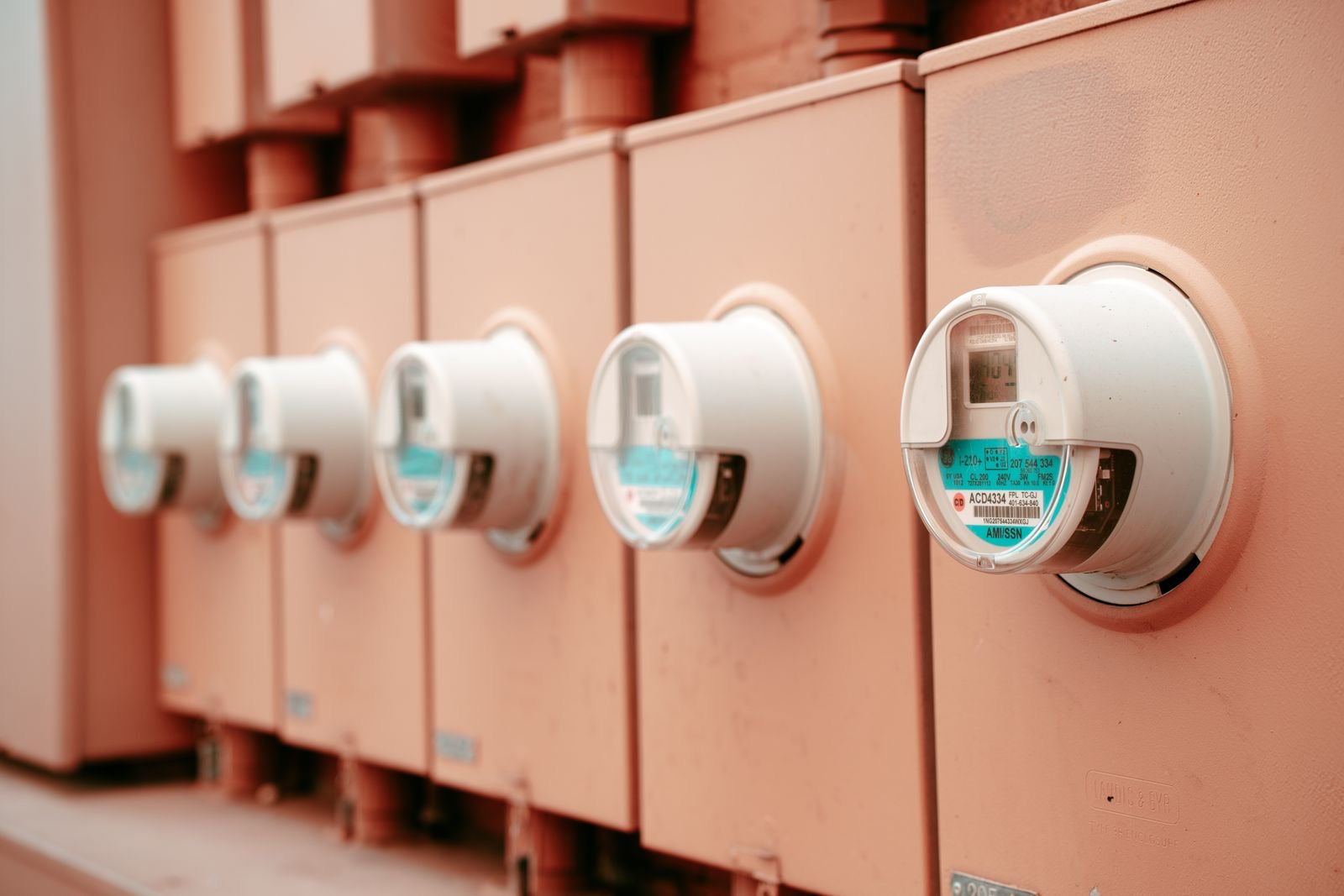

Ask what a building "uses" and the answer is a number with no meaning on its own: 4 million kilowatt-hours would be alarming for a small school and impressive for a hospital campus. Buildings needed what cars have had for decades, a consumption figure normalized to something fair, and energy use intensity is that figure: energy per square foot per year. With that one number, a portfolio manager can rank fifty buildings, a code official can set a target, and a design team can make a measurable promise. This guide covers what EUI is, how to calculate it, the site-versus-source distinction, what counts as a good number, and how the metric runs through benchmarking and LEED.
What is energy use intensity (EUI)?
Energy use intensity (EUI) is a building's total annual energy consumption divided by its gross floor area, expressed by ENERGY STAR as energy per square foot per year: in US practice, thousands of Btu (kBtu) per square foot per year, and generally, a lower EUI signifies better energy performance.
The metric's power comes from what it removes. Raw consumption mostly measures size: big buildings use more energy because they are big, which tells you nothing about whether they are run well. Dividing by floor area strips size out of the comparison, leaving intensity, the same move that turns fuel consumed into miles per gallon. What remains reflects the things owners and designers actually control (envelope, systems, controls, operations) plus the things they must benchmark around, like climate and building type. The result is one number that any metered building can compute, which is why EUI became the shared language of energy codes, benchmarking ordinances, and performance-minded rating systems alike.
How to calculate EUI
Divide the building's total energy use for one year (all fuels, converted to a common unit, kBtu in the US or gigajoules metrically) by its gross floor area: a building consuming 5,000,000 kBtu across 50,000 square feet has an EUI of 100 kBtu per square foot per year.
The two inputs each carry one trap. Total energy means all energy: electricity, natural gas, district steam or chilled water, anything crossing the property line, converted to a common unit before summing, because an electricity-only EUI flatters any building that heats with gas. Floor area means gross floor area, measured consistently, since creative area definitions are the easiest way to accidentally (or deliberately) improve a number without touching a kilowatt. Handled honestly, the calculation is utility-bill arithmetic, which is precisely the point: EUI was designed so that any building with twelve months of bills and a floor plan can produce its own score, no simulation required.
Ready to earn your LEED credential?
 200,000+ Learners and Counting


Site EUI vs source EUI
Site EUI counts the energy delivered to the building as measured at the meter; source EUI counts the total raw energy behind that delivery, including generation and transmission losses. Per ENERGY STAR, both appear in Portfolio Manager, and the EPA relies on source EUI as the basis for the ENERGY STAR score.
| Metric | What it counts |
|---|---|
| Site EUI | Energy consumed at the building, as metered |
| Source EUI | Total raw energy, including generation and transmission losses |
The distinction matters because a kilowatt-hour of electricity and a kilowatt-hour of gas are not equal upstream: the electricity arrived after conversion and transmission losses at the power plant and grid, so its source-energy footprint is larger than its meter reading. Site EUI answers the operator's question (what does this building consume?); source EUI answers the system's question (what does this building demand from the energy infrastructure?), which is why benchmarking that compares buildings fairly across fuel mixes leans on source. Neither is wrong; they are two camera angles on the same building, and knowing which one a number represents is the first step of reading it.
What is a good EUI?
A good EUI is low for its building type and climate, and only that comparison means anything: ENERGY STAR's national medians illustrate the spread, with K-12 schools at a median source EUI of about 104 kBtu per square foot per year while hospitals run about 427.
The hospital is not four times worse-run than the school. It is a different kind of machine, running around the clock with ventilation, equipment, and reliability demands a classroom never sees. That is why every serious use of EUI benchmarks within type: offices against offices, labs against labs, each against the medians for their category, with climate as the second adjustment. The practical readings follow. Against your own history, a falling EUI is improvement in one number. Against your type's median, your percentile is your report card, which is exactly how benchmarking platforms score buildings. And a "good" absolute number quoted without a building type attached is a red flag that someone is comparing schools to hospitals.
How EUI is used
EUI is the working unit of building energy accountability: benchmarking platforms score buildings with it, city disclosure ordinances collect and publish it, portfolio owners rank assets by it, and design teams set EUI targets that energy models are then asked to hit.
Follow the metric through a building's life. In design, an EUI target makes "energy efficient" a specific, measurable commitment: the energy model predicts the design's EUI, and options are judged by what they do to it. At occupancy, utility data starts generating the real number, which ENERGY STAR's Portfolio Manager converts and benchmarks against national medians by property type. From there it becomes management: the operator watching for drift, the owner ranking the portfolio, and in a growing number of cities, the disclosure ordinance putting the number where tenants and buyers can see it. No other energy number in buildings runs all the way from the first sketch to the annual report, and that reach is exactly why EUI carries so much weight.
EUI in LEED
LEED runs on the data EUI is made from: the v5 scorecard's required Energy Metering and Reporting prerequisite (EAp4) guarantees every certified building measures and reports its energy, and the rating system's performance orientation (from the efficiency prerequisite to O+M's measured operations) speaks EUI natively.
The connections span the certification family. On the design side, the Minimum Energy Efficiency prerequisite (EAp2) sets the floor and the modeling-driven credits climb from it, with EUI as the natural language for targets and results. On the operations side, the O+M rating system certifies measured performance, where a building must be occupied at least a year before certifying and recertifies every three years, a rhythm that is effectively EUI accountability on a cycle. And v5's metering prerequisite makes the whole loop possible: a building that meters and reports can always compute its intensity, compare it, and act on it.
Exam tip: Remember EUI as annual energy use divided by floor area (kBtu per square foot per year in the US), lower = better within the same building type, and the site vs source distinction: site is metered consumption, source adds generation and transmission losses.
How to lower a building's EUI
Lowering EUI means reducing the numerator: reduce loads with the envelope and lighting, meet the remaining loads with efficient, well-controlled systems, verify the systems actually perform as designed, and keep operations honest with metering, because floor area is fixed but consumption never is.
The sequence mirrors good energy practice generally. Loads come first: a better envelope, right-lit spaces, and equipment that sips make every downstream system's job smaller. Systems come second, sized to the reduced loads rather than to habit. Verification is the step that separates the intended EUI from the achieved one, which is exactly what commissioning exists to close, and operations carry it from there, with metering catching the drift and flexibility strategies like demand response shaping when the remaining energy is used. For exam candidates, EUI is a friendly topic, because one formula ties metering, benchmarking, and performance together; our Green Associate Complete Exam Prep Pack teaches the whole energy story it belongs to as one system, and our flashcards keep the definitions and distinctions instant for exam day.
Ready to earn your LEED credential?
200,000+ Learners and Counting
Frequently Asked Questions
What is energy use intensity (EUI)?
A building's total annual energy use divided by its gross floor area, expressed as energy per square foot per year (kBtu per square foot per year in US practice), per ENERGY STAR. It normalizes consumption for size, making buildings comparable, and lower generally signifies better performance.
How is EUI calculated?
Add all the building's energy for one year (electricity, gas, district energy, converted to a common unit like kBtu), then divide by gross floor area. A building using 5,000,000 kBtu across 50,000 square feet has an EUI of 100 kBtu per square foot per year.
What is the difference between site EUI and source EUI?
Site EUI counts energy as metered at the building; source EUI counts the total raw energy behind it, including generation and transmission losses. Per ENERGY STAR, the EPA relies on source EUI as the basis for the ENERGY STAR score because it compares fuel mixes fairly.
What is a good EUI?
Low for the building's type and climate. ENERGY STAR's medians show the spread: around 104 kBtu per square foot per year for K-12 schools versus around 427 for hospitals, so a number is only meaningful against the right peer group's median.
Why does EUI matter?
It is the shared metric of building energy accountability: design teams set EUI targets, benchmarking platforms and city disclosure ordinances score buildings with it, and owners track portfolios by it, from the first energy model to decades of operations.
How do you lower a building's EUI?
Reduce loads first (envelope, lighting, efficient equipment), serve the remaining loads with well-controlled systems, verify performance through commissioning, and manage operations with metering so drift gets caught. Floor area is fixed, so consumption is the part you can change.
Is EUI on the LEED Green Associate exam?
Yes, as core energy literacy: know the definition (annual energy divided by floor area), the units, that lower is better within a building type, and the site-versus-source distinction.
Is EUI on the LEED AP BD+C exam?
Yes, at project depth: the exam expects comfort with EUI as the working language of energy targets, modeling results, and the metering and reporting requirements that make measured performance possible.

Energy Modeling: How It Works, Software & LEED [2026]
Energy modeling explained: how building energy simulation works, the inputs and outputs, the major software tools, and the LEED credits that run through it.


Demand Response: How Buildings Help the Grid [2026]
Demand response explained: how buildings reduce or shift electricity use during peak events, the programs and incentives, and how LEED v5 rewards it all.

Building Commissioning: Process, Types & LEED [2026]
Building commissioning explained: the process from OPR to occupancy, the commissioning authority, retro- and re-commissioning, and what LEED requires.
