

ASHRAE 90.1 Explained: Scope, Compliance & LEED v5 [2026]
 A. Togay Koralturk
Last updated on November 03, 2026
10 min read
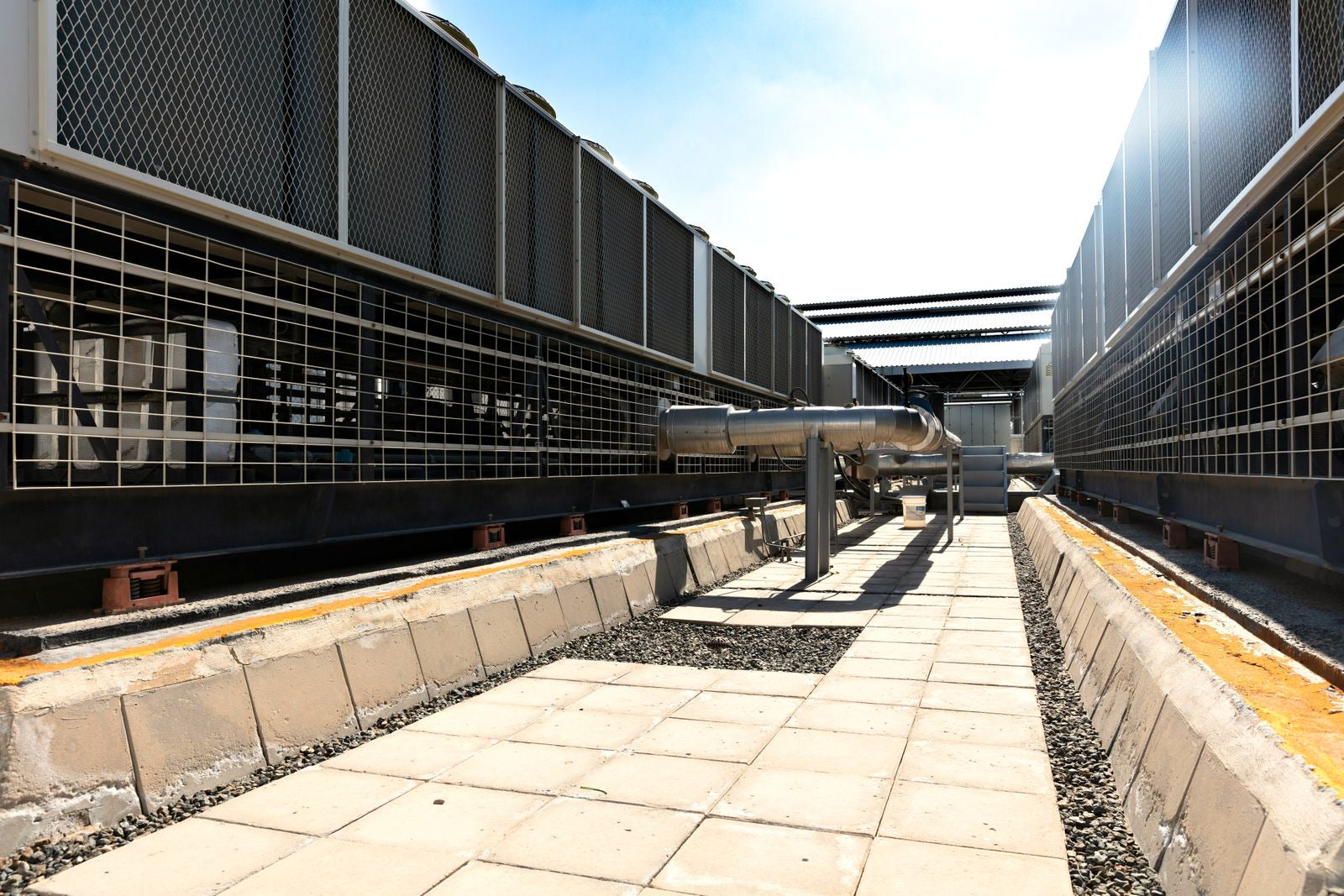

Every commercial building in the United States is designed against a rulebook that most of its occupants will never hear of, yet it decides how thick the insulation is, how efficient the air conditioners are, and how many watts the lights may draw. That rulebook is ASHRAE 90.1, and for architects and engineers it is as familiar as the structural code. It also happens to be the energy baseline that LEED measures every building against. This guide explains what ASHRAE 90.1 covers, how projects comply with it, and how LEED v5 uses it.
What is ASHRAE 90.1?
ASHRAE 90.1 is an energy standard that sets the minimum energy efficiency requirements for the design and construction of buildings other than low-rise residential buildings. Its formal name is ANSI/ASHRAE/IES Standard 90.1, and it is the most widely used reference for commercial building energy codes in the United States.
The standard is published by ASHRAE (the American Society of Heating, Refrigerating and Air-Conditioning Engineers) together with the Illuminating Engineering Society (IES), and it is approved as an American National Standard by ANSI (the American National Standards Institute), which explains the three acronyms in its full name. Its roots go back to 1975, when the first version, Standard 90, was issued in the wake of the 1970s oil crisis, as the country looked for ways to cut the energy its buildings consumed.
The most important word in the definition is minimum. ASHRAE 90.1 does not describe an exemplary building; it describes the least efficient building that is still acceptable. That is exactly why it is so useful as a benchmark: a building that merely complies sits at the baseline, and efficiency programs such as LEED measure how far a design goes beyond it.
Consider a developer planning a new four-story office building in a city that has adopted ASHRAE 90.1. The architect must meet its insulation and window requirements, the mechanical engineer must select equipment above its efficiency minimums and include the controls it requires, and the lighting designer must stay within its lighting power limits and install automatic shutoff controls. Each discipline has its own chapter of obligations, and the building only complies when all of them are met.
What buildings does ASHRAE 90.1 apply to?
ASHRAE 90.1 applies to all buildings except low-rise residential buildings. That includes offices, schools, hospitals, retail stores, warehouses, hotels, and residential buildings of four stories or more. Single-family homes, multifamily buildings under four stories, and mobile and modular homes fall outside its scope.
The standard applies to more than brand-new buildings. It covers:
- New buildings and their systems.
- Additions to existing buildings.
- Alterations, meaning new systems and equipment installed in existing buildings. For example, when a building owner replaces an aging rooftop air conditioner, the new unit must meet the efficiency requirements in force at the time.
Residential buildings follow a different path depending on their height. A 20-story apartment tower is designed to ASHRAE 90.1, while a three-story apartment building and a single-family house generally follow the residential provisions of the energy code that applies where they are built (usually the IECC, discussed below).
Ready to earn your LEED credential?
 200,000+ Learners and Counting


What ASHRAE 90.1 covers, section by section
ASHRAE 90.1 is organized by building system: the building envelope, heating, ventilating, and air conditioning (HVAC), service water heating, power, lighting, and other equipment. Each system section contains mandatory provisions that every project must meet, plus prescriptive requirements that can be met directly or traded off through energy modeling.
| ASHRAE 90.1 section | What it regulates | Example requirements |
|---|---|---|
| Section 5: Building envelope | Roofs, walls, floors, windows, doors, and air leakage | Minimum insulation values, maximum window U-factor and solar heat gain, a continuous air barrier |
| Section 6: HVAC | Heating, cooling, and ventilation equipment and controls | Equipment efficiency minimums, economizers, energy recovery, setback controls |
| Section 7: Service water heating | Domestic and process hot water systems | Water heater efficiency, pipe insulation, temperature controls |
| Section 8: Power | Electrical distribution and plug loads | Voltage drop limits, automatic receptacle control, energy monitoring |
| Section 9: Lighting | Interior and exterior lighting power and controls | Lighting power density limits, occupancy sensors, daylight-responsive controls |
| Section 10: Other equipment | Motors, pumps, elevators, and escalators | Motor efficiency minimums and equipment controls |
The newest edition adds a section requiring additional efficiency credits: beyond the system-by-system minimums, projects must earn a set number of credits by choosing from a menu of extra measures, such as higher-efficiency equipment, on-site renewable energy, or load management. The surrounding sections handle administration and the compliance paths described next.
Two terms from the table come up often. Lighting power density (LPD) is the installed lighting power divided by floor area, expressed in watts per square foot, and the standard caps it by building or space type. An economizer is an HVAC control that uses cool outdoor air for "free cooling" instead of running the compressors, a simple idea that saves a great deal of energy in mild weather.
ASHRAE 90.1 compliance paths, including Appendix G
ASHRAE 90.1 offers two broad routes to compliance. The prescriptive path requires meeting each requirement as written. The performance paths, the Energy Cost Budget Method and the Appendix G Performance Rating Method, use whole-building energy modeling to show that the proposed design performs at least as well as a compliant baseline.
| Compliance path | How compliance is shown | Typical use |
|---|---|---|
| Prescriptive path | Every component meets its listed requirement, section by section | Simpler buildings and teams that want a checklist approach |
| Building envelope trade-off | Envelope components trade against each other, such as more glass offset by better insulation | Designs that miss one envelope requirement but beat others |
| Energy Cost Budget (ECB) Method | Modeled annual energy cost of the design is less than or equal to that of a budget building meeting the prescriptive rules | Code compliance with flexibility across systems |
| Appendix G Performance Rating Method | Modeled performance is compared with a fixed baseline using a performance index that must meet a target | Code compliance and rating beyond-code programs such as LEED |
Whatever path a team chooses, the mandatory provisions of each section still apply. These cover items that cannot be traded away, such as basic controls, air leakage limits, and equipment efficiency floors.
Appendix G deserves special attention because it is the path LEED relies on. It was originally created to measure how far a design goes beyond the standard, and it later became a code-compliance path as well. Its key feature is a stable baseline: instead of rebuilding the baseline building every time the standard tightens, Appendix G keeps one fixed baseline and raises the target performance index for each new edition. As a result, the same energy model can be used to show code compliance, calculate LEED points, and compare buildings designed under different editions. Our guide to energy modeling explains how these models are built and which software teams use.
How often is ASHRAE 90.1 updated?
ASHRAE 90.1 is under continuous maintenance, so changes called addenda are approved throughout the year, and a new consolidated edition is published every three years. Each edition is more stringent than the last, but the edition a project must follow depends on what its state or city has adopted.
Because ASHRAE is a standards organization, not a government, a new edition becomes mandatory only when a jurisdiction adopts it into law. The federal government shapes that process. Each time a new edition is published, the U.S. Department of Energy must issue a determination on whether it improves energy efficiency, and after a positive determination for the commercial standard, every state must certify within two years that its commercial energy code meets or exceeds it. The DOE Building Energy Codes Program tracks these determinations and each state's status.
In practice, adoption still varies. Some states adopt each new edition quickly, others lag behind by one or more editions, and some cities adopt stricter codes than their state. That is why the first question on any project is not "what is the latest edition?" but "which edition has our jurisdiction adopted?" Building rating programs add a third answer, since they can require an edition of their own, as LEED does below.
ASHRAE 90.1 vs IECC
ASHRAE 90.1 is an energy standard published by ASHRAE, while the IECC (International Energy Conservation Code) is a model energy code published by the International Code Council. The IECC covers both commercial and residential buildings, and its commercial provisions accept ASHRAE 90.1 as an alternative way to comply.
| Feature | ASHRAE 90.1 | IECC |
|---|---|---|
| Published by | ASHRAE with IES, approved by ANSI | International Code Council (ICC) |
| Document type | Consensus standard, written in standard language | Model code, written in code language for direct adoption |
| Buildings covered | All buildings except low-rise residential | Commercial and residential, in separate provisions |
| Federal pairing | DOE's reference for commercial buildings | DOE's reference for residential buildings |
For a commercial project in a jurisdiction that adopted the IECC, the design team can usually choose between the IECC's own commercial provisions and ASHRAE 90.1. Teams often pick 90.1 when they plan to use energy modeling or pursue LEED, since the same model serves both purposes. Low-rise residential buildings, by contrast, follow the IECC's residential provisions or a state residential code, because ASHRAE 90.1 does not cover them.
ASHRAE 90.1 in LEED v5
ASHRAE 90.1 is the energy backbone of LEED v5. The Minimum Energy Efficiency prerequisite requires compliance with it, the Enhanced Energy Efficiency credit awards up to 10 points for beating it, the Fundamental Commissioning prerequisite follows its commissioning requirements, and the envelope credit builds on its envelope rules.
Here is how ASHRAE 90.1 appears in LEED v5 for Building Design and Construction (BD+C):
| LEED v5 BD+C requirement | Type | Role of ASHRAE 90.1 |
|---|---|---|
| EAp2 Minimum Energy Efficiency | Prerequisite | Every project must comply with ASHRAE 90.1 through any of its compliance paths |
| EAc3 Enhanced Energy Efficiency | Credit (10 points New Construction, 7 Core and Shell) | Points for performing better than ASHRAE 90.1, shown prescriptively or with the Appendix G method |
| EAp3 Fundamental Commissioning | Prerequisite | Follows ASHRAE 90.1's commissioning requirements for systems, controls, and the envelope, with added LEED provisions |
| EAc2 Reduce Peak Thermal Loads | Credit (up to 5 points) | The envelope must first meet ASHRAE 90.1's envelope requirements on its own |
Which edition does LEED v5 require? In LEED v5, the Minimum Energy Efficiency prerequisite accepts either of the two most recent editions of ASHRAE 90.1 for projects registering before January 1, 2028. Projects registering on or after that date must use the newer edition, which raises the efficiency floor. When the older edition is used, LEED adds an envelope backstop: a project that proves compliance through energy modeling cannot use efficient equipment to excuse a weak envelope. The newer edition builds the same limit in. Our guide to the building envelope explains why LEED v5 protects envelope performance this way.
Earning points beyond the minimum. The Enhanced Energy Efficiency credit is one of the largest single credits in LEED v5. Teams earn points either prescriptively or through the Appendix G Performance Rating Method; the Energy Cost Budget Method is not used for this credit. A project that complies prescriptively with the newer edition of ASHRAE 90.1 earns 4 points under New Construction (2 under Core and Shell) for that edition's higher efficiency floor.
Commissioning. Fundamental commissioning in LEED v5 follows ASHRAE 90.1's commissioning requirements, applies to every project without the exceptions the standard allows, and requires the owner to name an experienced commissioning provider by the end of design development. Our guide to building commissioning walks through the full process.
For exam candidates, the relationship between LEED and ASHRAE 90.1 is a recurring theme: LEED uses the standard as its baseline, then rewards projects for going beyond it. Our LEED AP BD+C exam prep covers these energy requirements credit by credit, and our LEED Green Associate study guide explains the baseline concept from the ground up.
Ready to earn your LEED credential?
200,000+ Learners and Counting
Frequently Asked Questions
What is the ASHRAE 90.1 standard?
ASHRAE 90.1 is the energy standard that sets minimum energy efficiency requirements for buildings other than low-rise residential buildings. It covers the building envelope, HVAC, service water heating, power, lighting, and other equipment, and it is the basis for most U.S. commercial energy codes.
What buildings does ASHRAE 90.1 apply to?
It applies to all buildings except low-rise residential buildings, including offices, schools, hospitals, retail, warehouses, and residential buildings of four or more stories. It covers new buildings, additions, and new systems installed in existing buildings.
Does ASHRAE 90.1 require commissioning?
Yes. Recent editions of ASHRAE 90.1 include commissioning requirements for building systems, controls, and the envelope, with certain exceptions. LEED v5 builds on these requirements and applies them to every project.
What are ASHRAE standards for HVAC?
Three ASHRAE standards shape most HVAC design: ASHRAE 90.1 sets energy efficiency requirements, ASHRAE 62.1 sets ventilation rates for acceptable indoor air quality, and ASHRAE 55 defines conditions for thermal comfort.
Is ASHRAE 90.1 a building code?
Not by itself. ASHRAE 90.1 is a standard, and it becomes enforceable only when a state or city adopts it into its energy code, either directly or through the IECC, which accepts it as an alternative compliance path for commercial buildings.
What is the difference between ASHRAE 90.1 and the IECC?
ASHRAE 90.1 is a standard published by ASHRAE that covers all buildings except low-rise residential. The IECC is a model code published by the International Code Council that covers both commercial and residential buildings and accepts ASHRAE 90.1 for commercial compliance.
Is ASHRAE 90.1 on the LEED Green Associate exam?
Yes, at a conceptual level. Green Associate candidates should know that ASHRAE 90.1 is the energy standard LEED uses as its baseline and that LEED rewards projects for performing better than it.
Is ASHRAE 90.1 on the LEED AP BD+C exam?
Yes, in detail. AP BD+C candidates should understand how ASHRAE 90.1 underpins the Minimum Energy Efficiency prerequisite, the Enhanced Energy Efficiency credit, the Appendix G Performance Rating Method, and fundamental commissioning in LEED v5.
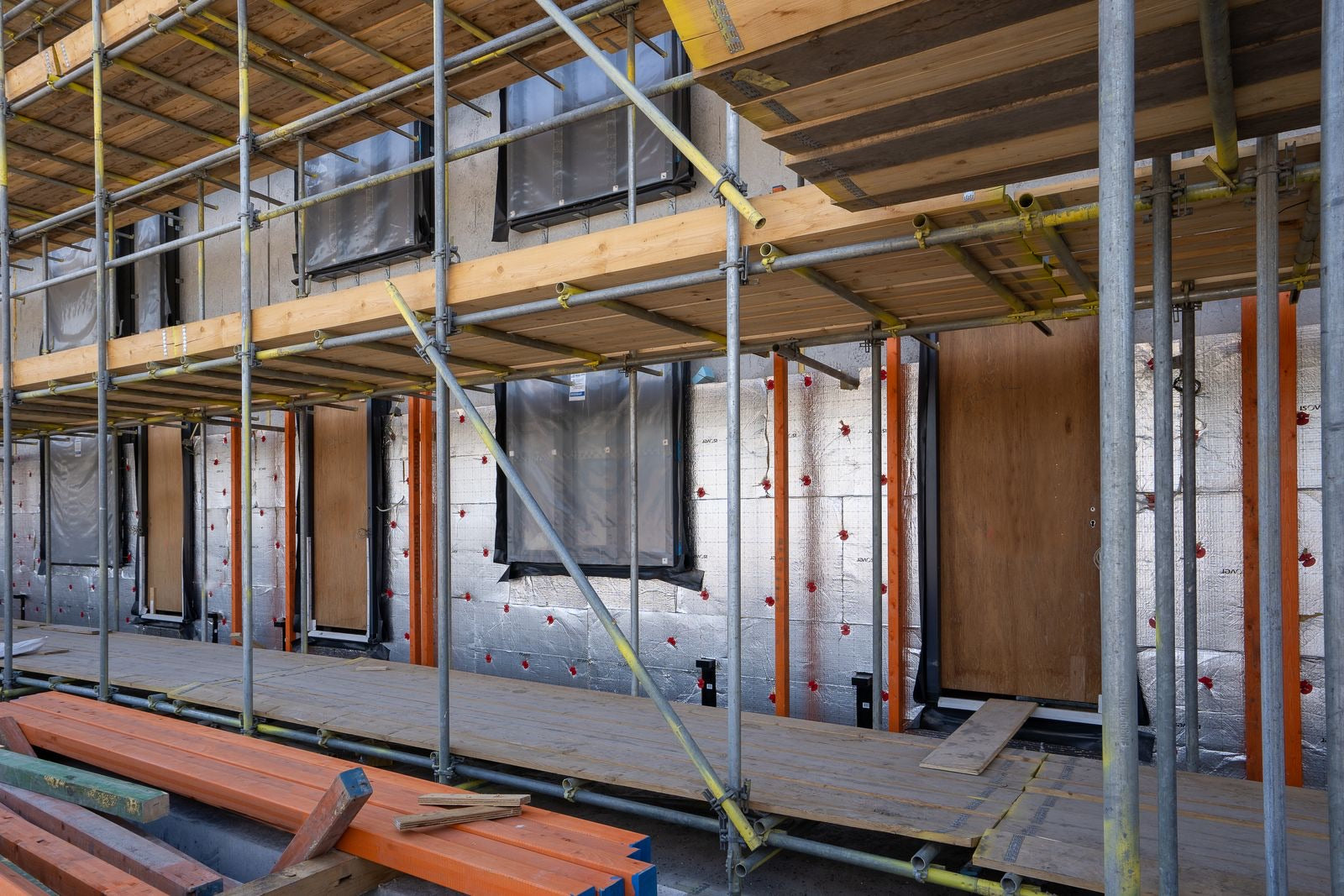

What Is a Building Envelope? Components & Design [2026]
What is a building envelope? Learn its components, the four control layers, design and testing basics, and how the building envelope earns points in LEED v5.

Energy Use Intensity (EUI): The Core Metric [2026]
Energy use intensity (EUI) explained: the formula, site vs source EUI, what counts as a good number, and how this metric drives benchmarking and LEED.
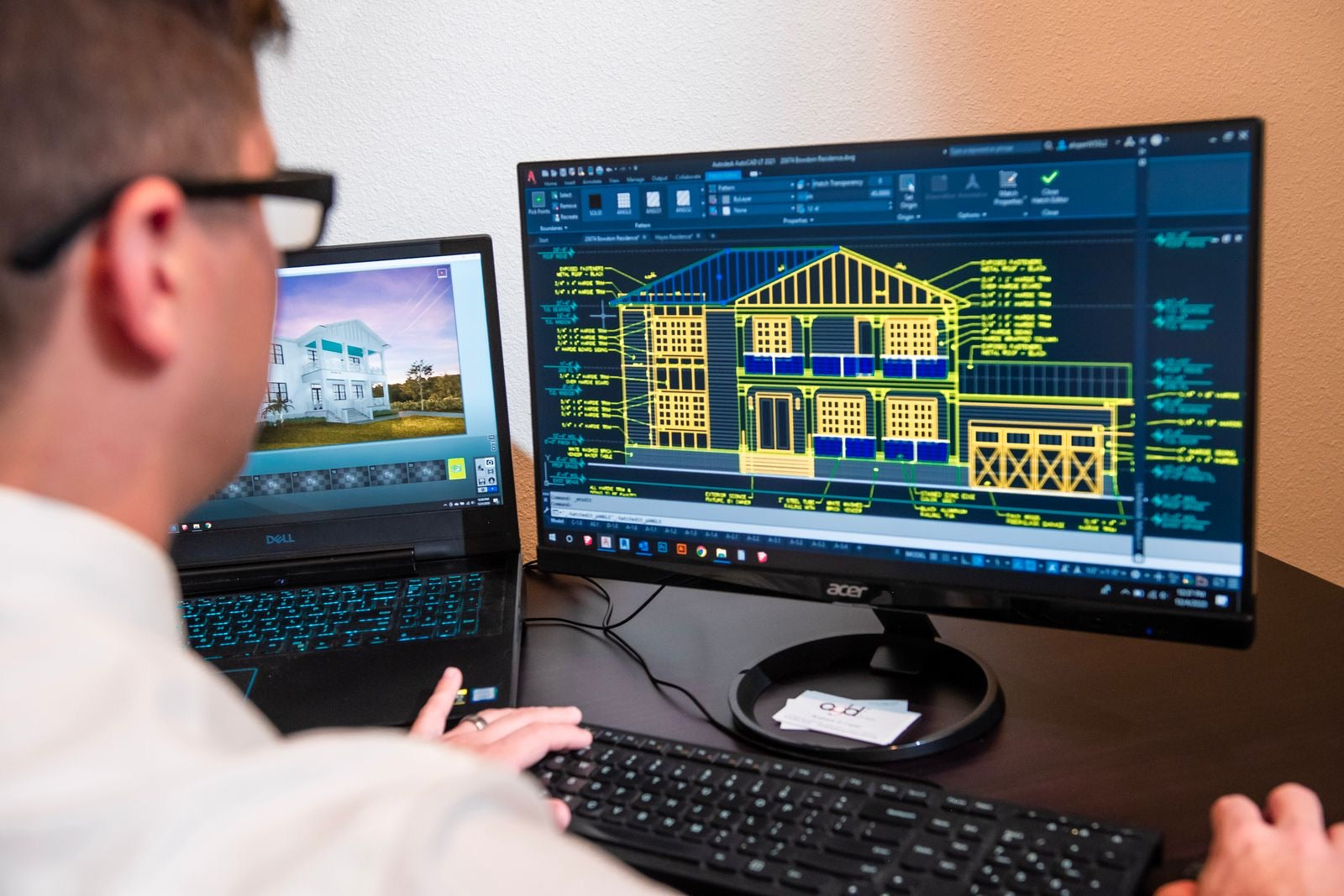

Energy Modeling: How It Works, Software & LEED [2026]
Energy modeling explained: how building energy simulation works, the inputs and outputs, the major software tools, and the LEED credits that run through it.
