
LEED AP BD+C Study Guide: Free & International Bestseller [2026]
 A. Togay Koralturk
Last updated on November 08, 2026
7 min read
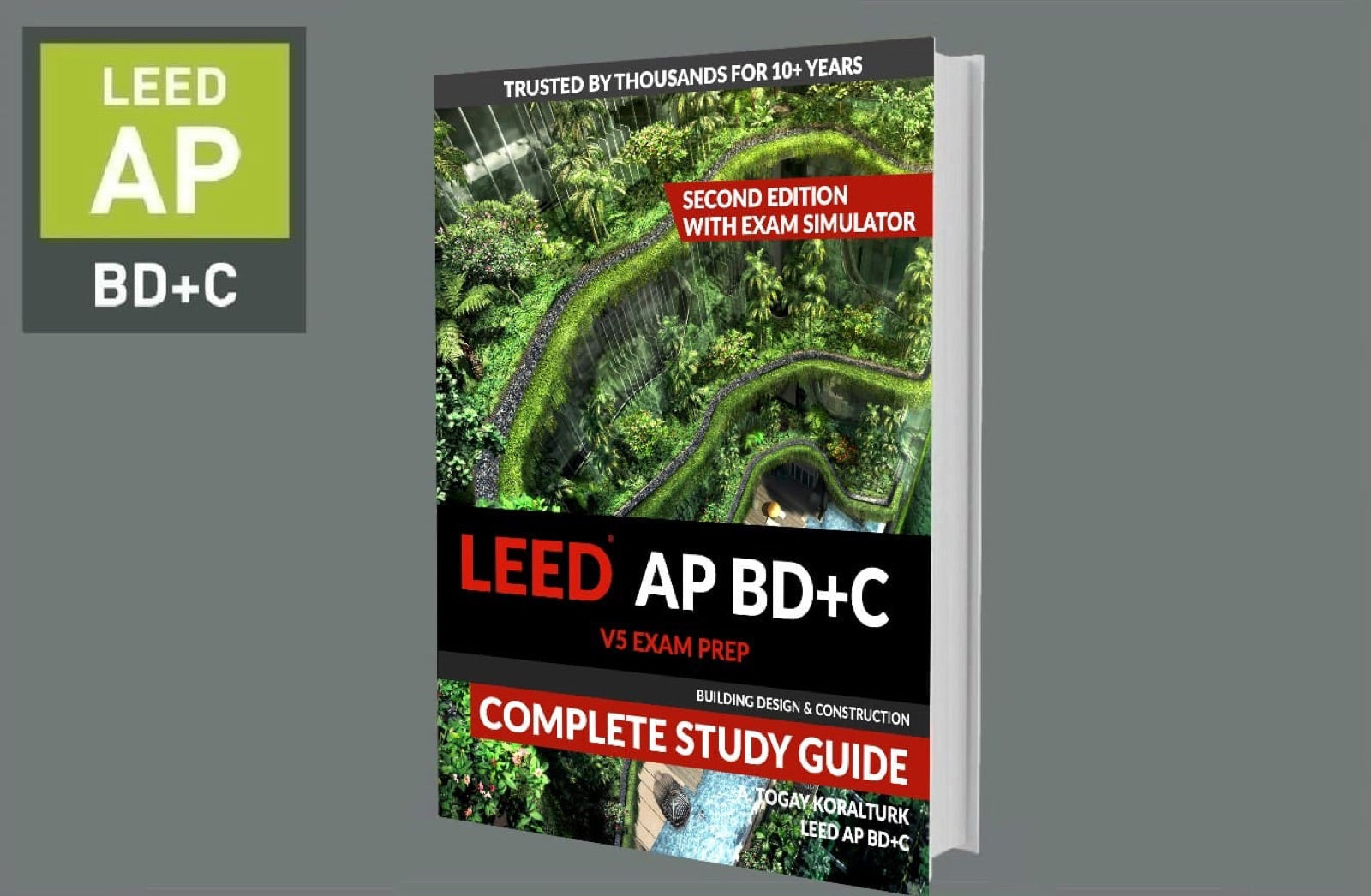

For the majority of candidates, a book is the best and the shortest way to prepare for the LEED AP BD+C exam. That is why a complete study guide sits at the heart of LEED AP BD+C preparation (and actually all you need). You can begin with our free study guide today, which is the best-selling study guide for this exam.
Free LEED AP BD+C study guide for LEED v5

Start here. You can start reading our LEED AP BD+C study guide for free, with no signup and no payment details. It is written for LEED v5, the current version of the exam.
Most free LEED AP BD+C study guides online were written for older versions of LEED, so much of what they teach is no longer on the exam. Ours is different, because it is the best-selling study guide for this exam, trusted by thousands of candidates for over a decade, and you are learning from the real book from the first page.
Every prerequisite and credit is explained step by step with case studies, so you learn the material rather than memorize it and understand the technical terms the first time you read them.
When you want to test what you have learned, our free LEED AP BD+C exam prep resources include a free practice exam in our online exam simulator and free flashcards.
What to study for the LEED AP BD+C exam, area by area
The LEED AP BD+C exam is 100 multiple-choice questions in 2 hours, scored from 125 to 200 with 170 required to pass. It tests the LEED v5 Building Design and Construction rating system in depth, so you need to know each prerequisite and credit, what it requires, and how many points it is worth.
Before the categories, keep two things in mind.
You need an active LEED Green Associate credential first. To register, you must be 18 or older and hold an active LEED Green Associate credential or another active LEED AP with specialty credential. The exam assumes you already know everything the Green Associate exam covers, and our guide to the LEED AP BD+C credential explains where it fits.
The details carry the questions. Expect questions on what a credit requires, which standards it references, and how one credit affects another. Knowing what a credit is for is only the starting point at this level.
With those in place, here is what to know in each of the eight LEED v5 credit categories. Points are for New Construction, out of 110 available.
| LEED v5 BD+C credit category | Prerequisites and credits to know |
|---|---|
| Integrative Process, Planning, and Assessments (1 point) |
|
| Location and Transportation (15 points) |
|
| Sustainable Sites (11 points) |
|
| Water Efficiency (9 points) |
|
| Energy and Atmosphere (33 points) |
|
| Materials and Resources (18 points) |
|
| Indoor Environmental Quality (13 points) |
|
| Project Priorities (10 points) |
|
Energy and Atmosphere alone holds 33 of the 110 points, and Materials and Resources adds another 18, so expect to spend the most time on those two. Consider a project team deciding how to heat a building. That one decision affects Electrification, Enhanced Energy Efficiency, and Enhanced Refrigerant Management at the same time, so studying related credits together makes each one easier to remember.
To see how the exam itself is built, our guide to how hard the LEED AP BD+C exam is covers scoring and question style, and our overview of the LEED v5 AP BD+C exam changes explains what is new.
Ready to earn your LEED credential?
 200,000+ Learners and Counting


How to prepare for the LEED AP BD+C exam in the shortest time
The shortest reliable path is to read the free Candidate Handbook once, work through one complete study guide front to back, then take timed practice exams until you hold 80% or better. At one to two hours a day, most candidates are ready in about four weeks.
The time most candidates lose goes to switching between materials and to reading credits out of order. One complete guide, read in sequence, avoids both. Follow these four steps.
- Read the Candidate Handbook on day one. The handbook is the exam's free official rulebook, covering eligibility, identification, registration, and scheduling. Our LEED AP Candidate Handbook explainer walks through it section by section.
- Work through the study guide front to back. Start reading it for free and keep going in order, one credit category at a time. When you finish, use the book's summary sheets to review. If you learn best by watching, our LEED AP BD+C exam prep course covers the full exam scope on video.
- Finish with timed practice exams. The exam is 100 questions in 120 minutes, which leaves a little over a minute per question, so pacing needs practice. Our LEED AP BD+C practice tests are full-length, timed, and built to replicate the actual exam. Take one, read every answer explanation including the questions you got right, revisit your weak categories in the guide, and test again.
- Book when you hold 80%. That is the benchmark for our practice exams, which replicate the real exam. When your scores sit at 80% or better, you are comfortably above the passing standard, so book the exam while everything is fresh.
For the full week-by-week calendar, follow our guide on how to study for the LEED AP BD+C exam.
The best LEED AP BD+C study guide for the LEED v5 exam
Our complete LEED AP BD+C study guide is our best-selling book for this exam, and it is the only resource a candidate needs to pass.
Plenty of LEED books circulate, so here is exactly what you are choosing when you study from ours.
It is the book the market already chose. It has been widely adopted as primary course material at universities across the United States. Instructors need one text that covers everything and teaches it in the right order, and that is exactly what you need too.
It is built for the shortest preparation, not the longest. The explanations are complete enough that you do not need further research or repeated passes over the same topic. It comes in digital and paperback editions, so the format never slows you down either.
It shows you what the exam looks for. A Key Things to Remember section closes each prerequisite and credit, flagging the elements that may seem minor but often appear as exam questions.
It includes an online exam simulator. The book comes with access to a simulator built to mirror the real LEED AP BD+C exam experience.
It was written for this exam, not patched for it. The guide was entirely rewritten for LEED v5 rather than updated from an earlier edition. The LEED AP BD+C exam completed its move to v5 in 2026, and material written before that teaches requirements the exam no longer uses.
Ready to earn your LEED credential?
200,000+ Learners and Counting
Frequently Asked Questions
Is there a free LEED AP BD+C study guide PDF?
Be careful with free PDF downloads, because most are written for older versions of LEED and no longer match the exam. You can start reading our best-selling LEED AP BD+C study guide for free, written for LEED v5 and readable online with no signup.
Do you need a study guide to pass the LEED AP BD+C exam?
There is no required textbook, so technically no. In practice, the exam covers every prerequisite and credit in LEED v5 BD+C, and a complete study guide is the most reliable way to prepare for all of them.
How difficult is the LEED AP BD+C exam?
It is a demanding professional exam, with 100 questions in 2 hours and 170 required to pass on a scale of 125 to 200. Candidates who study every credit category with a complete guide and hold 80% on realistic practice exams are well prepared to pass on the first attempt.
How long does it take to study for the LEED AP BD+C exam?
Most candidates need about four weeks at one to two hours a day. Project experience can shorten that, and your practice exam scores tell you when you are ready.
How do you study for the LEED AP BD+C exam?
Read the free Candidate Handbook, work through one complete study guide front to back, then take timed practice exams and review every answer explanation until you consistently score 80% or better.
Do I need the LEED Green Associate credential before the LEED AP BD+C exam?
Yes. You must hold an active LEED Green Associate credential or another active LEED AP with specialty credential when you register.
Can older LEED study materials prepare you for the current exam?
No. The exam tests LEED v5, which reorganized the credit categories and added new prerequisites and credits. Material written for earlier versions teaches requirements the exam no longer uses.

LEED AP Homes: The Residential LEED Credential [2026]
LEED AP Homes explained: the residential specialty credential, what the exam covers, how it differs from a Green Rater, and who should choose this path.

LEED AP ID+C: The Credential & LEED ID+C Guide [2026]
LEED AP ID+C explained: the interiors credential, the LEED ID+C rating system for tenant fit-outs, the newly updated v5 exam, and who should choose it.


LEED AP O+M: The Credential & LEED O+M Explained [2026]
LEED AP O+M explained: the existing-buildings credential, the LEED O+M rating system, recertification, the v5 exam, and who should pick this specialty.
