

Cradle to Cradle: Design Concept & Certification [2026]
 A. Togay Koralturk
Last updated on October 27, 2026
11 min read
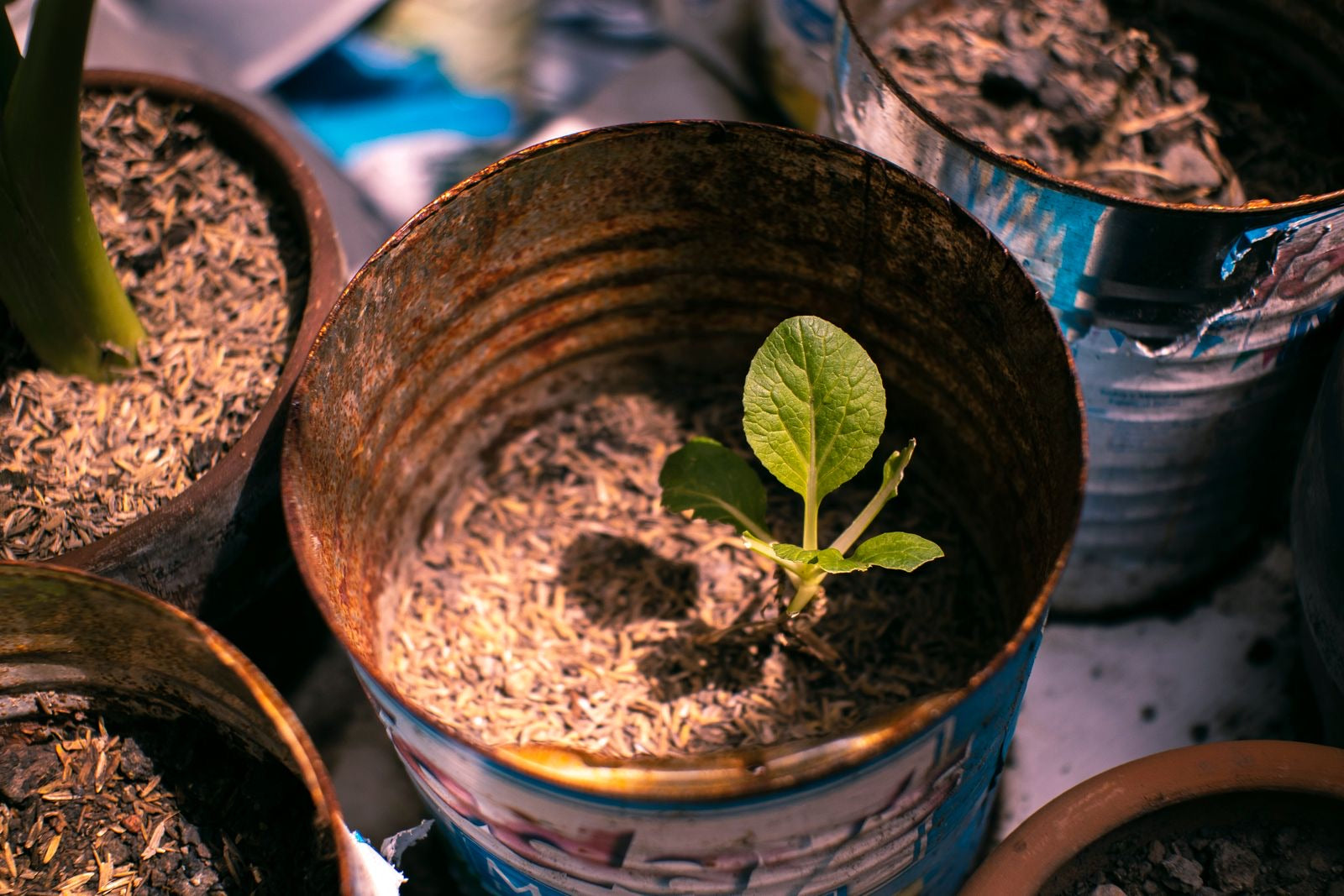

In a forest, nothing is wasted: a fallen leaf breaks down into soil, and that soil feeds the next generation of trees. Most manufactured products follow a very different path, running in a straight line from the mine or the field, through a short useful life, to the landfill. Cradle to cradle starts from a simple question about that difference: what if products were designed from the very beginning to behave like the leaf? This guide covers what cradle to cradle means, how it differs from cradle to grave and from the circular economy, how the Cradle to Cradle Certified program works, and how the certification counts in LEED v5.
What does cradle to cradle mean?
Cradle to cradle is a design approach in which every material in a product is planned, from the start, to have a next use: biological materials return safely to the soil, and technical materials such as metals and plastics return to manufacturing to become new products of equal quality.
The idea was popularized by the architect William McDonough and the chemist Michael Braungart in their 2002 book Cradle to Cradle: Remaking the Way We Make Things, and its central principle is often summarized as "waste equals food." In nature, the waste of one organism is the food of another, so the system never fills up with garbage. Cradle to cradle applies the same logic to manufactured products by sorting their materials into two loops:
- The biological cycle. Materials such as natural fibers, wood, and other plant-based materials are designed to be safe enough to break down and return to the soil, feeding new growth.
- The technical cycle. Materials such as metals, glass, and many plastics are designed to stay in manufacturing, being recovered and remade into new products again and again without losing their value.
Consider a carpet tile. In the conventional model, it is glued down, worn out, torn up, and landfilled, and every fiber in it is lost. In a cradle-to-cradle design, the backing and the fibers are chosen so they can be separated, and the manufacturer takes the old tiles back to turn the fibers into new carpet. In other words, the end of one product's life is planned as the raw material for the next one. The crucial point is that this has to be decided at the design stage, because once incompatible materials are glued together, they usually cannot be separated again at the end of the product's life.
Cradle to cradle design examples
Cradle to cradle design shows up most clearly in products built to come apart: carpet and flooring returned to the manufacturer and remade, furniture designed for disassembly, textiles made to break down safely in compost, and metal building components designed to be recovered at full value.
Let's look at how the two cycles play out in real product types:
- Carpet and flooring (technical cycle). Beyond the carpet tile described above, resilient flooring and carpet can be engineered so that the wearing layer separates cleanly from the backing, letting each material return to its own manufacturing stream.
- Furniture (technical cycle). Office chairs and desks assembled with screws and clips instead of glue can be taken apart at the end of their life, so the steel, aluminum, and plastics can each be recycled into new products.
- Textiles and upholstery (biological cycle). Fabrics made from natural fibers with safe dyes and finishes can be designed to break down in compost, returning nutrients to the soil instead of releasing harmful chemicals.
- Building components (technical cycle). Metal facade panels, ceiling grids, and other components attached with mechanical fasteners rather than adhesives can be removed during a renovation and reused or recycled without losing quality.
What these examples share is a decision made before manufacturing: the designer chose materials that are safe for their cycle and an assembly method that lets them be separated. In other words, cradle to cradle design is less about a special material and more about planning the product's next life from the beginning.
Ready to earn your LEED credential?
 200,000+ Learners and Counting


Cradle to cradle vs cradle to grave
Cradle to grave describes the conventional, linear life of a product: extraction, manufacturing, use, and disposal. Cradle to cradle replaces the final "grave" stage with a return to a new beginning, so the materials loop back into nature or into new products instead of being thrown away.
The two terms appear side by side in green building because they describe two different things. Cradle to grave is, first of all, a measurement boundary: when professionals carry out a life cycle assessment, a cradle-to-grave study counts a product's impacts from raw-material extraction all the way through disposal. It simply describes where a product's life ends today. Cradle to cradle, on the other hand, is a design goal. It asks the team to redesign the product so that there is no grave at all.
That being said, the two ideas work well together. A cradle-to-grave assessment shows a project team where a product's biggest impacts occur, and the cradle-to-cradle mindset gives the team a direction for reducing them. Therefore, a team comparing two flooring products might use the assessment to see that disposal is a large share of one product's footprint, and then prefer the product whose manufacturer takes it back for remanufacturing.
Is cradle to cradle the same as the circular economy?
Not exactly. The circular economy is the broad economic model of keeping materials in use instead of discarding them; cradle to cradle is one of the design frameworks that helped shape that model, with a stronger focus on making materials safe and of lasting quality.
The difference is mostly one of scale and emphasis. The circular economy describes how whole industries and cities can keep materials circulating, through reuse, repair, remanufacturing, and recycling, rather than running a "take, make, dispose" economy. Cradle to cradle operates at the level of the individual product and its ingredients, and it adds two demands that general circularity does not always make.
First, it insists on material health: a material that loops back into the economy must be safe to loop, because recycling a material that contains hazardous chemicals simply carries those chemicals into the next product. Second, it aims to keep materials at their original quality. Much ordinary recycling is really downcycling, where a material becomes a lower-grade product with each round (a plastic bottle becoming a fleece, which is rarely recycled again). Cradle to cradle aims for materials that can cycle repeatedly without that loss. Cradle to cradle is also the only one of the two ideas with its own product certification, which brings us to the next section.
What is Cradle to Cradle certification?
Cradle to Cradle certification, through the Cradle to Cradle Certified program, is a product certification managed by the nonprofit Cradle to Cradle Products Innovation Institute. It evaluates products in five categories (Material Health, Product Circularity, Clean Air and Climate Protection, Water and Soil Stewardship, and Social Fairness) and awards one of four levels: Bronze, Silver, Gold, or Platinum.
The certification turns the design philosophy into measurable requirements. According to the Cradle to Cradle Products Innovation Institute, the program is a Type 1 ecolabel, independently verified as conforming to the ISO 14024 standard for environmental labeling programs. Each of its five categories looks at a different part of how a product is made:
| Category | What it examines |
|---|---|
| Material Health | The chemicals in the product and whether they are safe for people and the environment |
| Product Circularity | Whether the product is designed to be reused, recycled, or safely returned to nature |
| Clean Air & Climate Protection | The energy use and greenhouse gas emissions involved in making the product |
| Water & Soil Stewardship | How manufacturing protects the water and soil around the facility |
| Social Fairness | Human rights and fair labor practices in the company and its supply chain |
The scoring system follows a strict but sensible rule. Within each category, a product must meet the requirements of its target level and every level below it, so a Gold product has also satisfied Bronze and Silver. Then, according to the program's certification manual, the product's overall level equals the lowest level it achieved in any category. To illustrate, a product that reaches Gold in four categories but only Silver in Water and Soil Stewardship is certified at Silver overall. This rule is deliberate: it stops a product from hiding a poor result in one area behind excellent results in the others.
The standard is also current: Version 5 of the Cradle to Cradle Certified Product Standard was released in February 2026 and took effect in March 2026, so older descriptions of the program found online may not reflect the latest requirements.
How Cradle to Cradle certification works
A manufacturer pursues certification by hiring an independent Conformity Assessment Body to evaluate the product, applying to the Institute's certification body, supplying detailed product and manufacturing data, and then recertifying over time with documented improvement.
The certification process published by the Institute runs in a clear sequence. The manufacturer first confirms the product is eligible and chooses which version of the standard to apply under. Next, it selects a Conformity Assessment Body (an independent assessor) and applies to the Institute's certification body. The assessor then works with the manufacturer to compile the evidence, which is the demanding part: for Material Health, for example, the program's manual requires the product's ingredients to be inventoried and assessed in increasing depth at each level. Once the evidence meets the requirements, the product is certified, and its level appears on the certificate.
Certification is not a one-time event. Products at the Bronze and Silver levels must have a plan for reaching the next level and must show measurable improvement when they recertify, so the program pushes products upward over time rather than rewarding them for standing still.
Is cradle to cradle certification expensive? The honest answer is that it depends on the product. The manufacturer pays application and annual fees to the Institute plus the assessor's work, and that work grows with the complexity of the product and its supply chain. A product made of a few well-documented materials is far simpler to assess than one assembled from dozens of components, each with its own chemical recipe. The Institute does not publish a single standard price, so manufacturers get quotes based on their specific products.
Cradle to cradle products in buildings and LEED v5
In LEED v5, the Building Product Selection and Procurement credit (MRc4) rewards products that show strong performance, through third-party certifications, ecolabels, and declarations, across five criteria areas. Because Cradle to Cradle Certified assesses several of those themes at once, a certified product can be unusually valuable to a project team.
Buildings are full of the products this certification covers: flooring, ceiling tiles, wall panels, insulation, furniture, and finishes. In the Materials and Resources category of LEED v5, the Building Product Selection and Procurement credit (MRc4) is worth 1 to 5 points. The credit evaluates products in five criteria areas (climate health, human health, ecosystem health, social health and equity, and circular economy), each with three achievement levels, and a project earns 1 point for each product category in which it meets the targets, up to 5 points. A product that performs in at least two of these areas counts as a multi-attribute product, and the calculation gives it more weight.
This is where cradle to cradle stands out, because its five certification categories line up closely with the credit's five criteria areas: Material Health with human health, Clean Air & Climate Protection with climate health, Water & Soil Stewardship with ecosystem health, Social Fairness with social health and equity, and Product Circularity with the circular economy. Most product documents speak to a single theme; ingredient disclosures such as Health Product Declarations and Declare labels, for instance, focus on what a product contains. A certification that assesses several themes at once is exactly the multi-attribute performance the credit rewards. For the circular economy area specifically, the credit's first level covers products with recycled content or bio-based content, while the higher levels reward reuse and closed-loop systems, which is the cradle-to-cradle ideal in one sentence.
For project teams, the practical lesson is to treat the certification as one strong piece of evidence within a broader material strategy, alongside the Environmental Product Declarations that measure carbon and the selection criteria covered in our guide to sustainable building materials. For exam candidates, cradle to cradle belongs to the life-cycle thinking the LEED exams expect you to understand, and our LEED Green Associate Complete Exam Prep Pack teaches that thinking from the ground up, with a passing guarantee.
Ready to earn your LEED credential?
200,000+ Learners and Counting
Frequently Asked Questions
What does cradle to cradle mean?
It means designing a product so that its materials have a planned next life: biological materials return safely to the soil, and technical materials go back into manufacturing to make new products. The goal is to eliminate the concept of waste.
What is the difference between cradle to cradle and cradle to grave?
Cradle to grave describes a product's linear life from extraction to disposal, and it is also a common boundary for life cycle assessments. Cradle to cradle replaces disposal with a return to a new beginning, so materials keep cycling instead of ending in a landfill.
Is cradle to cradle the same as the circular economy?
They are closely related but not identical. The circular economy is the broad model of keeping materials in use across the economy; cradle to cradle is a product-level design framework within that thinking, with extra emphasis on safe, healthy materials that keep their quality.
Is cradle to cradle certification expensive?
Costs vary by product. Manufacturers pay application and annual fees to the Cradle to Cradle Products Innovation Institute plus the cost of an independent assessment, and simpler products with well-documented materials are less costly to assess than complex ones.
What is the Cradle to Cradle book about?
Cradle to Cradle: Remaking the Way We Make Things, published in 2002 by the architect William McDonough and the chemist Michael Braungart, argues that products should be designed so their materials circulate safely instead of becoming waste. It introduced the biological and technical cycles and the principle that waste equals food.
Is cradle to cradle on the LEED Green Associate exam?
Yes. Cradle to cradle and cradle to grave are part of the life-cycle thinking the Green Associate exam covers, so candidates should be able to explain the difference between the two and the idea of designing out waste.
Is cradle to cradle on the LEED AP BD+C exam?
Yes, in more applied form. AP BD+C candidates should understand how product certifications such as Cradle to Cradle Certified serve as evidence in the Building Product Selection and Procurement credit of LEED v5.

Recycled Concrete Aggregate: Uses, Properties & LEED [2026]
Recycled concrete aggregate explained: how concrete is recycled, what RCA is used for, how it differs from natural aggregate, and how LEED v5 counts it.

Recycled Content: Pre- vs Post-Consumer & LEED [2026]
Recycled content explained: pre-consumer vs post-consumer material, how claims are verified, common recycled-content building materials, and its LEED v5 role.

Construction Waste Management: Plan & LEED [2026]
Construction waste management explained: what a waste management plan includes, how to minimize and recycle C&D waste, and how LEED rewards diversion.
