

Recycled Content: Pre- vs Post-Consumer & LEED [2026]
 A. Togay Koralturk
Last updated on October 27, 2026
9 min read
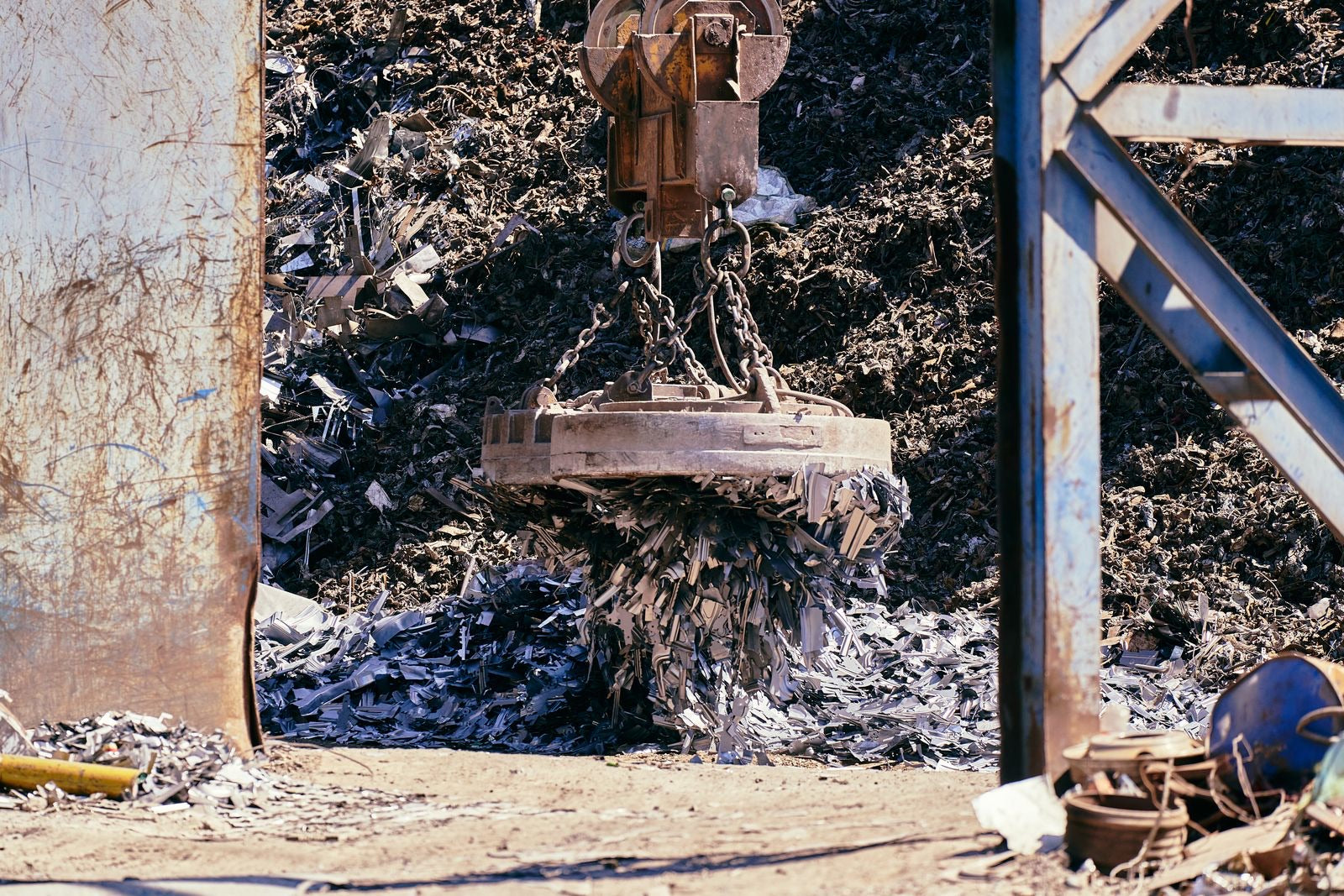

Pick up a steel stud, a sheet of gypsum board, or a bag of cellulose insulation on a construction site, and part of it may well have lived a previous life as a car, a stack of newspapers, or the leftovers of another factory. That hidden history is what manufacturers mean by recycled content, and it is one of the oldest and most widely reported green attributes in the building industry. However, the phrase covers two quite different sources of material, and the difference between them decides how much a recycled-content claim is really worth. This guide covers what recycled content is, the difference between pre-consumer and post-consumer material, how recycled-content claims are verified, which building materials commonly contain it, and how LEED v5 treats it.
What is recycled content?
Recycled content is the portion of a product made from materials that were recovered or diverted from the waste stream, either during manufacturing (pre-consumer) or after consumer use (post-consumer). It is normally stated as a percentage of the product's weight, such as a ceiling tile containing 70% recycled content.
The definition used across the United States comes from the Federal Trade Commission. Its Green Guides, the federal guidance on environmental marketing claims, describe recycled content as materials "recovered or otherwise diverted from the waste stream, either during the manufacturing process (pre-consumer), or after consumer use (post-consumer)." The key words are the waste stream. Recycled content is not simply "material that has been used before"; it is material that was on its way to being thrown away and was rescued instead. Internationally, the ISO 14021 standard for self-declared environmental claims draws the same line between pre-consumer and post-consumer material.
The Green Guides also set the rule for how claims are stated. If only part of a product is recycled, the manufacturer should state the amount or percentage, by weight, rather than calling the whole product "recycled." Consider a box of carpet tiles labeled simply "made with recycled materials." That label tells a project team very little; a label stating 45% post-consumer recycled content by weight tells them exactly what they are getting, and it can be compared with a competing product.
Pre-consumer vs post-consumer recycled content
Pre-consumer recycled content is manufacturing scrap that would otherwise have been discarded, such as trimmings from one factory used as raw material in another. Post-consumer recycled content is material that already served its purpose with an end user and was then collected, such as aluminum cans, newspapers, or steel from demolished buildings.
The table below shows the difference side by side:
| Type of recycled content | Where the material comes from | Building-product example |
|---|---|---|
| Pre-consumer (also called post-industrial) | Scrap and byproducts diverted from a manufacturing process | Wood fiber from a sawmill used in a composite panel |
| Post-consumer | Products discarded after use by households, businesses, or institutions | Scrap steel from demolished structures and old cars melted into new steel |
Pre-consumer material comes with an important limit. Under the FTC Green Guides, a manufacturer claiming pre-consumer content should be able to show that the material would otherwise have entered the waste stream. Therefore, scrap that a factory routinely feeds straight back into the same process does not qualify. Think about a plant that molds plastic parts: the trimmings it grinds up and puts back into its own molding machine were never going to be thrown away, so counting them as recycled content would mislead buyers. On the other hand, trimmings sold to a different manufacturer that would otherwise have landfilled them are genuine pre-consumer content.
You will also see the term post-industrial used in product literature. In practice it means the same thing as pre-consumer: material recovered from industry before it ever reached a consumer.
Ready to earn your LEED credential?
 200,000+ Learners and Counting


Why post-consumer recycled content matters
Post-consumer recycled content is generally the more valuable of the two because it gives a second life to products that were already headed for landfills, and it creates demand for the materials people and businesses put out for recycling. Pre-consumer content still matters, because it keeps industrial scrap out of landfills.
The reasoning follows the material. A factory's scrap is concentrated, clean, and close at hand, so manufacturers have long had a financial reason to find a use for it. Post-consumer material is different: it is scattered across millions of homes, offices, and job sites, mixed with other waste, and expensive to collect and clean. Recycling programs only work if someone buys what they collect, which means every product made with post-consumer content helps keep those collection systems running. In other words, choosing post-consumer content does not just use recycled material; it pulls more material out of the waste stream in the first place.
That being said, a project team should not dismiss pre-consumer content. A composite panel made from sawmill residue, or concrete that uses an industrial byproduct in place of part of its cement, keeps waste out of landfills and often reduces the product's embodied carbon as well. The best practice is simply to know which kind of content a product contains, and in what amount.
How recycled content is verified and certified
Verified recycled content is backed by evidence: manufacturer documentation that states the percentage by weight, Environmental Product Declarations that report recycled content as part of a verified impact study, and recycled content certification, in which an independent third party audits the manufacturer's records.
Because recycled content is invisible in the finished product, a buyer has to rely on the evidence that supports the claim. The three common levels of evidence are worth knowing:
- Manufacturer declarations. A product data sheet or letter states the pre-consumer and post-consumer percentages. This is the most common form, and its reliability depends on the manufacturer's records.
- Environmental Product Declarations (EPDs). An EPD is a third-party-verified report of a product's environmental impacts, and many EPDs describe the product's material makeup, including its recycled content. When they do, the recycled content rests on a verified study rather than on a stand-alone claim.
- Recycled content certification. Independent certifiers audit a manufacturer's purchasing and production records and certify the recycled percentage, which gives buyers the strongest assurance for this specific attribute.
One more caution belongs here. Recycled content says where a material came from, not what is in it. A material that lived a previous life can carry substances from that life, so it is worth judging a product as a whole rather than by a single attribute. This is why ingredient disclosures like Health Product Declarations complement recycled-content claims instead of replacing them.
Common recycled-content building materials
Many everyday building materials contain significant recycled content: steel and aluminum, gypsum board, insulation, tile, carpet, ceiling tiles, and concrete, which can use recycled aggregate or industrial byproducts in its mix.
- Steel. Steelmaking relies heavily on scrap, much of it from demolished buildings, vehicles, and appliances, so structural steel and reinforcing bar commonly carry substantial recycled content.
- Aluminum. Window frames, curtain walls, and panels can be made from recycled aluminum, which takes far less energy to produce than new aluminum.
- Gypsum board. Its paper facing is commonly made from recycled paper, and some boards also contain recycled or byproduct gypsum.
- Insulation. Cellulose insulation is made largely from recycled paper, and other insulation types can incorporate recycled glass or industrial byproducts.
- Tile. Glass tiles are often made from recycled glass, and some ceramic and porcelain tiles incorporate recycled material, so the recycled content of tile is worth checking on product data sheets.
- Carpet and ceiling tiles. Many products use recycled fibers or recycled mineral content, and some manufacturers take their old products back to make new ones.
- Concrete. Crushed concrete from demolition can return as recycled concrete aggregate, and mixes can replace part of their cement with industrial byproducts, as our guide to sustainable building materials explains.
Notice how closely this list mirrors the waste a building project produces. The concrete, metal, and gypsum that a well-run construction waste management plan sends to recyclers are exactly the materials that come back as recycled content in the next project, which is the loop working as intended.
Recycled content in LEED v5
LEED v5 recognizes recycled content in the circular economy area of the Building Product Selection and Procurement credit (MRc4). In LEED v5, recycled or qualified bio-based content earns the first achievement level, while the higher levels reward reuse and closed-loop systems.
The Building Product Selection and Procurement credit (MRc4) is worth 1 to 5 points in LEED v5. It evaluates products in five criteria areas (climate health, human health, ecosystem health, social health and equity, and circular economy), each with three achievement levels, and a project earns points product category by product category. In the circular economy area, products made with recycled or bio-based material sit at the first of the three levels. To reach the second or third level, a product has to go further, keeping materials in use through reuse or through systems where the manufacturer takes products back and remakes them. To illustrate, a carpet made with recycled fibers fits the first level, while a manufacturer program that takes old carpet back and remakes it into new carpet points toward the higher levels. Certifications that cover circularity, such as Cradle to Cradle, are one way manufacturers document that kind of performance.
This ranking carries an important lesson: in LEED v5, recycled content earns the first level of the circular economy area, but it is not the highest achievement. Recycling breaks a product down and remakes it, which uses energy, while reuse keeps the product whole. LEED v5 keeps the two ideas apart: a product made from recycled material counts as recycled, never as reused, and reuse is rewarded on its own in the Building and Materials Reuse credit (MRc1).
For exam candidates, the distinctions in this guide (pre-consumer versus post-consumer, recycled versus reused) are exactly the kind of reasoning the LEED exams test. Our LEED Green Associate Complete Exam Prep Pack teaches the Materials and Resources category through that reasoning, and it carries our passing guarantee.
Ready to earn your LEED credential?
200,000+ Learners and Counting
Frequently Asked Questions
What is post-consumer recycled content?
It is material that served its purpose with an end user, such as a household or business, and was then collected and recycled into a new product. Aluminum cans, newspapers, and steel from demolished buildings are common sources.
What is pre-consumer recycled material?
It is scrap or byproduct diverted from a manufacturing process that would otherwise have been thrown away, such as sawmill residue used in a composite panel. Scrap a factory routinely reuses in its own process does not count.
Is post-industrial the same as pre-consumer recycled content?
Yes. Both terms describe material recovered from industry before it ever reached a consumer. Product literature uses them interchangeably.
What is recycled content certification?
It is an independent audit in which a third-party certifier reviews a manufacturer's purchasing and production records and confirms the percentage of recycled content in a product. It gives buyers stronger assurance than a manufacturer's own declaration.
Is recycled content the same as reused material?
No. Recycled material is broken down and remanufactured into a new product, while reused material is used again in its existing form. LEED v5 treats them separately, and reuse ranks higher in its circular economy criteria.
Is recycled content on the LEED Green Associate exam?
Yes. Candidates should understand what recycled content is, the difference between pre-consumer and post-consumer material, and why reuse ranks above recycling in sustainable material choices.
Is recycled content on the LEED AP BD+C exam?
Yes, in more depth. AP BD+C candidates should know how recycled content is documented and how it counts within the Building Product Selection and Procurement credit of LEED v5.

Recycled Concrete Aggregate: Uses, Properties & LEED [2026]
Recycled concrete aggregate explained: how concrete is recycled, what RCA is used for, how it differs from natural aggregate, and how LEED v5 counts it.


Cradle to Cradle: Design Concept & Certification [2026]
Cradle to cradle explained: the design concept, how it differs from cradle to grave, how Cradle to Cradle Certified works, and how it counts in LEED v5.

Construction Waste Management: Plan & LEED [2026]
Construction waste management explained: what a waste management plan includes, how to minimize and recycle C&D waste, and how LEED rewards diversion.
