

Life Cycle Assessment (LCA): Buildings Guide [2026]
 A. Togay Koralturk
Last updated on October 09, 2026
8 min read
A. Togay Koralturk
Last updated on October 09, 2026
8 min read
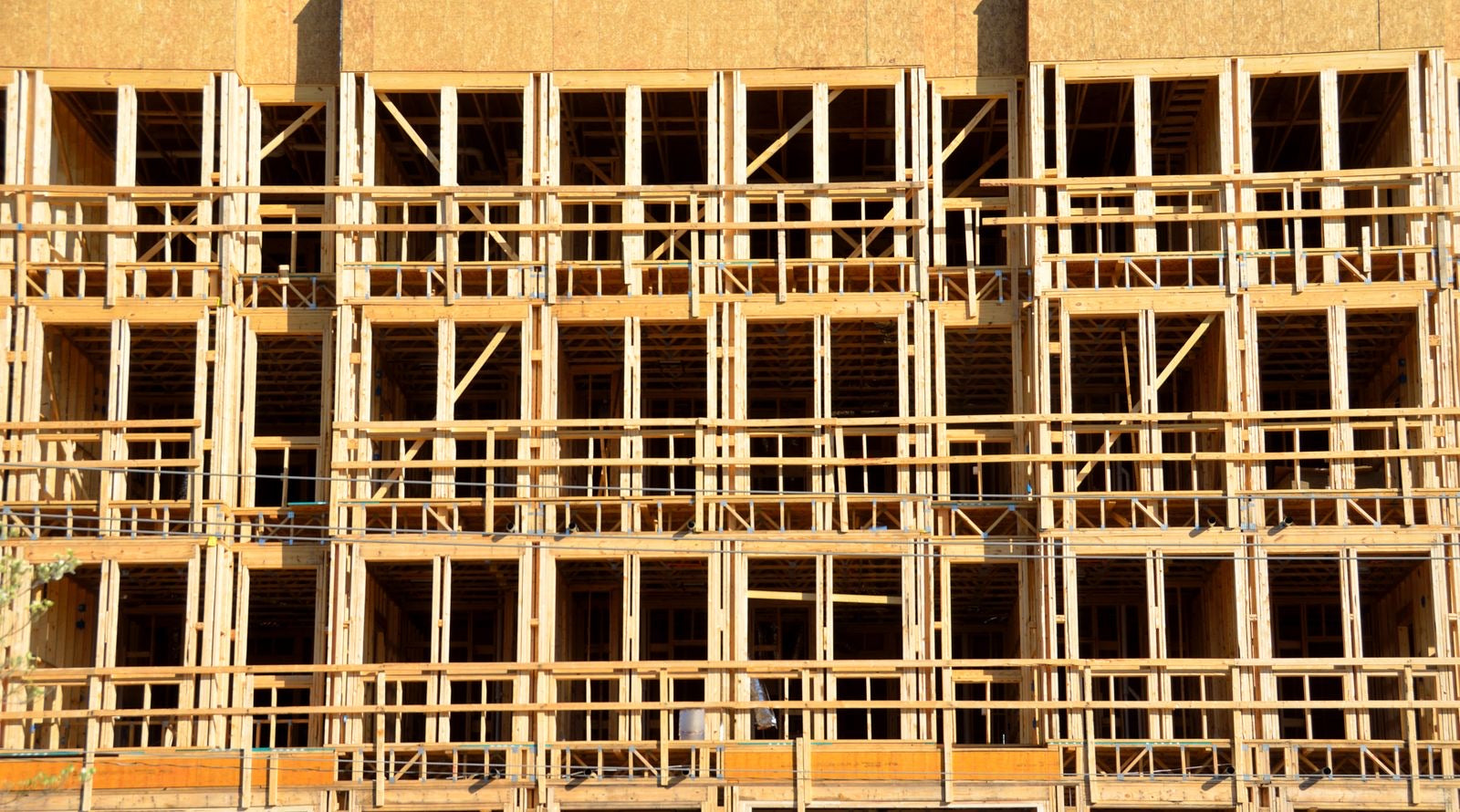

Every building product has two stories: what it does after it is installed, and what it took to make, transport, and eventually dispose of it. A life cycle assessment is how that second story gets measured. In green building, it has grown from a specialist study into something LEED now requires. This guide covers what a life cycle assessment is, its stages and phases, how it works for whole buildings, how it relates to EPDs, and its role in LEED v5.
What is a life cycle assessment (LCA)?
A life cycle assessment (LCA), also called a life cycle analysis, is a systematic analysis of environmental impact over the entire life cycle of a product, material, process, or other measurable activity, as RIT's sustainability center defines it — quantifying the impacts that arise from all the inputs and outputs, from energy use to emissions, across every stage of the thing's existence.
The method's purpose is honest comparison. The GSA frames LCA as quantifying the environmental impacts that arise from material inputs and outputs over a product's entire life cycle, so that decisions can be made on complete information rather than on whichever stage happens to be visible. That whole-life discipline is what separates LCA from intuition: a durable product with a heavy manufacturing footprint, a recyclable product that travels far, an efficient product that is hard to dispose of — each of these trades one life stage against another, and only an account that sees all the stages can referee the trade. One note on names: you will see life cycle assessment and life cycle analysis used interchangeably, and LCA abbreviates both; outside sustainability, the acronym has unrelated meanings, so the full phrase is the reliable term.
The life-cycle stages and scopes: cradle to grave
A full LCA follows the subject through five broad life stages — raw-material extraction, manufacturing, distribution, use, and end of life — and a study's scope declares how many of them it covers: cradle-to-grave spans all five, cradle-to-gate stops at the factory door, and cradle-to-cradle extends into recovery and reuse.
The stage names are the vocabulary of the whole field, so they are worth making concrete. Cradle is the ground: the quarry, the forest, the well where raw material originates. From there the material is manufactured into a product, distributed to where it is used, used for however long it serves, and finally handled at end of life, whether that means landfill, recycling, or becoming input for something new. Scopes exist because not every question needs every stage: a manufacturer comparing two production methods may study gate-to-gate, while a building owner choosing between structural systems needs the full cradle-to-grave picture. The practical rule carries over from every document built on LCA: before comparing two results, confirm their scopes match, because a cradle-to-gate number and a cradle-to-grave number answer different questions.
Ready to earn your LEED credential?
 200,000+ Learners and Counting


The four phases of a life cycle assessment
Under ISO 14040 and ISO 14044, the standards that define the method, an LCA runs in four phases: goal and scope definition, life cycle inventory analysis (LCI), life cycle impact assessment (LCIA), and interpretation.
| Phase | What happens |
|---|---|
| 1. Goal and scope definition | What is being studied, for what purpose, over which life stages, per what unit |
| 2. Life cycle inventory (LCI) | Every input and output is quantified: materials, energy, water, emissions, waste |
| 3. Life cycle impact assessment (LCIA) | The inventory is translated into impacts: climate change, resource depletion, and others |
| 4. Interpretation | The results are checked, weighed, and turned into conclusions the goal can support |
The phases are a discipline, not a formality, and each exists to prevent a specific failure. Goal and scope comes first because an LCA without a declared question produces numbers nobody can use; the functional unit set here (a square meter of wall at a given performance, a ton of cement) is what makes later comparison legitimate. The life cycle inventory is the accounting heart, where the flows are counted. The life cycle impact assessment converts those flows into consequences, because a kilogram of emissions means nothing until it is translated into categories like global warming potential. And interpretation closes the loop, testing how sensitive the conclusions are to the assumptions. Read in order, the four phases are simply a careful study's skeleton: ask clearly, count completely, translate honestly, conclude cautiously.
Life cycle assessment in construction: the whole-building LCA
In construction, LCA scales from products to the building itself: a whole-building life cycle assessment (WBLCA) models all of a building's materials and assemblies across its service life, and its climate-change result is the project's embodied carbon number.
The whole-building study is where the method earns its place in practice, because buildings are exactly the kind of long-lived, material-intensive purchases that single-moment judgment gets wrong. The model combines quantities from the design with per-material data, and its results concentrate attention where the impacts concentrate: the structure and envelope typically dominate, which is why structural material comparisons (one framing system against another, one concrete mix against another) are the classic whole-building LCA questions. Timing follows the same logic as every design analysis: run early, the model steers decisions while they are cheap; run late, it documents a building that can no longer change. The GSA's framing applies at this scale too — it is the entire life cycle of materials, systems, and the whole building that belongs in design decisions, not the slice that is easiest to see.
LCA vs EPD: the study and the report
An LCA is the study; an environmental product declaration (EPD) is the standardized, third-party-verified report produced from an LCA under product category rules, so the two relate as research relates to a published, checked paper.
Keeping the pair straight unlocks how the building industry's materials data actually flows. Manufacturers run product LCAs and publish them as EPDs; project teams then feed those EPDs, as per-material data, into whole-building LCAs; and the whole-building results feed certification and carbon accounting. In other words, the EPD is how one LCA's output becomes another LCA's input, with verification standing between so strangers can trust data they did not produce. The distinction also explains the division of labor among the transparency documents: the health-focused disclosures (HPDs and Declare labels) inventory what products contain, while the LCA-EPD pipeline quantifies what products do to the environment — two different questions, both of which a thorough project asks.
LCA tools and data
LCA work runs on software and databases: modeling tools carry the calculation mechanics, life-cycle inventory databases supply background data for common materials and processes, and EPDs supply product-specific data — with the study's quality resting far more on data choices and scope than on which tool performed the arithmetic.
For a practitioner entering the field, the encouraging news is that the heavy machinery is shared. The method is standardized, the databases are established, whole-building tools automate the assembly-level bookkeeping, and free calculators cover common early-design questions. The judgment, as everywhere in this guide, lives in the inputs: whether the functional unit is fair, whether the scope fits the question, whether product-specific EPD data replaces generic averages where the decision is close, and whether the interpretation phase honestly tested the conclusion's sensitivity. A modest study with declared assumptions beats an elaborate one with hidden ones, which is a sentence worth remembering about more than LCA.
Life cycle assessment in LEED
LEED v5 put LCA at the foundation of its materials strategy: the required Quantify and Assess Embodied Carbon prerequisite (MRp2) runs on life-cycle data, the Reduce Embodied Carbon credit (MRc2, 6 points on New Construction) rewards the reductions an LCA can demonstrate, and the required Carbon Assessment (IPp3) builds a 25-year projection that counts embodied carbon among its four streams.
The pattern is the same one running through all of v5: measurement is required, improvement is rewarded, and carbon is the organizing metric. For project teams that means life-cycle thinking is no longer an optional specialty — every v5 BD+C project quantifies its embodied carbon, which is to say every project performs or procures life-cycle accounting, and the teams that run it early enough to act on it are the ones the credit pays. For exam candidates, LCA sits at the center of a connected story (materials, EPDs, embodied carbon, the assessments), and connected stories are how the exams actually test: our LEED Green Associate Complete Exam Prep Pack teaches the whole materials-and-carbon system as one argument, with our flashcards keeping the phases, scopes, and document names ready for exam day.
Ready to earn your LEED credential?
200,000+ Learners and Counting
Frequently Asked Questions
What is a life cycle assessment?
A systematic, standardized analysis of the environmental impacts of a product, material, process, or building across its entire life cycle, from raw-material extraction through manufacturing, use, and end of life. It quantifies the inputs and outputs of every stage so decisions rest on the whole picture.
What are the five stages of a life cycle assessment?
The five life-cycle stages a full study follows are raw-material extraction, manufacturing, distribution, use, and end of life. A study's scope declares how many it covers: cradle-to-gate stops at the factory, cradle-to-grave spans all five, and cradle-to-cradle extends into recovery and reuse.
What are the four phases of an LCA?
Per ISO 14040 and 14044: goal and scope definition, life cycle inventory analysis (quantifying all inputs and outputs), life cycle impact assessment (translating the inventory into impact categories like global warming potential), and interpretation (testing and concluding from the results).
What is a life cycle assessment in construction?
Usually a whole-building LCA: a model of all the building's materials and assemblies across its service life, whose climate-change result is the project's embodied carbon. It concentrates attention on the structure and envelope, where a building's material impacts typically dominate.
What is the difference between an LCA and an EPD?
The LCA is the underlying study; the environmental product declaration is the standardized, third-party-verified report created from it under product category rules. EPDs then serve as the per-product data that whole-building LCAs consume.
What does LCA stand for?
In sustainability, LCA stands for life cycle assessment (equivalently, life cycle analysis). The acronym has unrelated meanings in other fields, so the full phrase is the reliable search and reference term.
Is life cycle assessment on the LEED Green Associate exam?
Yes, as core materials-and-carbon content: know what an LCA is, the whole-life idea behind it, its relationship to EPDs and embodied carbon, and that v5 requires every BD+C project to quantify and assess embodied carbon.
Is life cycle assessment on the LEED AP BD+C exam?
Yes, at project depth: the v5 exam expects familiarity with how life-cycle data feeds the Quantify and Assess Embodied Carbon prerequisite (MRp2), the Reduce Embodied Carbon credit (MRc2), and the 25-year Carbon Assessment's embodied-carbon stream.


Environmental Product Declaration (EPD) Guide [2026]
The environmental product declaration (EPD) explained: the LCA-based impact report, how one is made and verified, EPD vs LCA vs HPD, and the LEED connection.

What Is Embodied Carbon? Buildings & LEED [2026]
What is embodied carbon? The emissions built into materials and construction explained: vs operational carbon, how it's calculated, reduced, and LEED's rules.


Health Product Declaration (HPD) Explained [2026]
The health product declaration (HPD) explained: what the ingredient-disclosure report shows, the Open Standard behind it, HPD vs Declare vs EPD, and LEED.
