

Sustainable Building Materials: A LEED Guide [2026]
 A. Togay Koralturk
Last updated on October 16, 2026
9 min read
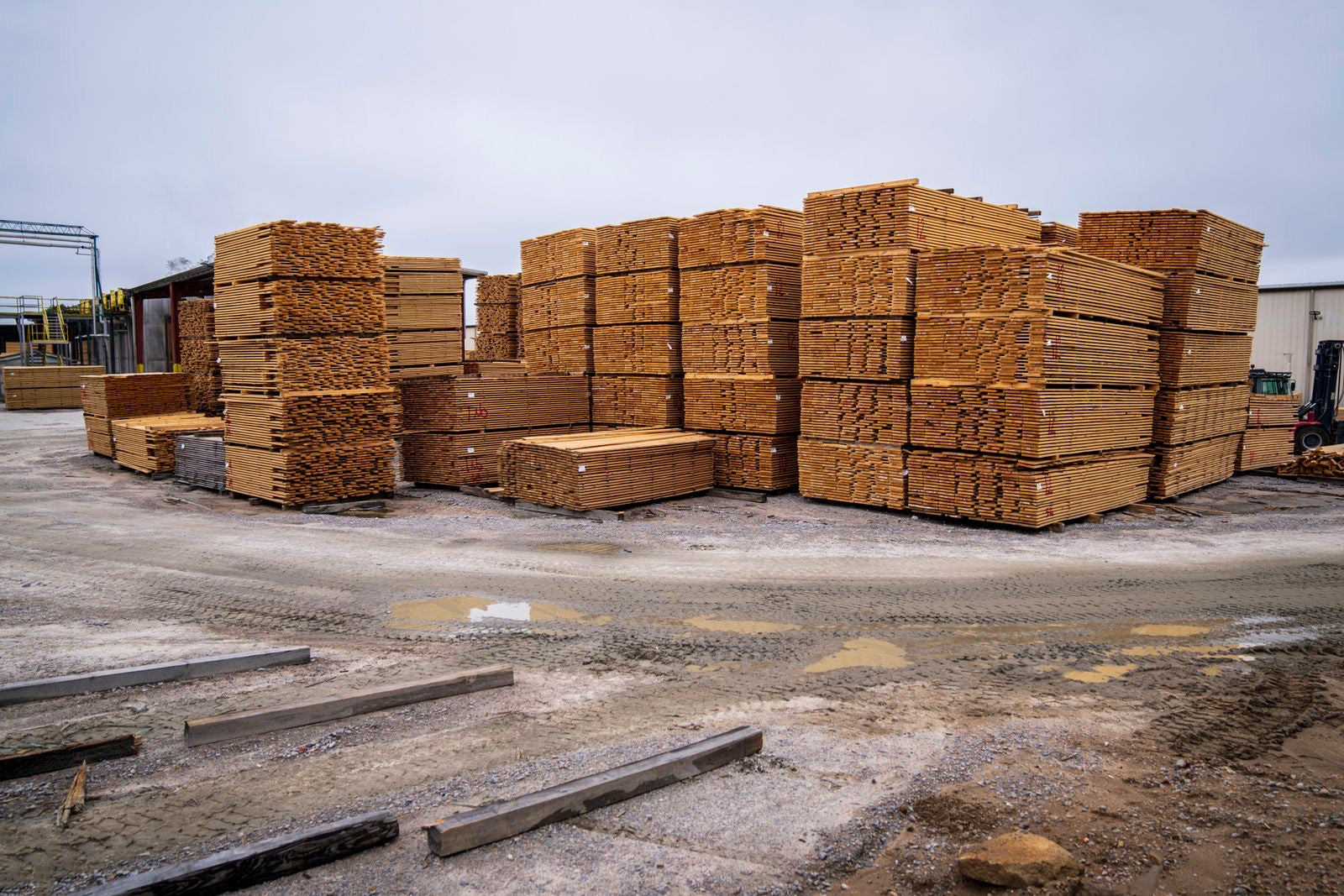

Walk through any building-products showroom and nearly everything now calls itself green: the insulation, the flooring, even the concrete. A project team cannot specify a building out of adjectives, though — they need a way to tell which materials genuinely carry a smaller footprint and which ones simply have a well-designed brochure. That test exists, and it is more practical than most people expect. This guide covers what sustainable building materials are, how professionals judge a material's sustainability, a list of the leading materials organized by their role in the building, the wood and concrete questions everyone asks, and how LEED rewards better material choices.
What are sustainable building materials?
Sustainable building materials are materials that reduce a building's environmental impact across their entire life cycle: they take less energy and carbon to produce, contain fewer harmful substances, last longer in service, and can be reused or recycled instead of landfilled when the building changes.
The key idea in that definition is the life cycle. A material is not sustainable or unsustainable at the moment you look at it on a shelf; it carries a history (the mining, harvesting, manufacturing, and transport that produced it) and a future (decades of service, maintenance, and eventually removal). Consider a steel beam: most of its environmental impact happened before it ever reached the site, in the furnace that made it. That is why recycled steel matters so much — reusing the metal skips the most damaging step. Our guide to life cycle assessment explains how professionals measure these impacts stage by stage, and the same thinking runs through everything else in this article.
The scale of the opportunity is also easy to underestimate. According to the EPA, the United States generated 600 million tons of construction and demolition debris in 2018, more than twice the country's municipal solid waste. Every material choice a team makes is therefore also a choice about what enters that stream later.
How do you judge whether a material is sustainable?
Professionals judge a material on evidence, not marketing: its embodied carbon, its published ingredient and impact disclosures, its recycled or reused content, how responsibly it was sourced, and how long it will last in service. A material that performs well on several of these counts is a genuinely sustainable choice.
Each of these tests deserves a short explanation, because together they form a practical checklist:
- Embodied carbon. This is the greenhouse gas emitted to extract, manufacture, and transport a material before the building ever operates. Cement, steel, and aluminum are the heavyweights here, which is why substituting or reducing them matters most. Our guide to embodied carbon covers how it is measured and reduced.
- Impact transparency. An Environmental Product Declaration (EPD) is a verified report of a product's measured environmental impacts, including its carbon footprint. A product that publishes one can be compared; a product that does not cannot. We explain the document in full in our EPD guide.
- Ingredient transparency. A Health Product Declaration (HPD) discloses what a product is made of and the health hazards associated with those ingredients, while the Declare label screens products against a list of worst-in-class chemicals. Our HPD guide and Declare label guide cover both.
- Recycled and reused content. Material that has already lived one life carries far less new impact. Recycled steel and recycled-content insulation are the classic examples.
- Responsible sourcing. For biobased materials, sourcing matters as much as the material itself: timber from a responsibly managed forest and rapidly renewable plants like bamboo and cork earn their reputation through how they are grown and harvested.
- Durability and health. A material that lasts twice as long halves its lifetime impact, and a material that emits little into the indoor air — see our guide to low-VOC materials — protects the people inside.
Notice what this list does not contain: a single magic certification. Sustainability is a profile, and the documents above exist so a team can read that profile instead of guessing.
Ready to earn your LEED credential?
 200,000+ Learners and Counting


Sustainable building materials list, by role in the building
The leading sustainable building materials sort naturally by the job they do: mass timber, bamboo, and recycled steel for structure; cork, straw bale, rammed earth, and recycled-content insulation for the envelope; and recycled glass, reclaimed wood, and low-emitting finishes for the interior.
| Material | Role in the building | Why it is considered sustainable |
|---|---|---|
| Mass timber | Structure (beams, panels, floors) | Renewable, stores carbon absorbed by the growing tree, replaces carbon-intensive concrete and steel |
| Bamboo | Structure and finishes | Rapidly renewable grass that matures in years rather than decades |
| Recycled steel | Structure | Reusing the metal avoids the most energy-intensive step of steelmaking |
| Cork | Insulation, flooring | Harvested from the bark without felling the tree, which keeps regrowing it |
| Straw bale | Wall insulation | An agricultural byproduct with strong insulating performance |
| Rammed earth | Walls | Built from earth on or near the site, with minimal processing and transport |
| Sheep's wool and recycled-content insulation | Envelope | Renewable or diverted-waste alternatives to petroleum-based insulation |
| Reclaimed wood and brick | Structure and finishes | Reuse carries almost no new manufacturing impact |
| Recycled glass | Countertops, tiles, aggregate | Diverts a fully recyclable material back into service |
A few of these deserve a closer word. Mass timber — large engineered wood elements such as cross-laminated panels — is the headline material of the decade because it replaces structural concrete and steel, the two heavyweights of embodied carbon; the next section explains the carbon argument behind wood in full. Rammed earth and straw bale earn their place differently, through sheer modesty: the material is local, barely processed, and abundant. And the reclaimed group (wood, brick, steel) is the quiet champion, because reuse sidesteps manufacturing altogether. That is also why interior projects lean so heavily on these choices, as our guide to sustainable interior design explains.
One caution as you read lists like this one: a material is only sustainable in context. Bamboo shipped across the world on a diesel freighter loses part of its advantage in transit, and a durable conventional material that lasts 80 years can outperform a greener one replaced every 15. The criteria from the previous section always outrank the label on the crate.
Is wood a sustainable building material?
Yes, when it is responsibly sourced. Wood is renewable, stores carbon for the life of the building, and takes far less energy to produce than concrete or steel. The condition is the forestry behind it: timber from responsibly managed forests earns the benefit, while timber from cleared forests cancels it.
The reason wood keeps winning sustainability comparisons is physical, not sentimental. A growing tree pulls carbon dioxide out of the atmosphere and binds the carbon into its fibers; put that wood into a beam and the carbon stays locked up for as long as the building stands. Concrete and steel run the equation in the other direction, because their production releases carbon. However, the advantage depends entirely on what happens at the forest. Responsible management means harvested trees are replaced and the forest keeps absorbing carbon; clear-cutting without regeneration means the "renewable" label is doing dishonest work. This is exactly why the sourcing test from our criteria list exists, and why project teams ask for chain-of-custody documentation rather than taking the word "wood" as proof of virtue.
What is the new alternative to concrete?
There is no single replacement for concrete yet; the realistic alternatives are lower-carbon versions of concrete itself — mixes that substitute part of the cement with industrial byproducts — plus mass timber taking over roles that once defaulted to concrete.
The honest starting point is that concrete's problem is cement: producing it releases carbon both from the fuel burned and from the chemical reaction itself. Therefore, the most practical fix is using less cement per cubic yard. Mixes that replace a share of cement with supplementary cementitious materials — industrial byproducts such as slag and fly ash — deliver real reductions with materials the industry already knows how to use. Beyond that, mass timber is displacing concrete in mid-rise structures, and newer cements and carbon-storing mixes are moving from pilot projects toward the mainstream. For a project team today, the alternative to concrete is usually better concrete, specified through the comparison documents we covered earlier: an EPD makes one mix's carbon footprint directly comparable to another's.
How LEED rewards sustainable building materials
LEED v5 rewards sustainable material choices throughout its Materials and Resources (MR) category: projects earn points for reusing buildings and materials, reducing embodied carbon, choosing low-emitting products, and selecting products with verified disclosures — and quantifying embodied carbon is now a prerequisite every project must meet.
The structure is worth seeing as a whole, because it mirrors the criteria from earlier in this guide. Every LEED v5 BD+C project must complete Quantify and Assess Embodied Carbon (MRp2), a prerequisite, so carbon accounting is no longer optional. From there, Building and Materials Reuse (MRc1) rewards keeping existing structure and salvaged materials in service, Reduce Embodied Carbon (MRc2) carries up to 6 points for cutting the measured footprint, Low-Emitting Materials (MRc3) rewards products that protect indoor air, and Building Product Selection and Procurement (MRc4) carries 5 points for choosing products with the disclosures this guide keeps returning to — EPDs, HPDs, and Declare among them. MRc2 is also one of the specific credits a project must achieve to reach Platinum under LEED v5, which tells you how central materials have become; the construction side of the story, diverting demolition and construction waste, is covered in our guide to construction waste management.
For exam candidates, this category rewards understanding rather than memorization: the exams test why reuse beats recycling and what an EPD proves, not supplier catalogs. That reasoning-first approach is exactly how our LEED Green Associate Complete Exam Prep Pack teaches the Materials and Resources category, and it carries our passing guarantee.
Ready to earn your LEED credential?
200,000+ Learners and Counting
Frequently Asked Questions
What are some environmentally sustainable building materials?
Mass timber, bamboo, cork, straw bale, rammed earth, recycled steel, reclaimed wood and brick, recycled glass, and recycled-content or wool insulation are leading examples. Each is sustainable for a different reason: renewability, reuse, low processing, or avoided manufacturing.
What is the most eco-friendly material to build a house?
There is no single winner; it depends on the site and climate. Responsibly sourced wood is the strongest all-around candidate for homes because it is renewable and stores carbon, while reclaimed materials carry the least new impact of all.
What makes a building material sustainable?
Low embodied carbon, published disclosures (such as an EPD for environmental impacts and an HPD for ingredients), recycled or reused content, responsible sourcing, durability, and low emissions into indoor air. A genuinely sustainable material performs well on several of these at once.
Are sustainable building materials more expensive?
Some carry a price premium and some do not; reclaimed and local materials can cost less. Durability also changes the math, because a longer-lasting material spreads its cost and impact over more years of service.
What is the most sustainable insulation?
Cork, sheep's wool, and recycled-content insulation lead on material grounds. Performance still matters most, though: whichever insulation keeps the building efficient for decades earns back its footprint through saved energy.
Are sustainable building materials on the LEED Green Associate exam?
Yes. The Materials and Resources category is part of the exam, and candidates should understand the material life cycle, reuse versus recycling, and what disclosures like EPDs demonstrate — at the concept level rather than product-by-product.
Are sustainable building materials on the LEED AP BD+C exam?
Yes, in greater depth. The AP BD+C exam expects working knowledge of the MR credits, including embodied carbon reduction and the product selection and procurement credit, and how teams document these choices on real projects.

Recycled Concrete Aggregate: Uses, Properties & LEED [2026]
Recycled concrete aggregate explained: how concrete is recycled, what RCA is used for, how it differs from natural aggregate, and how LEED v5 counts it.

Recycled Content: Pre- vs Post-Consumer & LEED [2026]
Recycled content explained: pre-consumer vs post-consumer material, how claims are verified, common recycled-content building materials, and its LEED v5 role.

Cradle to Cradle: Design Concept & Certification [2026]
Cradle to cradle explained: the design concept, how it differs from cradle to grave, how Cradle to Cradle Certified works, and how it counts in LEED v5.
