

LEED Certified Buildings: 13 Famous Examples [2026]
 A. Togay Koralturk
Last updated on September 05, 2026
9 min read
A. Togay Koralturk
Last updated on September 05, 2026
9 min read
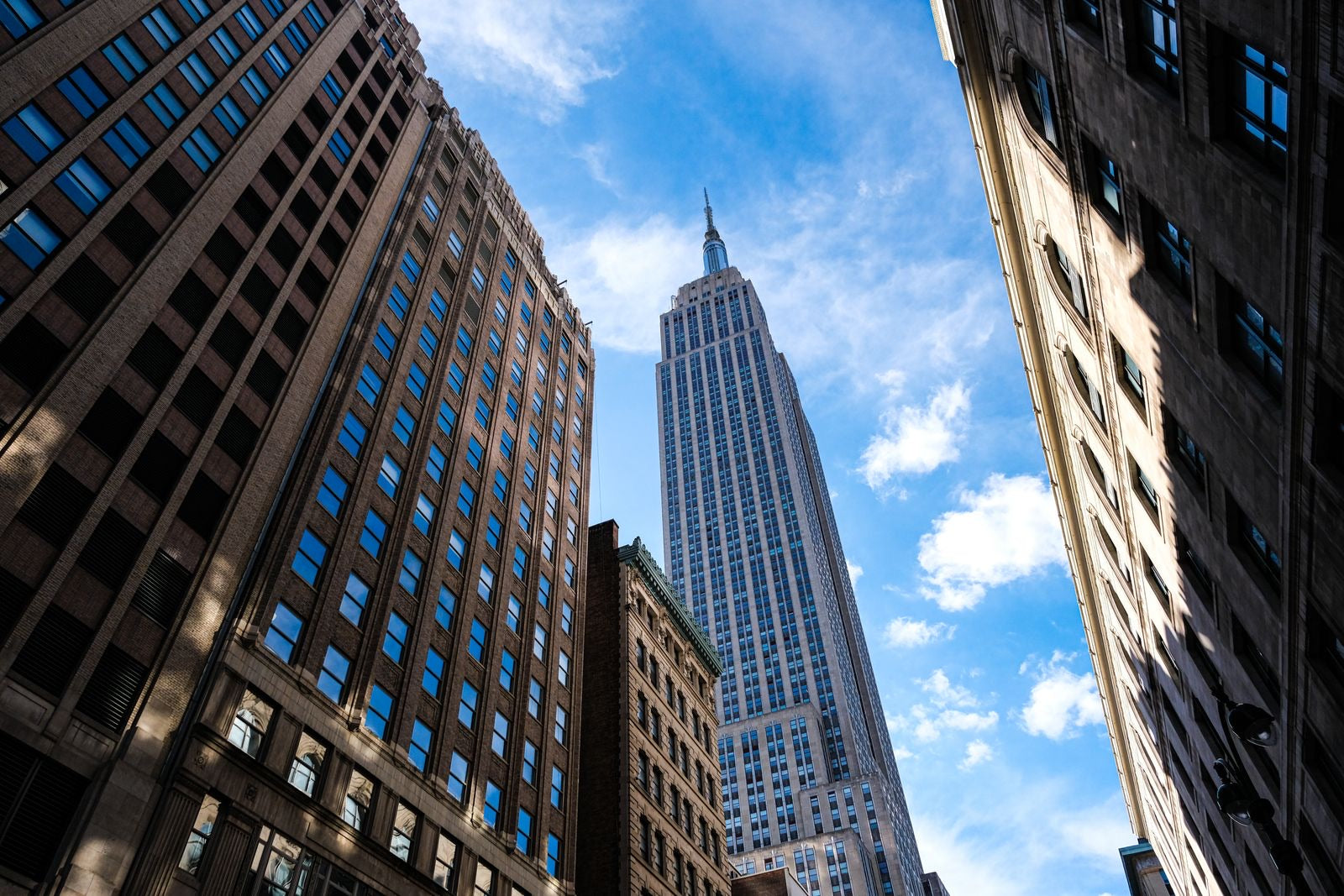

The Empire State Building was completed in 1931, six decades before LEED existed, and today it holds a LEED Gold certification. This is possible because LEED certified buildings are not a separate category of new glass towers; they are ordinary building types, from offices and libraries to airport terminals and even a burger restaurant, that documented outstanding performance. Looking at the famous examples is one of the fastest ways to understand what the rating system actually rewards. This guide tours thirteen of the best-known LEED certified buildings: the Platinum icons, the retrofit that changed the conversation, the unexpected building types, the net-zero overachievers, the international flagships, and what each one teaches about how certification works.
What makes a building LEED certified?
A LEED certified building has documented its performance against the rating system's prerequisites and credits and passed third-party review, earning one of the four certification levels: Certified, Silver, Gold, or Platinum. The famous examples below followed exactly the same path as any other project; their results simply drew more attention.
Because certification is earned rather than claimed, every building in this guide represents a verified performance case: energy models, water calculations, materials documentation, all reviewed by GBCI. The differences between them come from strategy, since each project earns its level through the credits it selects under its rating system, which is why a tour of famous buildings is genuinely educational: each one shows a different way of earning points under the same system. Figures below are as reported by the projects and the coverage of them, and every certification is checkable in USGBC's public project directory.
13 famous LEED certified buildings at a glance
The famous examples span every building type and both coasts of the certification spectrum, from Gold retrofits of pre-war icons to Platinum airports and breweries.
| Building | Location | Level | Known for |
|---|---|---|---|
| Empire State Building | New York, NY | Gold | The landmark green retrofit of a 1931 icon |
| Willis Tower | Chicago, IL | Platinum | Reported as the largest U.S. building to reach the top level |
| Apple Park | Cupertino, CA | Platinum | 100% renewable energy; a 14-megawatt solar array |
| Vancouver Convention Center | Vancouver, Canada | Platinum | A six-acre living roof and seawater heating and cooling |
| Harvey Milk Terminal 1, SFO | San Francisco, CA | Platinum | Reported as the first LEED Platinum airport terminal |
| McDonald's Chicago Flagship | Chicago, IL | Platinum | Mass-timber structure; 1,062 solar panels |
| Austin Central Library | Austin, TX | Platinum | Built on a brownfield; 100% daylighting in public spaces |
| Sierra Nevada Brewing Co. | Mills River, NC | Platinum | A 500,000-gallon rainwater cistern; on-site wastewater treatment |
| Parkview Green | Beijing, China | Platinum | Reported as China's first Platinum commercial complex |
| UN City | Copenhagen, Denmark | Platinum | 55% electricity reduction; seawater cooling |
| Frick Environmental Center | Pittsburgh, PA | Platinum | Double-certified with the Living Building Challenge |
| The Exploratorium | San Francisco, CA | Platinum | Net zero energy; a 1.3-megawatt solar grid on waterfront piers |
| Manitoba Hydro Place | Winnipeg, Canada | Platinum | A 377-foot solar chimney and geothermal system |
Notice the variety in this table. A skyline office tower and a public library can hold the same certification because LEED evaluates each building's performance for its own type and use, and the sections below walk through what each famous case demonstrates.
Ready to earn your LEED credential?
 200,000+ Learners and Counting


The Platinum icons: Apple Park, Willis Tower, and Vancouver
The best-known LEED Platinum buildings each demonstrate a different top-tier strategy: Apple Park runs on 100% renewable energy with a 14-megawatt rooftop solar array, Willis Tower is reported as the largest U.S. building to achieve the top level, and the Vancouver Convention Center pairs a six-acre living roof with seawater heating and cooling.
Together, the three show that there is no single formula for reaching Platinum. Apple Park's route runs through energy: generating renewable energy at building scale addresses the largest credit category directly, which is exactly where the points concentrate. Willis Tower's route runs through scale and existing fabric: certifying one of America's largest buildings means improving efficiency, water, and operations numbers across millions of square feet, which shows that the top level can be reached by existing buildings, not only by purpose-built campuses. And Vancouver's route runs through site and water: a living roof the size of several city blocks manages rainwater and habitat while the building uses seawater for heating and cooling and treats its own wastewater on site. In other words, the three buildings reached the same level through almost non-overlapping strategies, and the rating system is flexible enough to score them all.
The retrofit lesson: the Empire State Building
The Empire State Building earned LEED Gold in 2011 through a deep energy retrofit reported to cut energy use by 38% and save $4.4 million annually, making it the world's most famous proof that certification is not only for new construction.
The retrofit's influence extends far beyond the building itself. Before it, green building conversations defaulted to new projects, because upgrading the world's existing towers seemed impractical; after it, a 1931 landmark had published numbers showing an old building could compete with new construction on efficiency. The measures themselves were ordinary and repeatable: rebuilt windows, better insulation, modernized systems, and low-flow fixtures. That is precisely what makes the example so useful, because nothing in that list requires a landmark building. This is the story that explains why the O+M rating system exists and why existing buildings have become such a large part of certification activity, a theme our rating systems guide picks up in full. For owners weighing the same move, the costs sit against exactly the kind of operating savings the Empire State's reported numbers made famous.
LEED beyond the office tower
Certification's range shows best in its unexpected holders: an airport terminal (SFO's Harvey Milk Terminal 1), a McDonald's flagship built from mass timber, a public library on a reclaimed brownfield, and a production brewery all hold LEED Platinum.
Each case extends the definition of what a green building can be. Harvey Milk Terminal 1, reported as the first LEED Platinum airport terminal, brought displacement ventilation, dynamic glazing, and rooftop solar to one of the hardest building types to run efficiently. The McDonald's Chicago Flagship is a lesson in materials: a cross-laminated timber structure (mass timber stores carbon rather than emitting it the way concrete and steel production do) under green roofs with fruit trees, powered in reported majority by its 1,062 solar panels. The Austin Central Library turned a brownfield site into a civic landmark with 100% daylighting in its public spaces, the Indoor Environmental Quality strategy applied at municipal scale. And Sierra Nevada's Mills River brewery shows that industrial facilities can certify too: a half-million-gallon rainwater cistern and on-site wastewater treatment in a facility whose entire business depends on water. Together, these four cases show that certification extends to almost every building type.
The overachievers: net zero and double certification
Some certified buildings go further than Platinum: Pittsburgh's Frick Environmental Center holds LEED Platinum alongside Living Building Challenge certification, and San Francisco's Exploratorium pairs its Platinum with certified net zero energy from a 1.3-megawatt solar grid.
These cases answer a fair question: what lies beyond the top level? The Frick Environmental Center offsets 100% of its energy photovoltaically, runs on geothermal heating and cooling, and captures rainwater in a 15,000-gallon cistern, performance strong enough to satisfy two of the world's most demanding certification programs at once. The Exploratorium relocated a science museum onto waterfront piers and made the site its power plant: 5,874 solar panels reported at 1.3 megawatts, radiant cooling drawn from the bay beneath it, and a certified net zero energy balance. Buildings like these matter to the rating system's future, because what counts as overachievement today tends to become a standard expectation in later versions of the rating system; the mandatory carbon assessments and decarbonization weighting of LEED v5 show that process already underway.
LEED certified buildings around the world
LEED is a U.S.-born standard with a global footprint: Beijing's Parkview Green is reported as China's first LEED Platinum commercial complex, and Copenhagen's UN City runs on 55% less electricity with seawater cooling under its smart facade.
The international cases matter because they show that the standard works the same way everywhere. Parkview Green wraps more than two million square feet of mixed-use Beijing real estate in a glass envelope that creates its own microclimate, with a reported 35.7% energy reduction and 81% of construction waste recycled, demonstrating that the documentation and review process works the same in any country. UN City is the symbolic flagship: the United Nations choosing to house its Copenhagen agencies in a LEED Platinum building, with a 1,400-square-meter solar facade and the harbor providing cooling, is a strong endorsement of the standard's credibility. Cold climates get a flagship too: Winnipeg's Manitoba Hydro Place, reported as 80% more efficient than comparable buildings, pairs a 377-foot solar chimney with geothermal tubes to condition a tower through Canadian winters, proof that the strategies work even in extreme cold. For professionals, the global footprint is career-relevant too: the same credential is recognized in Chicago, Beijing, and Copenhagen alike, which is part of the case our guide to the LEED credential path makes for earning it.
What these buildings teach
Each famous building is a credit strategy made visible: renewables and deep efficiency map to Energy and Atmosphere, living roofs and brownfield reclamation to site credits, mass timber to materials and embodied carbon, and daylighting to Indoor Environmental Quality.
This mapping is the practical reason to study the showcase rather than admire it. When LEED v5 weights decarbonization at half the available points, Apple Park's solar array and McDonald's carbon-storing timber become worked examples of where the points are now concentrated, rather than interesting trivia. When the exam asks which strategy serves which credit category, the Vancouver living roof (site and rainwater), the Austin daylighting (indoor environmental quality), and the Empire State retrofit (energy performance in existing buildings) give you memorable anchors for the concepts. That is how we recommend using this page: as a set of memorable examples for the concepts, with the systematic teaching in our best-selling LEED Green Associate study guide, which walks the same strategies in the order the exam tests them. And when you encounter any building claiming certification, USGBC's project directory will tell you its level in seconds, because every certification is public and verifiable.
Ready to earn your LEED credential?
200,000+ Learners and Counting
Frequently Asked Questions
What is the most famous LEED certified building?
The Empire State Building is probably the most widely known: its 2011 LEED Gold certification, earned through a deep retrofit reported to cut energy use by 38%, made it the global symbol of greening existing buildings. Among new construction, Apple Park's Platinum campus is the most recognized.
Is the Empire State Building LEED certified?
Yes. It earned LEED Gold in 2011 following a landmark energy retrofit of the 1931 tower, with reported savings of $4.4 million per year, and it remains the best-known example of certifying an existing building.
What is the largest LEED Platinum building?
Willis Tower in Chicago is reported as the largest building in the United States to achieve LEED Platinum, certified in 2019 after upgrades spanning its lighting, systems, and rooftop greenspace.
How do I find out if a building is LEED certified?
Search USGBC's public project directory at usgbc.org/projects, which lists certified projects with their rating system, certification level, and date. Every legitimate certification is checkable there.
Can any type of building become LEED certified?
Essentially yes, provided it meets the Minimum Program Requirements: offices, libraries, airports, restaurants, breweries, schools, homes, and hospitals all hold certifications, each under the rating system matching its project type.
What certification level do most famous buildings hold?
The famous examples skew Platinum and Gold, because top-tier certifications generate coverage. The full population of certified buildings is far broader, spanning every level from Certified upward, which the project directory makes easy to explore.


The LEED Credit Library: What It Is & How to Use It [2026]
The LEED credit library explained: what lives at usgbc.org/credits, how to filter it to your rating system, and how project teams and exam candidates use it.

LEED Certification Requirements: The Full List [2026]
Every LEED certification requirement in one place: the Minimum Program Requirements, all 16 prerequisites, the 40-point minimum, and documentation rules.

The LEED Certification Process: 5 Steps Explained [2026]
The LEED certification process step by step: rating system selection, registering on Arc, prerequisites and credits, GBCI review, and how long it takes.
